DC Edit | Focus On Air Defences, IAF Strength

Where India has to be more prepared is for battles in the air and this is where the defensive and offensive capabilities of the multi systems India employs in Russian made as well as India-made defence shields like the IACCS will count the most
The Integrated Air Defence System, which came out with flying colours when tested off the coast of Odisha, adds another layer to the capabilities of the armed forces. The tests last Saturday in which three different targets, including a multi-copter drone, flying at high speeds were struck down can be said to be a kind action replay of Operation Sindoor in which the Indian forces had displayed their proficiency in safeguarding the frontier as well as striking from the ground and air deep into enemy territory.
The development of an indigenous weapon system capable of handling the evolving threat in modern warfare of encounters in the skies to be fought with missiles and drones and other unmanned vehicles is an absolute necessity. That warfare has changed over time from the overwhelming strength of boots on the ground backed up by artillery and tanks as was made clear during the conflict with Pakistan.
So fluid is the situation around the borders that it calls not only for constant vigil but also the building of defence mechanisms that can deal with scenarios faced by a country which has no ambition to seize territory of other nations — a desire oft stated to take back Pakistan Occupied Kashmir can be said to be more nationalistic than practical.
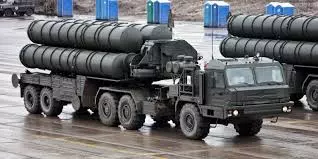
Where India has to be more prepared is for battles in the air and this is where the defensive and offensive capabilities of the multi systems India employs in Russian made as well as India-made defence shields like the IACCS will count the most. While Russia’s S-400 surface-to-air defence system did spectacularly in staving off drone and missile attacks, India awaits the supply of the last two of five systems as part of the $5.43 billion deal, but Russia could be preoccupied with the war in Ukraine.
It is a different matter that an even bigger national priority should be to take the IAF closer to the 42 squadrons that were once thought to be the ideal number needed to guard against the twin threat from the north and west. The need for more aircraft to perform the air defence role could diminish as air power is not measured only in terms of numerical superiority.
The acquisition and assembling of missile development programmes and adding defence systems may help reduce the numbers of aircraft needed, but the gap between what is an ideal squadron strength and what the IAF is operating with currently must be closed to ensure a level of national security that will be more reassuring.
