The Centre’s rejection of demands for statehood or a Union Territory status with a legislature has made one thing clear: Ladakh is unlikely to follow the constitutional road travelled elsewhere in the country
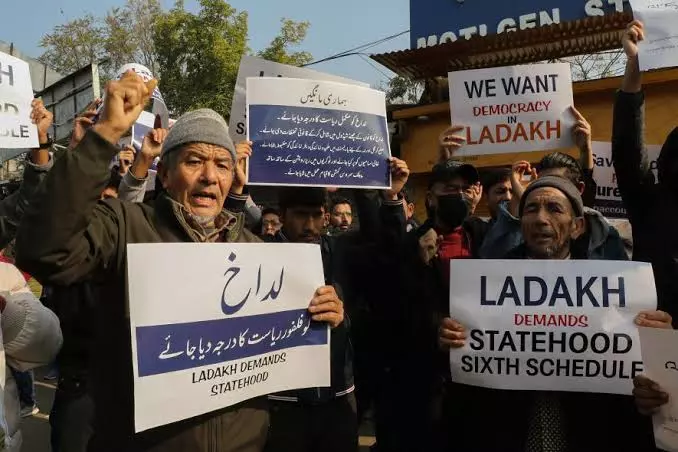
Ladakh stands at a defining moment in its modern political history. Massive infrastructure projects, unprecedented strategic investment and growing national attention have placed the region firmly at the centre of country's development and security calculus. Yet, beneath this promise lies a widening trust deficit between Ladakh’s representative leadership and the Union government, one that cannot be ignored.
The Centre’s rejection of demands for statehood or a Union Territory status with a legislature has made one thing clear: Ladakh is unlikely to follow the constitutional road travelled elsewhere in the country. Instead, the Centre is proposing a unique model, tailored to the region. While innovation in governance is not inherently problematic, any framework imposed without broad local acceptance risks deepening political alienation.
The concerns raised by the Leh Apex Body (LAB) and the Kargil Democratic Alliance (KDA) cannot be dismissed as mere questions of nomenclature or administrative design. At their core lies a demand for meaningful democratic participation, constitutional safeguards and a greater voice over land, resources, culture and development. For a region with fragile ecology, distinct cultural traditions and sensitive demographics, these aspirations are legitimate and deserve serious consideration.
At the same time, Ladakh’s leadership must recognise the strategic realities that inform the Centre’s approach. Bordering China and Pakistan, Ladakh is not an ordinary administrative unit. Its geopolitical significance makes stability, institutional clarity and national security paramount concerns. A prolonged confrontation between local stakeholders and the Centre serves neither purpose.
What is needed now is not maximalism from either side, but statesmanship. The Centre must engage with Ladakh’s representatives in a spirit of trust, flexibility and transparency. Equally, LAB and KDA should remain invested in dialogue rather than outright rejection. Constitutional innovation can succeed only if it carries democratic legitimacy.
The stakes are far greater than a constitutional formula. Development can build roads, airports and power plants. Only consensus can build durable institutions. For Ladakh, and for India, the challenge is to ensure that strategic importance is matched by political accommodation. A peaceful, empowered and confident Ladakh is not merely a regional aspiration; it is a national necessity.