DC Edit | As New CMs Take Over, Big Changes Loom In WB & TN

Mr Vijay may have found the last mile of his journey to the throne made tougher by the governor for no reason but his ascension has practically ended the nearly six-decade rule by parties that practised Dravidian politics
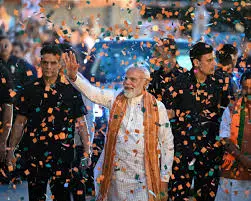
The assuming of office by chief ministers C. Joseph Vijay in Tamil Nadu and Suvendu Adhikari in West Bengal marks not just a change of government but a massive shift in the politics of two states that pride themselves on their cultural history and identity.
Mr Vijay may have found the last mile of his journey to the throne made tougher by the governor for no reason but his ascension has practically ended the nearly six-decade rule by parties that practised Dravidian politics. Tamil Nadu has been governed by the two Dravidian parties, the DMK and the AIADMK, for the last six decades; the last chief minister of the Congress A. Bhaktavatsalam left the chair in 1967. The Dravidian reign started with DMK patriarch C.N. Annadurai at the helm shortly thereafter. The Dravidian parties faced splits, the major one being in 1972 when film star politician M.G. Ramachandran broke away and formed his own outfit, the AIADMK, which won the election in 1977. Generations changed but the governments were run on Dravidian principles.
Mr Vijay has declared that he draws inspiration from the same principles, and from the lives of leaders such as E.V.R. Periyar and C.N. Annadurai. He has also expressed his deep admiration for Congress leader and former chief minister K. Kamaraj, whose times are still called the golden era in Tamil Nadu’s contemporary history. The new chief minister is yet to come up which an economic policy and it remains to be seen how he will take Tamil Nadu, an industrialised state that contributes more than nine per cent of India’s GDP, forward.
In his inaugural speech, Mr Vijay insists that he will usher in a model which practises “real secularism and social justice”, hallmarks of the Dravidian movement. He has made it clear that he will not stand corruption, a vice that has gripped the state in a debilitating manner. It will be interesting to see how a person with little political or administrative experience will handle the affairs of a state of about eight crore people. Maybe that’s why he said “be confident” as the parting note of the inaugural address.
The BJP capturing power in West Bengal marks a defining moment in the state’s political history, for it had until five years ago pushed back the Hindutva wave even as it was sweeping the rest of the country. The BJP may have used the worst of tactics at its disposal to win the elections, dividing the people and widening the schisms that already existed, including prevailing upon the administration to conduct the special intensive revision of the electoral roll. That the Election Commission was a willing partner in this operation is no more a secret: 27 lakh people were not able to vote in this election for no fault of theirs. The high court and the Supreme Court watched the entire drama unmindful of the gross violation of the democratic rights of the people. Everything seemed to be justified in the BJP’s relentless pursuit of its political goals.
It remains a fact that West Bengal, a state with the highest population density, is one of the most economically backward states. The Congress, the Communists and the Trinamul Congress are collectively to blame for this unenviable circumstance. Can a “double engine” government change its fate?
