DC Edit | Anti-PM Slogans at JNU: Police Action Over-Reach

JNU’s complaint over slogans raises troubling questions on free speech and state insecurity
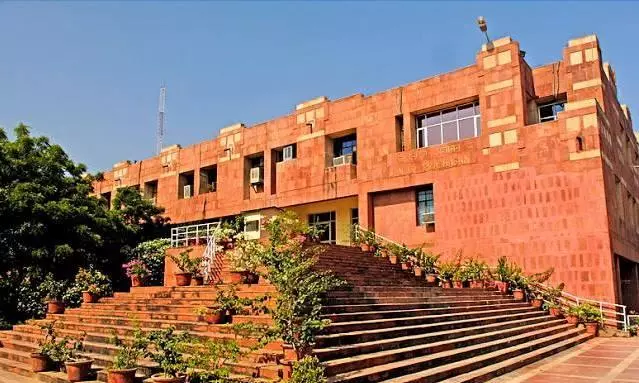
The strangest incident that can happen on a university campus just did in Jawaharlal Nehru University (JNU) in Delhi: Its authorities have complained to police that certain students raised “highly objectionable, provocative and inflammatory” slogans at an event on Monday night that were “in direct contempt of the Supreme Court” and reflect a "willful disrespect for constitutional institutions and established norms of civil and democratic discourse”.
The event the university refers to was organised on the campus to mark the anniversary of violence of January 5, 2020, in which a group of masked assailants entered the campus and unleashed mayhem on students and teachers. A video of the event showed students allegedly raising inflammatory slogans against Prime Minister Narendra Modi and Union home minister Amit Shah after the Supreme Court refused to grant bail to Umar Khalid, a former JNU student in the 2020 Delhi riots conspiracy case.
It is understandable for police to launch an investigation if illegal activity did indeed occur on the campus on Monday. Such an investigation, though, must be conducted with an element of caution because students have historically been in the forefront of agitations against injustices and thus played the biggest role in bringing about positive change in every society through centuries. But only if they come across specific incidents that violated the law should police initiate probe.
Thus, undoubtedly, this demand for an FIR is worrisome on its own, given the propensity of police to chargesheet dissenters under the harshest sections in the law book so that they can throw them in prison for years on end without bail. When the judiciary plays safe and goes by the executive’s interpretation of events, the process of justice delivery will become the punishment itself. The long incarceration of Khalid and another activist, Sharjeel Imam, for a similar event on the same campus years ago is a stark reminder of what could be in store for these students.
Equally, the shameful conduct of the university authorities in this evolving episode should also not be lost sight of. They proudly proclaim to the world that “universities are centres for innovation and new ideas” and that “freedom of speech and expression is a fundamental right”. Yet, more loyal than the king, they have rushed to the police with complaints even before finding out for themselves whether the students in question actually broke the university’s rules and regulations let alone ascertaining if they were also involved in law and order issues. In point of fact, it’s far beyond their remit to refer to graver acts of “violence, unlawful conduct or anti-national activity”. So the motive of the university authorities is all too clear: Silence voices against the incumbent government and its policies.
The whole episode betrays the insecurity of the Indian State. Why is the mighty government feeling threatened by a random handful of students raising slogans on their own campus? Shouldn’t it introspect to identify the source of this insecurity then? And take measures to make amends?
Meanwhile, it’s a matter of shame for the Indian academic community that claims a history of a few thousand years to smother young voices of enquiry and dissent just to be in the ruler’s good books. It’s a new low when a university seeks to hand over its students to law enforcement agencies even without verifying if they are guilty. All the more worrisome when it happens on a campus that hosts some of the country’s brightest brains!
