Wasbir Hussain | Will Myanmar Prez Visit to India Impact N-E Security?

Border stability, narcotics control and intelligence-sharing are key concerns for New Delhi.
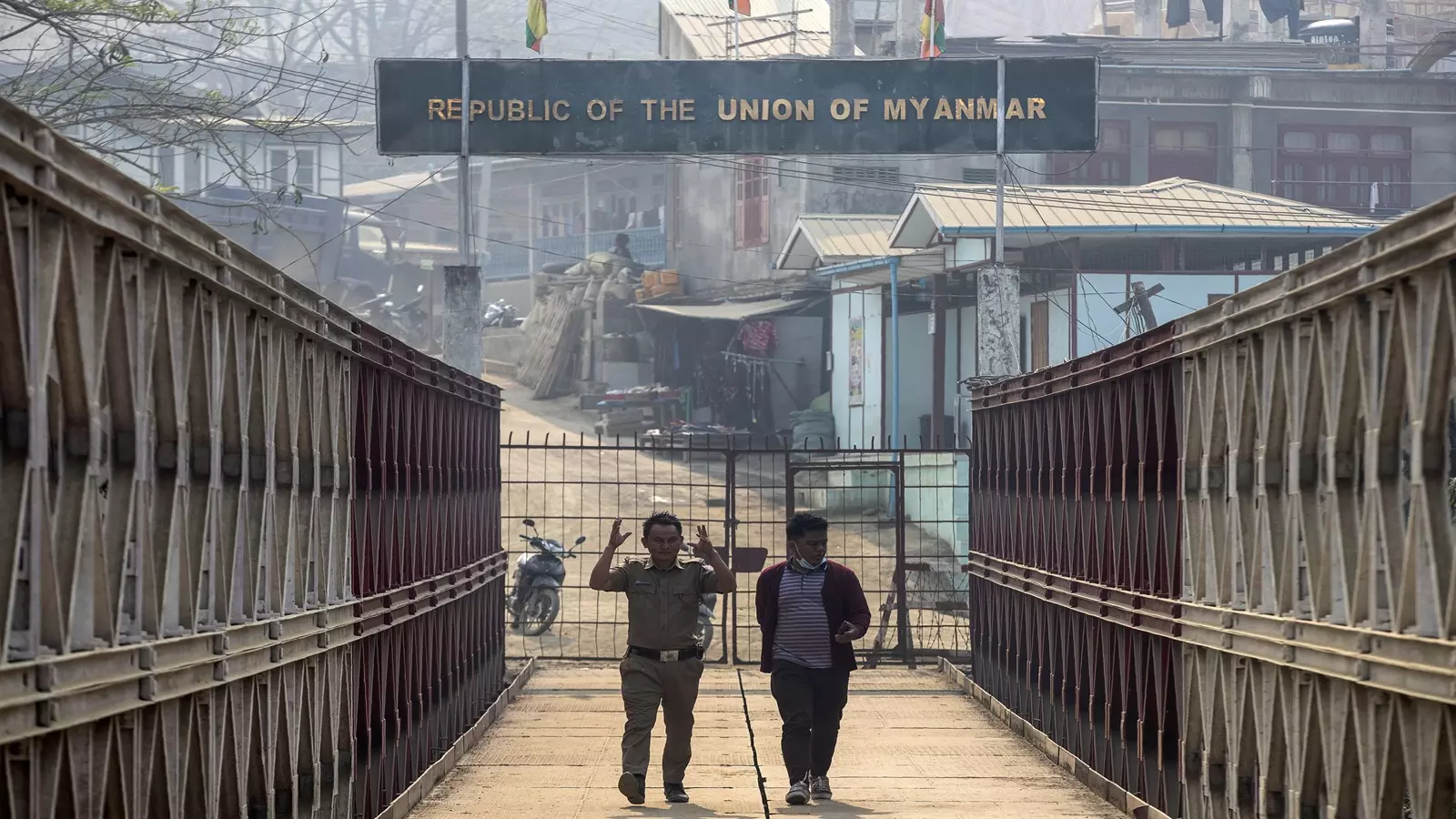
Myanmar President Min Aung Hlaing’s recent visit to India may have been projected as a diplomatic engagement, but for New Delhi, the real significance of the visit lies far away from the conference rooms and ceremonial receptions. It lies along the troubled India-Myanmar border and, more specifically, in Manipur.
The symbolism of the visit can’t be missed. After all, Myanmar’s new President, Hlaing, chose India for his first foreign visit, signalling Naypyidaw’s desire to deepen engagement with New Delhi at a time when Myanmar remains engulfed in conflict and geopolitical competition. But for India, the visit should not be viewed merely through the prism of regional diplomacy or balancing China. Its significance is far more immediate and domestic: the impact of Myanmar’s instability on the security of India’s Northeast.
The timing could not be more relevant. Even as the visit was underway, violence continued to cast a shadow over Manipur. The recent killing of three people in Kangpokpi district is yet another reminder that Manipur remains vulnerable to recurring cycles of armed violence, mistrust and insecurity. While the roots of the Manipur crisis are undoubtedly internal, developments across the border in Myanmar are increasingly shaping the broader security environment in which the conflict is unfolding.
This is why one particular aspect of Min Aung Hlaing’s remarks deserves close attention. In an interview with DD India, the Myanmar President acknowledged that armed groups have long exploited the rugged and porous 1,600-km India-Myanmar frontier for drug production and trafficking, using narcotics revenues to finance their activities. He noted that while production had been brought under some control around 2020, the situation deteriorated significantly following Myanmar’s political upheaval in 2021. He pledged stronger action against the drug networks and called for deeper intelligence-sharing and security cooperation with India to combat both drug trafficking and insurgent activities along the border.
That admission is significant because it publicly acknowledges what the security agencies on both sides have long recognised: the India-Myanmar border is not merely a line separating two countries; it is an active theatre where insurgency, organised crime, narcotics trafficking and ethnic conflicts intersect.
For Manipur, this reality carries profound implications.
The question often asked is whether there is a direct linkage between armed groups operating in Myanmar and armed elements in Manipur. Publicly available evidence does not support simplistic claims of a unified network or command structure. Yet it would be equally misleading to deny the existence of linkages altogether.
The border regions of Myanmar’s Chin State and Sagaing Region have witnessed an extraordinary erosion of state authority since 2021. Multiple armed groups now control or contest significant territories. In such an environment, weapons trafficking, narcotics smuggling and the movement of armed cadres become easier. Geography, ethnic affiliations and long-established cross-border networks create opportunities for cooperation, logistical support and movement that do not always fit neatly into official categories.
Recent events illustrate the growing complexity of the challenge. The arrest in India of an American citizen and six Ukrainians after they allegedly entered Myanmar illegally through Mizoram has drawn attention to reports that foreign nationals may have been involved in training armed groups in drone operations. Regardless of the specific affiliations of those involved, the episode highlights how the conflict in Myanmar is becoming increasingly internationalised and technologically sophisticated.
The concern for India is obvious. Modern conflicts are no longer confined within national borders. Expertise, technology, finances and weapons often travel faster than governments can track them. Any prolonged instability in Myanmar risks creating conditions in which armed actors, criminal syndicates and extremist elements can exploit the borderlands, with inevitable spillover effects into Manipur and other parts of the Northeast.
This is where Min Aung Hlaing’s pledge of enhanced intelligence-sharing assumes particular significance. For years, India and Myanmar have cooperated against insurgent groups operating along the border. Joint military operations and intelligence exchanges have, at various times, disrupted militant camps and cross-border networks. If Myanmar is able to restore greater control over its frontier regions and if intelligence cooperation deepens further, it could help restrict the movement of weapons, narcotics and armed cadres that contribute to instability in the Northeast.
The narcotics dimension is especially important. Drug trafficking is not merely a law-and-order problem; it is a security challenge. Revenues generated from narcotics have historically funded armed movements across the region. Myanmar’s own acknowledgement that drug production has been used to finance conflicts underscores the need for closer coordination between the two countries.
There is another dimension that deserves equal attention: connectivity.
During his visit, Min Aung Hlaing expressed optimism about reviving the long-delayed India-Myanmar-Thailand Trilateral Highway. For years, the project has been seen primarily as an economic initiative linked to India’s “Act East” policy. Yet its importance extends beyond trade. Connectivity creates state presence, encourages legitimate economic activity and helps integrate border regions into formal economic networks. In the long term, roads can become instruments of stability just as much as they are instruments of commerce.
However, the expectations should remain realistic.
Myanmar remains deeply fragmented. Large areas continue to witness conflict between the military and various resistance groups. A comprehensive political settlement remains distant. The restoration of effective state authority across Myanmar’s border lands will not happen overnight.
Nor would stability in Myanmar automatically resolve the crisis in Manipur. The causes of the conflict in Manipur are rooted in local political, ethnic and social dynamics that require solutions within India.
Yet, external factors matter. A volatile Myanmar can aggravate existing tensions. A more stable Myanmar can help contain them.
That is why New Delhi’s engagement with Naypyidaw must be driven not by abstract geopolitical calculations alone but by a clear understanding of India’s security interests in the entire Northeast region. Intelligence-sharing, coordinated border management, anti-narcotics cooperation and the revival of connectivity projects should all be viewed through that lens.
The true significance of Min Aung Hlaing’s visit will not be measured by diplomatic communiqués or ceremonial photographs. It will be measured by whether the India-Myanmar border becomes more secure, whether narcotics and weapons flows are reduced, and whether places such as Moreh, Churachandpur and Kangpokpi become safer.
For India, Myanmar is no longer simply a neighbouring country facing a distant civil conflict. It is a critical factor in the future security and stability of the Northeast region. And nowhere is that reality more evident than in Manipur.
Wasbir Hussain, author and political commentator, is editor-in-chief of Northeast Live, Northeast India’s only satellite English and Hindi news channel. The views expressed here are personal.
