Wasbir Hussain | Beyond Mangoes: Tackle Dhaka’s Swing To Beijing

For even as Dhaka extends symbolic goodwill towards India, it is quietly moving closer to China. During Prime Minister Tariq Rahman's recent visit to Beijing, discussions with President Xi Jinping included the proposal for a China-Bangladesh-Myanmar Economic Corridor — a project that, if realised, would carry consequences extending far beyond trade. For India, and especially for the Northeast, it should set off strategic alarm bells
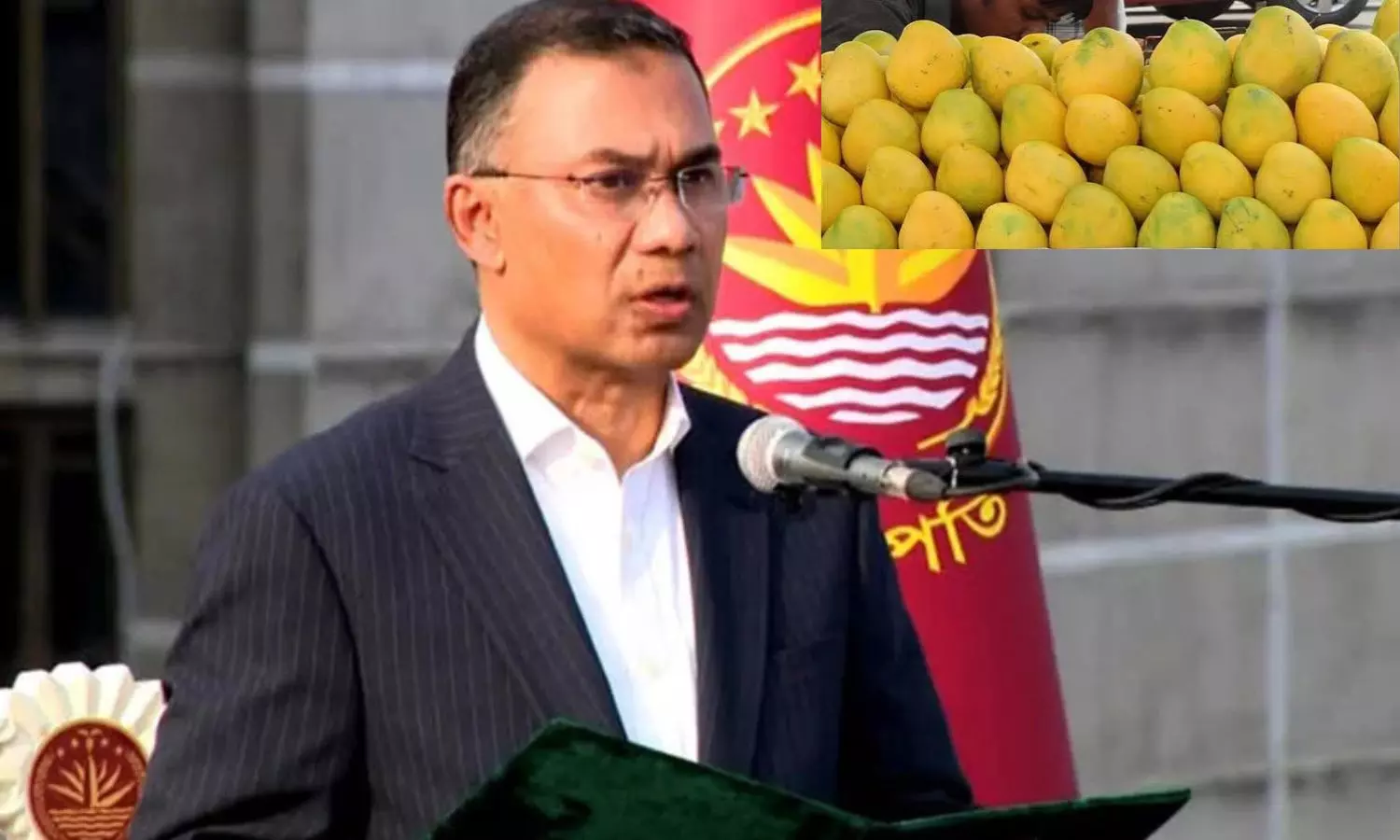
Diplomacy has its symbols. And Bangladesh has once again chosen mangoes. In recent weeks, Dhaka has dispatched crates of its celebrated fruit to Indian leaders, reviving the tradition of “mango diplomacy” that seeks to project warmth between the two neighbours. Such gestures are welcome as they keep the communication channels alive and soften political edges.
But statecraft cannot be guided by the sweetness of mangoes.
For even as Dhaka extends symbolic goodwill towards India, it is quietly moving closer to China. During Prime Minister Tarique Rahman's recent visit to Beijing, discussions with President Xi Jinping included the proposal for a China-Bangladesh-Myanmar Economic Corridor — a project that, if realised, would carry consequences extending far beyond trade. For India, and especially for the Northeast, it should set off strategic alarm bells.
This is not about Bangladesh having friendly relations with China. Every sovereign nation has the right to pursue multiple partnerships. Nor is it about opposing infrastructure or economic development. The issue is that China rarely invests without a strategic target.
From Pakistan’s Gwadar Port to Sri Lanka’s Hambantota, from Cambodia to the Indian Ocean, Beijing has demonstrated that economic corridors are not merely commercial ventures. They create political leverage, deepen dependence and gradually expand China’s strategic influence. A China-Bangladesh-Myanmar corridor would stretch from Yunnan to the Bay of Bengal, passing through one of Asia’s most volatile regions. It would bring Chinese influence closer to India’s vulnerable eastern frontier while strengthening Beijing’s presence around the Bay of Bengal.
Does it change India’s security calculus? The answer is yes. The Northeast is no longer India’s distant frontier or its periphery. It is central to New Delhi’s “Act East” policy, its regional connectivity ambitions and its national security architecture. Roads, railways, waterways and energy corridors linking the Northeast to Southeast Asia are critical to India's future economic geography.
But geography cuts both ways. Myanmar remains fractured by civil war. Several ethnic armed organisations control territory along India’s border. Many insurgent groups from India's Northeast have historically maintained networks across Myanmar. China enjoys considerable influence with several of these armed organisations.
Therefore, a Chinese-backed economic corridor passing through such territory inevitably raises uncomfortable questions. Infrastructure creates access. Access creates influence. Influence eventually acquires strategic value. India cannot afford to dismiss this as merely another development project. The Bay of Bengal presents another dimension. China has steadily increased its maritime presence across the Indian Ocean Region. Investments in ports may begin as commercial enterprises but can evolve into dual-use strategic assets. Bangladesh has repeatedly assured India that its territory will never be used against Indian interests. There is no reason to doubt those assurances today. But the concern is really about tomorrow as infrastructure lasts for decades, while governments don’t.
India must therefore assess the long-term strategic implications rather than the immediate diplomatic optics. Ironically, New Delhi has also made matters more complicated.
Following the BJP’s victory in West Bengal, reports of immediate pushbacks of suspected Bangladeshi migrants have generated unease in Dhaka. India has every sovereign right to identify illegal migrants and return them through due legal process. No responsible government can permit illegal immigration indefinitely, particularly in border states like Assam or West Bengal, where demographic change has remained politically explosive for decades. Border management is non-negotiable, but diplomacy is equally important. The manner in which deportations are carried out matters as much as the decision itself. If Bangladesh feels publicly embarrassed or politically cornered, anti-India sentiment becomes easier to mobilise. That is precisely the environment in which China thrives.
Beijing does not need to weaken India militarily if it can gradually weaken India's political influence among its neighbours. India's response, therefore, must avoid two extremes. The first is complacency — the belief that Bangladesh will always remain India's closest partner because of geography and history.
The second is panic — the assumption that every Chinese investment automatically represents a strategic defeat. Neither approach serves India's interests. Instead, New Delhi needs a strategy built on confidence rather than insecurity.
First, India must accelerate connectivity projects that directly benefit Bangladesh as well as the Northeast. Delayed infrastructure weakens credibility. Faster delivery strengthens partnerships.
Second, India should deepen economic integration beyond government agreements. Greater private investment, manufacturing partnerships, power trade and digital cooperation create long-term interdependence that no outside power can easily replace. Besides, New Delhi should address Dhaka's economic vulnerabilities by expanding preferential market access and resolving non-tariff barriers. This can give Dhaka immediate benefits by boosting its export capacity and foreign exchange reserves.
Third, New Delhi should institutionalise security dialogue with Dhaka specifically on developments in Myanmar. The instability west of the Chindwin River affects both countries. Intelligence sharing, coordinated border management and joint monitoring of transnational crime should become routine rather than episodic. India must also closely monitor Chinese investments in sensitive infrastructure along its borders as well as the Bay of Bengal, ensuring that local security interests are safeguarded through proactive diplomatic engagement with Dhaka.
Fourth, India must avoid reducing Bangladesh policy to domestic electoral politics. Migration may be a legitimate political issue inside India, but bilateral relations cannot become collateral damage in state-level political contests. Strong borders and strong diplomacy are not mutually exclusive.
Most importantly, India should stop assuming that goodwill accumulated over the past decade is permanent. Much of the remarkable improvement in India-Bangladesh relations rested on exceptional political trust. That era has changed. New leaders bring new priorities, new calculations and new external partnerships.
The relationship must now be sustained by institutions, economics and shared strategic interests — not merely political chemistry. Bangladesh Prime Minister Tarique Rahman had chosen Malaysia as the destination for his first official visit after assuming charge, followed by a visit to China. Will India be his next port of call? That’s the big question.
Bangladesh remains indispensable to India's Northeast. It offers the shortest access to the sea, the most practical transport routes and enormous economic opportunities. Equally, India remains Bangladesh’s largest neighbour, a major trading partner, an energy supplier and an indispensable security partner.
Neither country benefits from strategic estrangement.
That is why New Delhi must engage Bangladesh with confidence, not complacency; with firmness, not hostility; and with realism, not nostalgia. Mango diplomacy has its place. It reminds neighbours of shared history and a common culture. But the real test of diplomacy lies elsewhere. While mangoes occupy the headlines, Beijing is quietly shaping the map. India cannot afford to focus on the fruit while ignoring the corridor.
Wasbir Hussain, author and political commentator, is editor-in-chief of Northeast Live, Northeast India’s only satellite English and Hindi news channel. The views expressed here are personal.
