The System That Killed The Fearless Bureaucrat

Bureaucratic pliability has verifiable dividends: a desirable posting, an extension of tenure, a promotion, proximity to power, or simply the assurance that one's career will not be obstructed. The result is a damaging condominium of mutual convenience. The politician wants compliance; the bureaucrat wants patronage. Each can supply what the other seeks
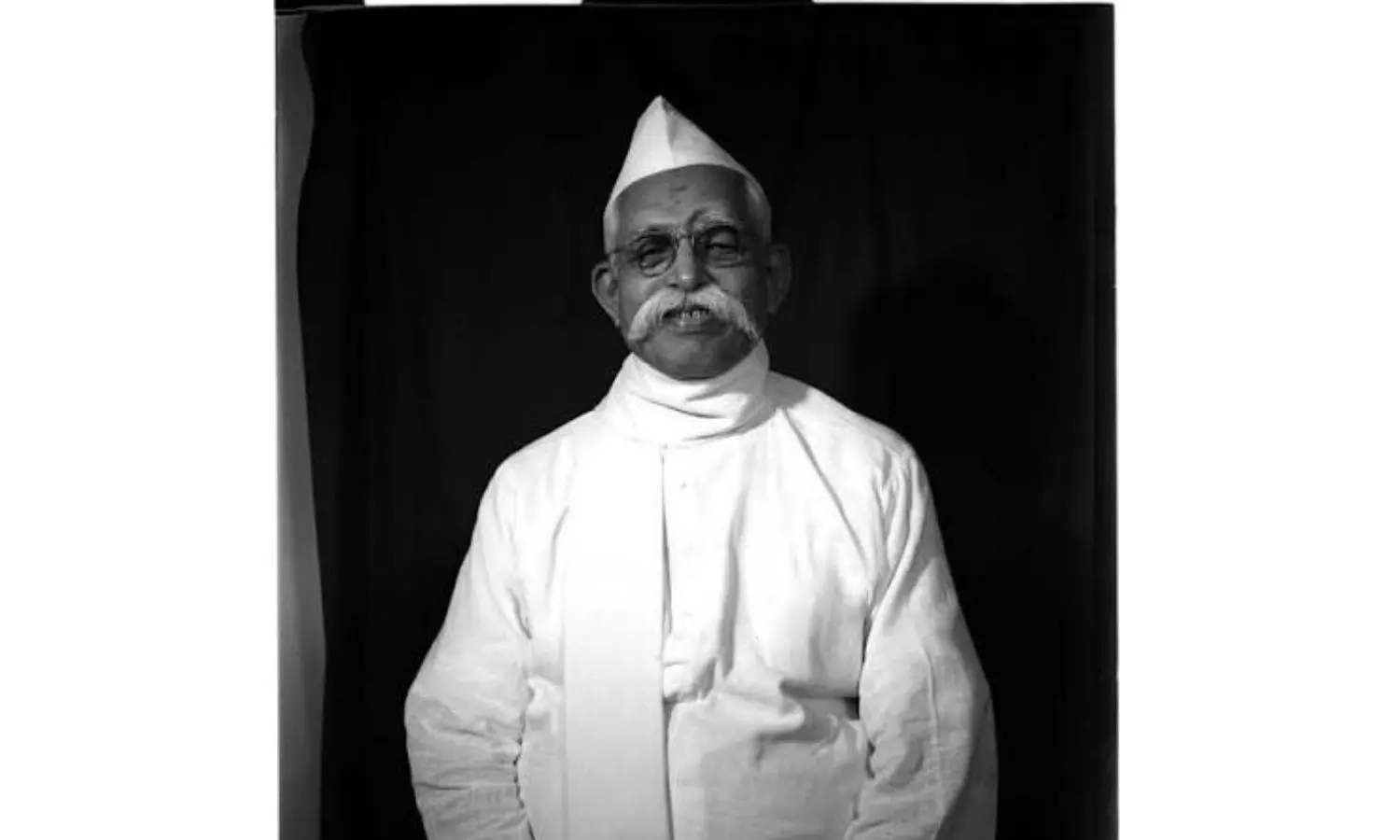
My father, a senior bureaucrat, would tell me a story of the early days after Independence. Pandit Ravi Shankar Shukla, a veteran and respected politician, was the chief minister (CM) of the then state of Central Provinces and Berar, with Nagpur as its capital. In an officer’s meeting, Shukla was keen that a certain decision be taken immediately. K.B.L. Seth, a highly regarded I.C.S officer, was the chief secretary. He explained to the CM that the decision would be in contravention of certain rules, and it would not be possible to implement it immediately in its current form. This annoyed the CM, and in anger he said: “What do you mean it is not possible? Everything is possible, even removing you from the service is possible.” Seth calmly responded: “Sir, I am a covenanted officer, and removing me from service for doing my duty would not be possible. However, it is possible for you to appoint another chief secretary, and I am not enamoured of this post.” Shukla instantly calmed down and graciously apologised. The decision was reviewed; Seth remained the chief secretary; and the CM and him enjoyed a relationship of even greater cordiality and mutual respect.
There was a time when a good bureaucrat was expected to possess the ability to say no. Such an officer could disagree with his political superior without regarding disagreement as disloyalty. The politician, for his part would often respect the officer for his courage of conviction.
That compact appears increasingly close to extinction. The administrative services were once described as the “steel frame” of India. It was expected to provide continuity amidst political change; institutional memory amidst political flux; and professional advice even when that advice was inconvenient. The minister represented the political will. The civil servant was expected to explain what was administratively feasible, legally permissible and institutionally prudent.
The relationship was never entirely idealistic. Politicians, of course, have always liked “cooperative officers”. Bureaucrats love to blame politicians but are from blameless themselves. In fact, in all likelihood, it was not the politician who first compromised the bureaucrat, but the bureaucrat who first conveyed to the politician that he was willing to be compromised. This attitude, in turn compromised the dharma of the bureaucracy: that an officer belonged, first and foremost, to the institution he served; his allegiance was to the Constitution, the law and the public interest — not to the individual politician occupying a particular office.
Bureaucratic pliability has verifiable dividends: a desirable posting, an extension of tenure, a promotion, proximity to power, or simply the assurance that one's career will not be obstructed. The result is a damaging condominium of mutual convenience. The politician wants compliance; the bureaucrat wants patronage. Each can supply what the other seeks.
Ethics, or self-esteem don’t matter in this happy ‘relationship’. I recall an incident in New York, when the private secretary (PS) to a minister, a senior IAS officer, arrived five minutes late at the airport to receive the minister’s wife. When he met her, she exploded: “Ullu ke patthe, ye time hai aane ka!: Bloody fool, is this the time to show up!” The officer quietly swallowed the unacceptable insult in order to retain the coveted post of PS to the minister.
It is equally true that the calibre of politician has also dramatically changed, and there are very few left of the ilk of Ravi Shankar Shukla. Alas, this transformation happened quite quickly after 1947. A well-known politician in the 1970s, who was both a Cabinet minister in the Centre and the CM of an important state, said publicly that he would be willing to give his very skin to make chappals or slippers for then Prime Minister Indira Gandhi. When politician reduce themselves to this kind of abject sycophancy before their political superiors, they expect the same kind of self-debasement and grovelling from the bureaucrats who work under them.
Politicians are unlikely to change, but the willing supplication of covenanted officials is, frankly, shameful. The need for them to reclaim their mandated self-respect is imperative because bureaucracy is where the decisions of government become concrete realities for citizens, be it the acquisition of land, the award of a contract, the allocation of a licence, the transfer of an employee, the demolition of a house, the construction of a road, or the delivery — or denial — of a welfare entitlement.
Corruption thrives when institutions become complicit. A politician who wants an improper favour requires an officer willing to facilitate it. An officer who seeks immunity for overlooking the rules requires a politician to protect him. The two are mutually dependent, and self-perpetuating, isolating the few honest bureaucrats left.
In fact, the honest officer, in such an ecosystem, becomes an eccentric liability: he is repeatedly transferred, labelled obstructive, unfairly penalised, and described as lacking ‘team spirit’. The consequences of this makes democracy itself less accountable. If administrators lose their neutrality, the citizen’s rights become dependent not merely upon law but upon whom he knows, which political faction he belongs to, and how much bribe he can pay.
This is the antithesis of the rule of law. The restoration of the steel frame therefore requires urgent reform. First, transfers and postings must become substantially more transparent and rule-bound, with meaningful protection for officers who act in good faith. Second, written records of important decisions and directions should be mandatory, reducing the space for informal instructions and subsequent deniability. Third, whistle-blowers and officers who resist unlawful orders must receive credible institutional protection. Fourth, performance evaluation should reward professional competence and integrity rather than merely political acceptability. And finally, politicians must recognise that an officer who disagrees with them is not necessarily an officer who opposes them.
Ultimately, of course, the most well-intentioned reforms are only a piece of paper if the character of those tasked to implement them does not change. The blunt truth is that, when officials begin to crawl when they are merely asked to bend, it is not only their spines that have been crushed. The institutional spine of the republic is compromised.
