First, Lula’s campaign showed how mass mobilisation — on the street and social media together — makes for a formidable combination even when pitted against big tech and big money
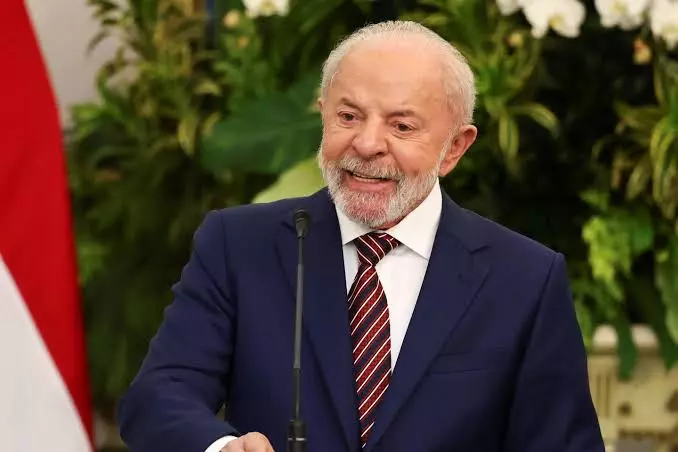
“The streets don’t have algorithms,” a Brazilian woman exclaimed on Instagram as news broke of Luiz Inácio Lula da Silva’s victory over Flávio Bolsonaro in Brazil’s October 2026 presidential run-off. “You can’t algorithmically control what happens when people start talking to each other, when they organise, when they show up,” she said, despite all the money and power.
There are key lessons here, beyond Brazil. In a hyper-connected world, people learn from each other, across cities, countries and continents.
First, Lula’s campaign showed how mass mobilisation — on the street and social media together — makes for a formidable combination even when pitted against big tech and big money.
After trailing Flávio Bolsonaro in the first round, he had three weeks to turn the contest around. A formidable right-wing digital operation and the algorithms governing online visibility posed a challenge. The response was to build a network of supporters. A WhatsApp channel called Lula’s Army, associated with congressman André Janones, grew from around 60,000 followers to nearly 11 million in three weeks. Supporters received specific tasks: circulate videos, share campaign material, push hashtags and recruit others.
Even Brazil’s women football players jumped into the battle of two fiercely opposing worldviews. “Ahead of the first round, São Paulo goalkeeper Carlinha used her post-match interview after winning the national title as a platform to support Lula, shouting into the cameras: “Never again Bolsonaro in power,” writes sports writer Andrea Lamperti.
Lula also used informal videos to reach voters directly. The network helped supporters find one another and coordinate their efforts, rather than hope algorithms would favour their message.
Second, Lula, a working-class hero and one of the world’s most consequential left-of-centre politicians, offered a master class in how to flip the script and respond to an insult. In a televised debate, Bolsonaro referred to Lula ‘Nine Fingers’, referring to an accident in a metalworking factory that cost Lula his little finger as a teenager. Lula’s supporters turned the taunt into weaponised solidarity, through “Somos Todos 9 Dedos” (We Are All Nine Fingers). What was intended to diminish one man became a way for others to identify with him.
Third, huge numbers of Brazil’s youth mobilised. Students took to the streets under banners such as “Never again Bolsonaro” and “No to the father, no to the son”, defending public education and democracy. For many, the presidential choice also concerned the legacy of Jair Bolsonaro’s 2019-22 government: education budget cuts and freezes, its handling of the pandemic, its rhetoric about minorities and the Amazon rainforest, and the aftermath of the 2022 coup attempt. Employment, public services, welfare protections and workers’ rights mattered alongside the broader political contest.
Serbia, where the student-led "Student List" has just unseated longtime leader Aleksandar Vučić, capturing an absolute majority in Parliament, offers similar lessons about what happens when social media and the street come together for a common purpose.
Student protests began after a concrete canopy collapsed at Novi Sad railway station in November 2024, killing 16 people. Students turned outrage into a movement demanding accountability. They used a raised red hand to signify the regime’s bloody hands, alongside memes, short videos and an Instagram game. They did not rely on just online mobilisation. Through Student u svakom selu — “A Student in Every Village” — they visited more than 400 towns and settlements, knocking on tens of thousands of doors. They cycled across the country, distributing copies of the constitution, taking their message to places where government-aligned television dominated and opposition campaigning was difficult.
Writing in the Journal of Democracy, Serbian activist Srdja Popovic draws a pointed lesson from the movement: “Virtual Is Nice. Boots on the Ground Are Essential.” Protest works when enthusiasm is coupled with strategy, mobilisation with organisation, and social media with boots on the ground.
One word that ties these different youth mobilisations and protests is accountability. You can’t copy-paste blueprints for protest or anything else. But the demand for accountability leaps out, even when political contexts diverge. In India too, it is the demand for accountability that is bringing together different youth groups as well as Opposition parties.
The Cockroach Janta Party (CJP), a satirical, youth-led movement, emerged in India in mid-2026 after Chief Justice Surya Kant’s remarks comparing certain unemployed or activist young people to “cockroaches”. Anger over exam paper leaks, graduate unemployment and failures in education has given the insult a wider political context. Summer protests at Jantar Mantar were followed by protests demanding electoral accountability and the sanctity of the vote.
The CJP turned its concerns into a wider argument over electoral accountability.
“No party is beyond accountability”, says Neha Bora, national president of the All-India Students’ Association (AISA) and another prominent figure in the youth-led protests linked to electoral roll revisions and democratic dissent. In India, the intense phase of demonstrations appears to have subsided, for now, but the underlying grievances remain.
One vital takeaway from these diverse youth mobilisations is the need for intergenerational solidarity. Serbia’s median age is around 44, while India’s is around 28. Yet the CJP protests, like the Serbian movement, have attracted people beyond the young. Brazil, too, where the median age is 35, saw young people mobilise in support of Lula, who turned 81 on October 27.
Across these countries, the significance of youth-led mobilisation lies partly in its capacity for building coalitions across generations: turning concerns that may first find expression among the young into a wider public cause.
Young people across the world are not protesting for the same things. But they are refusing to remain spectators to decisions that shape their lives. For them, employment, education, healthcare, political accountability and the possibility of living with dignity are not concerns to be postponed until some grand national project is complete. Some protests have turned violent. Others, as in India, have not. Whatever be the immediate grievance, young people are finding ways to turn their frustration into collective action.
As I write, Opposition parties, including Rahul Gandhi and the INDIA bloc, have announced a large “Save the Vote, Save the Country” march and mega-rally at Delhi’s Ramlila Maidan on November 1, explicitly appealing to youth and others over the electoral roll revision. Whether the recent protests open up or shrink democratic space remains to be seen.
What is palpably clear: Urban India has changed. Indian youth will not go back to how they were before. The protests may or may not lead to immediate policy overhauls. But even in the face of barricades and security, the foundational relationship between young citizens and the state is being fundamentally rewritten.

