Syed Ata Hasnain | Venezuela And The Return Of Strategic Enforcement

Energy considerations nonetheless form part of this equation, though in a measured way. Venezuela’s oil reserves do not offer dominance, but they do offer optionality
Venezuela is not a core concern for much of the international strategic community, nor does it naturally command attention among most readers in India. It is distant, both geographically and psychologically. Yet distance has rarely insulated regions from the logic of great-power politics. History shows that superpowers, both current or former, are acutely sensitive to alien ideologies taking root in their immediate neighbourhood — particularly when such regimes resist accommodation and become magnets for activity perceived as hostile to their interests. That logic has shaped Washington’s responses across the Western Hemisphere for decades, and it frames the Venezuelan situation.
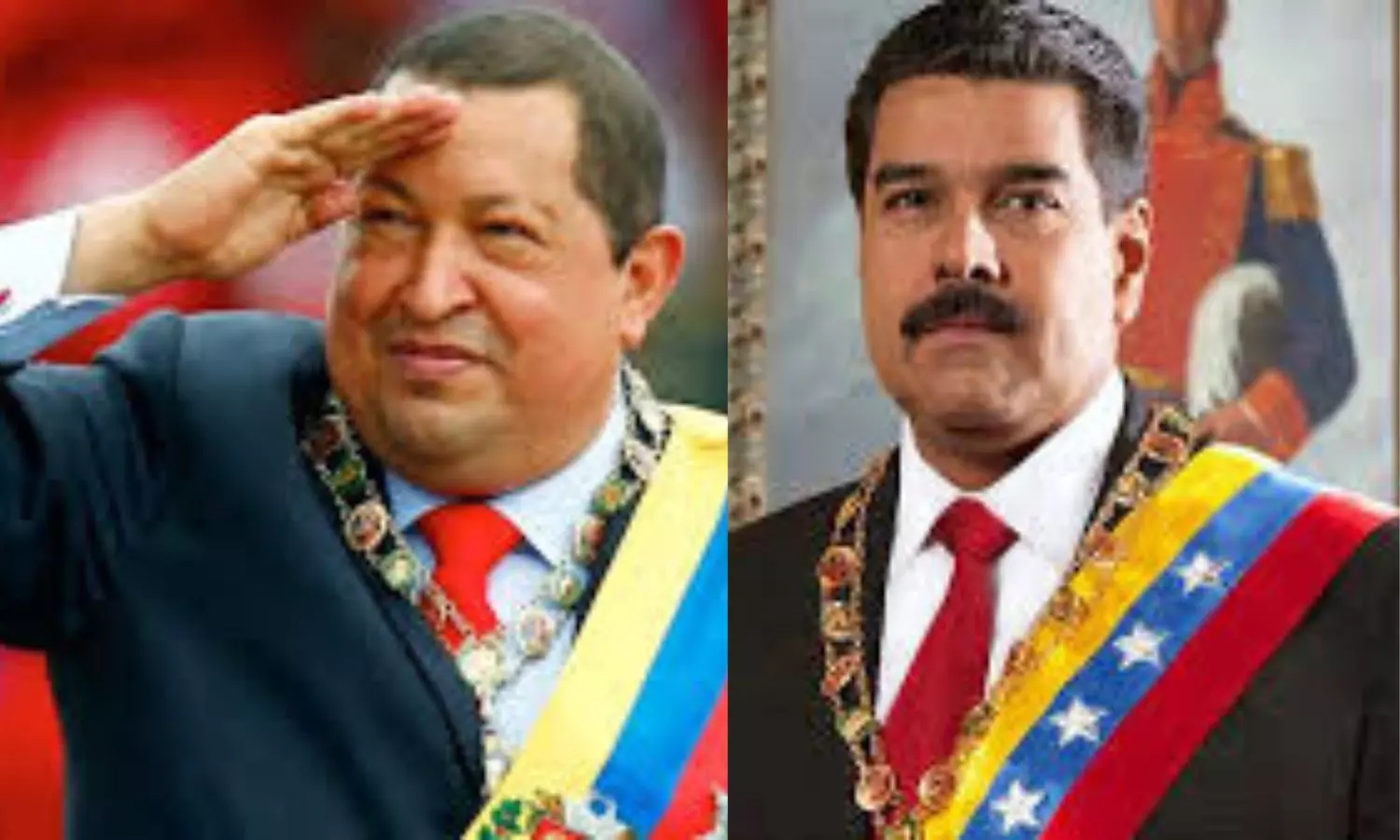
Neighbourhood sensitivities and strategic memory: Since the late 1990s, Venezuela’s political trajectory has increasingly unsettled the United States. Under Hugo Chávez, and later Nicolás Maduro, the country adopted a sharply leftist orientation and an overtly anti-American posture, nationalising foreign-linked assets and projecting ideological resistance to US influence. Over time, concerns extended beyond ideology. Weakening institutions, growing links to narcotics trafficking, and the erosion of internal controls added a security dimension to an already strained relationship.
More consequentially, Venezuela’s leadership sought survival through external alignment. Deepening engagement with Russia, China, Iran and Cuba transformed the country from an isolated adversary into a strategically useful platform for extra-regional powers. This externalisation of regime survival altered the strategic picture and increasingly led Washington to treat Venezuela as part of its broader “rogue state” framework.
Geography sharpened this perception. Venezuela sits uncomfortably close to the US mainland. For American policymakers, instability in the Caribbean basin carries implications for migration, organised crime and illicit arms flows. Beyond these immediate concerns lies a longer-standing sensitivity to the possibility of hostile military or intelligence infrastructure emerging in the near neighbourhood — an anxiety deeply embedded in US strategic culture.
From restraint to strategic enforcement: For many years, the US responded through restraint. Economic sanctions, diplomatic isolation and regional pressure were favoured. This approach rested on the assumption that the internal contradictions within Venezuela — economic mismanagement, institutional decay as well as social fragmentation — would limit its ability to generate sustained strategic consequences.
Recent developments suggest that this calculation has shifted. Differences in approach between successive US administrations reflected varying assessments of how long such restraint could be sustained. What is now emerging resembles a move towards strategic enforcement; selective, calibrated action designed to reassert limits rather than engineer wholesale transformation. Reports point to a high degree of operational sophistication, including intelligence penetration and disruption of command-and-control structures. Leadership continuity indicates disruption rather than collapse, yet the message conveyed is unmistakable. Washington is signalling that deep and hostile external alignments by states in its strategic neighbourhood are no longer acceptable. It remains unclear whether, or to what extent, the US intends to leverage Venezuela’s oil wealth to its advantage.
Energy considerations nonetheless form part of this equation, though in a measured way. Venezuela’s oil reserves do not offer dominance, but they do offer optionality. Greater predictability in Western Hemisphere energy flows would marginally reduce US exposure to disruption elsewhere, particularly in the Persian Gulf. Such flexibility does not determine strategy, but it does shape risk. It lowers the economic threshold at which pressure in other theatres becomes politically manageable.
Rules, precedent and power: The most debated thing about the Venezuela operation will inevitably be the rules-based international order. The concept remains central to Western diplomacy, yet its application has always been uneven. Where core interests of major powers are involved, rules tend to bend. The American actions in Afghanistan, Iraq and sustained pressure on Iran sit uneasily alongside universalist interpretations of international norms. Venezuela now appears to fall within this category of strategic exception.
This complicates Washington’s moral posture when opposing Russian actions in Ukraine or criticising Chinese assertiveness in the South China Sea, and adds further complexity to its position on Taiwan. Moscow’s objections to Nato’s influence in its near abroad rest on arguments structurally similar to those advanced by the US in the Western Hemisphere. The comparison doesn’t legitimise Russian aggression, but it exposes the conditional nature of rule enforcement. International coexistence is increasingly shaped by power, not by neutral application of rules.
Risks beyond Latin America: The implications of the military action in Venezuela extend beyond the region. For Russia, the episode adds pressure to an already constrained global position, further narrowing the space to use energy and distraction as strategic tools. For China, it reinforces the message that American restraint is situational.
Yet strategic enforcement carries risks. Should Venezuela slide into prolonged instability, resistance or fragmented authority, the outcome would be counterproductive. Entanglement would drain political capital, stretch resources and constrain US capacity to manage concurrent challenges in the Middle East and the Indo-Pacific. A drawn-out Venezuelan crisis would weaken, not strengthen, American leverage elsewhere.
For this reason, Venezuela represents more than a regional episode. It is a test case. It will indicate whether economic pressure, political engineering and limited force can still reshape outcomes in strategically sensitive states, or whether such efforts now generate diminishing returns. The majority belief in academic circles favours the latter.
India’s perspective: For India, Venezuela presents no immediate strategic imperative, but it does offer lessons. Our engagement with Venezuela has historically been pragmatic and energy-focused, devoid of ideological alignment. As Venezuela’s crisis deepened and sanctions intensified, Indian involvement declined quietly, without unnecessary noise.
India’s interests lie in stable energy markets and predictable state behaviour. It remains sceptical of selective enforcement while recognising the realities of power politics. Cautious neutrality, emphasis on humanitarian considerations, and avoidance of bloc entanglement remain the most consistent course.
Venezuela’s significance lies less in the immediacy of events than in what they reveal about how power is exercised today. Years of restraint created ambiguity. That ambiguity is now narrowing. Strategic enforcement has returned as a tool of statecraft. Whether this approach restores stability or deepens friction will depend on execution and endurance. Sustained engagement will reshape expectations. The US intervention in Venezuela is a reminder that rules endure only when limits are understood — and when major powers are willing to enforce them fairly.
