Syed Ata Hasnain | Pakistan’s Confidence Trap & India’s Strategic Caution

At the helm of the Pakistan military today stands a chief with an ambitious streak, emblematic of the institution’s instinct to dominate the nation’s destiny
South Asia stands once again at a moment of unease. Pakistan, long accustomed to surviving on cycles of external patronage, has received a fresh diplomatic fillip. Washington has chosen to re-engage Islamabad to keep strategic balances in play. Riyadh has extended more assured financial and political support. Beijing continues to provide its traditional depth, tying Pakistan closely into its wider Indo-Pacific game plan. To this trio can be added Turkey, which backs Pakistan to the hilt politically and militarily, and even Iran, which despite its own rivalries with Gulf powers, provides selective transactional support. For Pakistan’s Army, which rules by proxy while allowing elected governments to maintain the optics, this moment of multiple patrons is intoxicating. It also fuels the idea, often floated in Pakistan’s strategic discourse, that an Islamic Nato is within reach -- a military-diplomatic umbrella of Muslim solidarity that could tilt the subcontinental balance.
At the helm of the Pakistan military today stands a chief with an ambitious streak, emblematic of the institution’s instinct to dominate the nation’s destiny. Pakistan’s political class remains marginalised, its economy propped up by external guarantees, but the Army’s confidence is brimming. This is not new in Pakistan’s history. What makes the present moment significant is the blend of self-belief, foreign reinforcement, and unrest within Pakistan-occupied Kashmir.
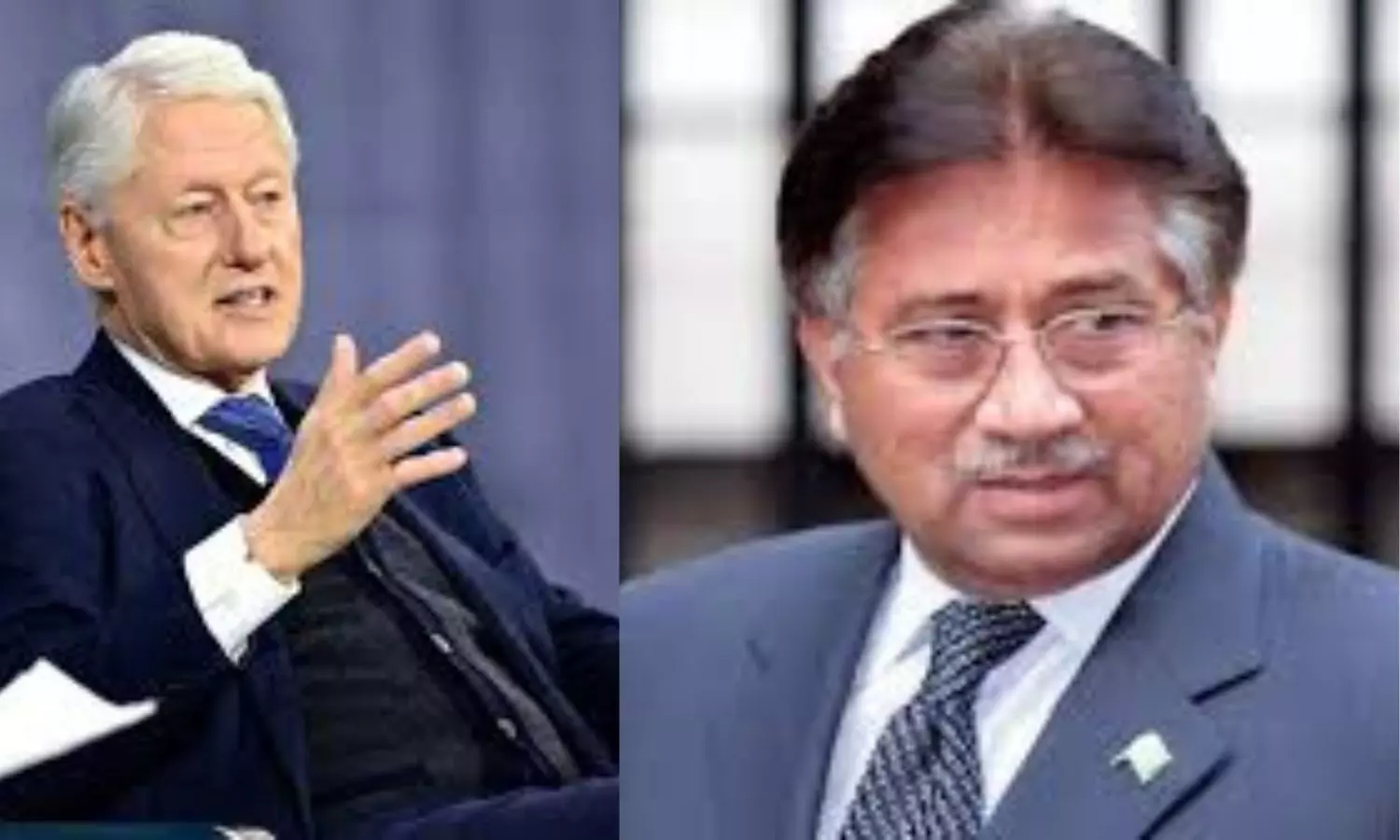
For decades, Pakistan has nurtured a narrative that it has never lost a war against India. This is not mere rhetoric but doctrine, embedded in the psyche of its military establishment. The 1971 debacle that saw the birth of Bangladesh is explained away as a “no contest”, predetermined by geography and India’s exploitation of constraints. The 1965 conflict is remembered every year on September 6, Defence Day, which Pakistan celebrates as its great military triumph. It is a day etched into the psyche of its officer corps, reinforcing their conviction that standing firm against India equals victory. Even the Kargil conflict of 1999, which ended in humiliation, is portrayed in Pakistani narratives as a moment of martial glory. The myth, often repeated, is that US President Bill Clinton forced Pakistan to vacate under American pressure; otherwise, as Gen. Pervez Musharraf had once claimed, India was “by the throat”. These myths are not harmless. They are the scaffolding of Pakistan’s military culture, producing generations of officers convinced of their country’s martial invincibility. Endurance, rather than outcome, is equated with victory, and survival is projected as success.
The comfort of renewed external patronage now emboldens this worldview. The United States, wary of India drifting too far into rival alignments, finds tactical use in balancing New Delhi with Islamabad. The Donald Trump doctrine perceives intimidation of India as a strategic advantage. Saudi Arabia, long a benefactor, still values Pakistan as a dependable military auxiliary, especially as Gulf rivalries sharpen. Turkey provides political and military reinforcement, offering Pakistan ideological solidarity and defence cooperation. Iran, though a complex neighbour, grants occasional transactional support that Pakistan interprets as wider Islamic solidarity. China remains the ultimate guarantor, embedding Pakistan into its regional strategy. Rarely have all these external supports aligned at once. For Rawalpindi, the effect is heady.
Simultaneously, Occupied Kashmir is seething. Protests over neglect, exploitation, and repression by intelligence agencies have grown more intense than in earlier years. For Pakistan’s Army, which claims legitimacy as the custodian of Kashmir, instability there is deeply unsettling. History shows that regimes under domestic strain often divert pressure outward. A crackdown is possible, but the temptation to externalize unrest through escalation with India is equally real.
For India, the calculus must be one of vigilance. Recent operations against the nine terrorist sites dented the myth of impunity that Rawalpindi has cultivated for decades. Retaliation, delayed though it may be, remains part of Pakistan’s playbook. Whether through terror attacks, cyber disruption of Indian infrastructure, or other grey-zone tactics, the risk of asymmetric escalation is high. A conventional clash cannot be ruled out entirely, but it is unlikely to be Pakistan’s first choice.
India is stronger than at any point since Independence -- economically more robust, militarily more sophisticated, although diplomatically we need to strive more. Yet power alone is not enough. Overreaction would hand Pakistan the parity narrative it craves. Underreaction would embolden further adventurism. The balance requires both strategic patience and credible deterrence.
Pakistan’s Army is steeped in the psychology of revenge. Setbacks are never accepted as final; they are absorbed, nurtured as grievances, and eventually avenged in some form. This culture ensures that Rawalpindi’s humiliation after Indian strikes is not forgotten. Equally important is the Army’s reliance on hostility with India for domestic legitimacy. In a political order where civilian governments struggle to deliver jobs or growth, the Army sustains its dominance by presenting India as an existential threat. Confrontation, even inconclusive, reinforces its indispensability.
Viewed historically, the pattern is unmistakable. Since 1947, Pakistan has oscillated between foreign patronage and domestic fragility. American support during the Cold War, Chinese backing since the 1960s, Saudi financial flows since the oil boom -- each cycle emboldened Rawalpindi to pursue revisionist policies. Each episode of overreach eventually collapsed, but each time new patrons revived Pakistani confidence. Today, with Washington, Riyadh, Beijing, Ankara, and even Tehran aligned to varying degrees, Pakistan feels unusually shielded, possibly reckless. Yet confidence built on external guarantees is fragile, for patronage is driven by the shifting interests of others.
India’s task is to manage this phase with foresight. Intelligence must anticipate Pakistan’s moves in every domain, from kinetic to cyber. Deterrence must be credible but calibrated. The international narrative must be shaped to expose Pakistan’s myth-making and prevent its victimhood story from taking hold. Domestic political consensus is equally vital, for fissures at home provide avenues for exploitation abroad.
The Pakistan of today is not fundamentally different from its earlier avatars. What is new is the convergence of foreign support, amplified by the fantasy of an Islamic Nato. This makes Rawalpindi bolder. Yet history teaches that such confidence is temporary. Strategic imperatives in Washington, Riyadh, Ankara, Beijing or Tehran will shift again. When they do, Pakistan’s overreach will leave it vulnerable.
For India, the challenge is to avoid being dragged into old cycles of reactive hostility. Strategic patience, backed by credible deterrence, is the wiser path. Pakistan’s myths of martial triumph feed real policies with real consequences. South Asia remains a theatre where pride, myth and geopolitics intersect dangerously. For Pakistan, the moment feels triumphant. For India, the enduring watchword must remain caution.
The writer, a retired lieutenant-general, is a former GOC of the Srinagar-based 15 (“Chinar”) Corps
