Sunanda K. Datta-Ray | Is 2026 the New 1848 for Gen Z and Gen X?

From India to France and Albania, youth-led protests challenge political establishments and demand accountability.
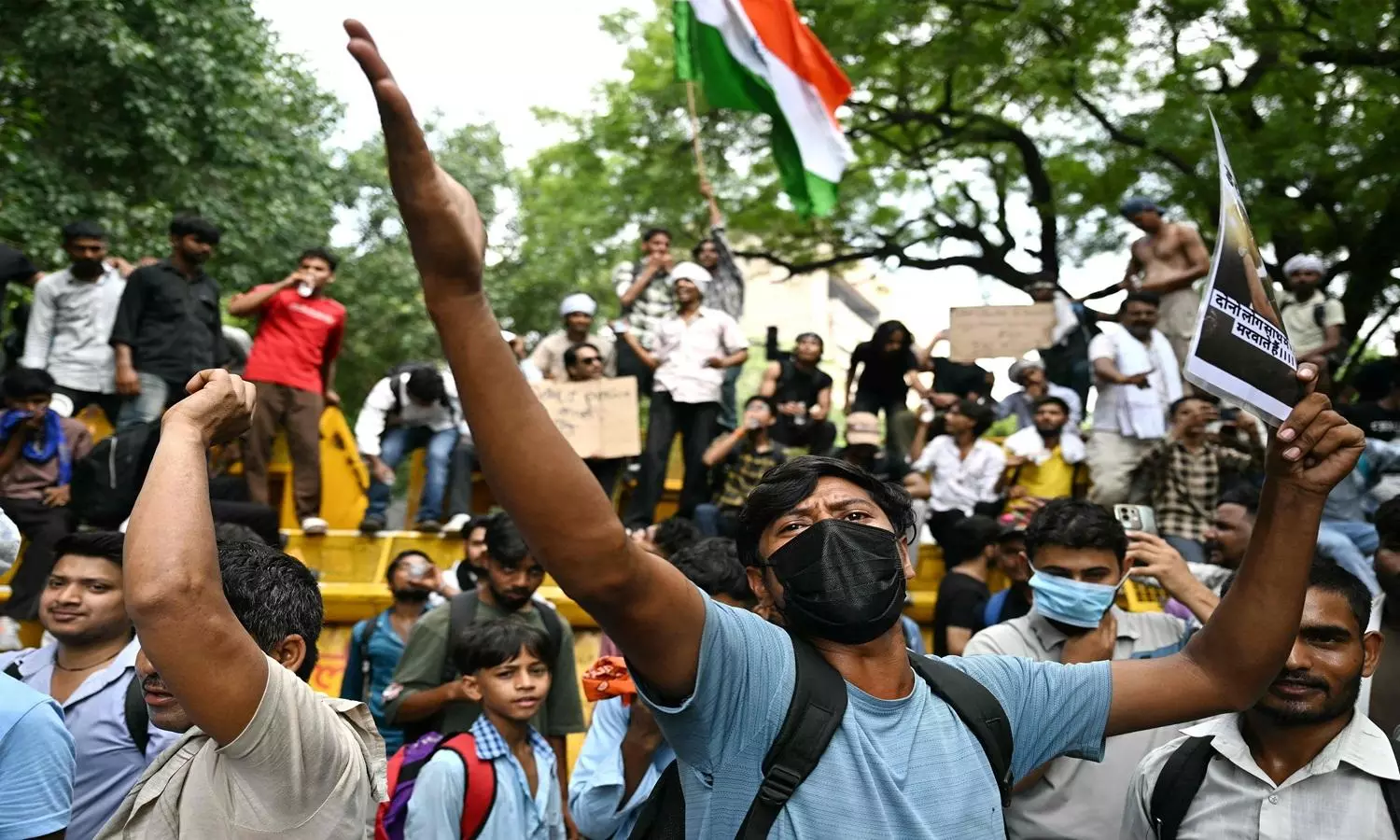
India isn’t the only country to be in ferment. As an American academic pointed out in a BBC television programme the other day, the flames of revolt — if not revolution — have been raging through the institutions of several other nations, including Nepal, France and Albania. How the future will shape is still anybody’s guess.
India has the world’s largest Generation Z population, with an estimated 406 to 407 million people born between 1997 and 2012. With nearly 300 protesters arrested in France alone by last weekend, this might be not 2026 but 1848, Europe’s year of revolutions known as the springtime of the peoples. Those spurts of unrest spanned almost two years, between January 1848 and October 1849, and remain the most widespread revolutionary wave in European history.
Over 50 countries were affected, but without any significant coordination or cooperation among their respective revolutionary organisations. Some of the major political contributing factors were widespread dissatisfaction with the political leadership of the day, demands for more participation in government and democracy, and for freedom of the media, meaning in those pre-wireless and pre-Internet days, the printed press.
The demand of the working class for economic rights, coupled with the demand for women to enjoy the franchise, presaged the rise of nationalism. Other economic factors, such as the European potato failure, triggered mass starvation, migration and civil unrest, leading to law and order problems, and mounting challenges to lingering feudalism in governance which, in turn, indicated the march of political democracy.
The uprisings were led by temporary coalitions of workers and reformers, including figures from the middle and upper classes (the bourgeoisie). However, these coalitions did not hold together for long. Many of the revolutions were quickly suppressed, as tens of thousands of people were killed, and even more were forced into exile. Despite this, significant lasting reforms included the abolition of serfdom in Austria and Hungary, the end of absolute monarchy in Denmark and the introduction of representative democracy in the Netherlands. The revolutions were most prominent in France, Italy, the Austrian Empire, and the states of the German Confederation that would make up the German Empire. The wave of uprisings ended in October 1849 as conservative governments throughout Europe realised that warning bells could no longer be silenced.
The relatively new factor in the protests is of Generation X, often shortened to Gen X. It is the demographic cohort following the Baby Boomers and preceding Millennials. In India this means individuals born roughly between 1965 and 1980 and currently aged 45 to 60 who represent approximately 16.5% of the population (around 244 million people) as of 2026. Rightly or wrongly, researchers and the popular media often use the mid-1960s as their starting birth years and the late 1970s to early 1980s as their ending birth years, with the generation defined as people born from 1965 to 1980.
If Delhi’s Jantar Mantar, the collection of 18th-century astronomical observatories built by the Rajput king, Maharaja Sawai Jai Singh II of Jaipur, is the physical symbol of Gen Z’s revolt in India, the Belgium-born economist, social scientist and activist, the 67-year-old Jean Drèze (born January 22, 1959) is still its most powerful human articulation.
Dreze became an Indian citizen in 2002 and went on to shape India’s social welfare policies, helping to draft MGNREGA (the National Rural Employment Guarantee Act that India’s Parliament passed in 2005 and which came into effect on February 2, 2006, as a social and legal measure that guarantees the ‘right to work’: renamed Mahatma Gandhi National Rural Employment Guarantee Act in 2009, it guarantees at least 100 days of wage employment in each financial year to every household that is willing to do unskilled manual labour.
Dreze also played a key role in campaigns for the Right to Information Act and the National Food Security Act. Nearly a decade later, he was at the Jantar Mantar, protesting alleged electoral poll irregularities, the protest that captured the world’s attention and catapulted the Cockroach Janta Party and the three names usually associated with it — Abhijeet Dipke, Saurav Das and Ashutosh Ranka — into national and even international prominence.
In theory at least, there is nothing that Gen X, of whom there were 65.2 million in the United States alone in 2019, cannot achieve. While the 31-year-old Dipke (born September 29, 1995) is probably India’s most successful political communication strategist and digital campaigner, the real clue to his future aims might lie in the viral satirical political movement (the CJP that he founded) and which is now the main challenger that Prime Minister Narendra Modi and his right-wing Hindu-oriented Bharatiya Janata Party government face.
It was a signal achievement for Dipke when weeks of countrywide protests and disobedience campaigns forced a key member of Mr Modi’s cabinet, India’s education minister Dharmendra Pradhan, to resign in response to youth-led protests over exam paper leaks. The government’s capitulation followed an upsurge of nationwide anger over student demands for accountability, jobs, and education reforms.
India is home to the world’s largest Gen-Z population. More than 500 million Indians, about 35 per cent of the country, are aged 10-29, the band that maps onto the generation born between 1997 and 2012, according to World Bank projections based on the United Nations' 2024 population estimates. That single cohort is nearly as large as the combined populations of the United States, Britain, and Japan. Given these numbers, it is safe to assume that whatever happens in India is bound to have some spillover effect in smaller and not necessarily well-disposed neighbouring countries.
There is no central command or unified movement. The rebels in each country seek to gain their ends through empty lecture halls, burning buildings and demands for change: Albanian students are spearheading a protest movement that has become the biggest challenge to Prime Minister Edi Rama, leader of Albania’s Socialist Party since 2005 and Prime Minister since 2013. Albanians have been protesting since late May as part of a broader anti-government movement called the “Flamingo Revolution”. The protests began in response to a multimillion-euro tourism project in a protected coastal area on the Adriatic linked to the high-profile Jared Kushner, Donald Trump’s son-in-law.
Albania has a special connection with India. It was where Anjezë Gonxhe Bojaxhiu better known as Mother Teresa or Saint Mother Teresa of Calcutta, was born. She founded the Congregation of the Missionaries of Charity and worked for years among the destitute, orphans, aged, alcoholics and abandoned children.
Now it remains to be seen if the already dangerously volatile French also catch the bug. As in Albania, France also complains of corruption. It says that education is poorly serviced under Emmanuel Macron, that it needs funding and revamping with modern aids and equipment. Like India and Albania, France, too, seeks a drastic overhaul. Whoever touches a spark to that inflammable pyre might plunge the world into far worse turmoil than anything in the past.
