Suman Sahai | Women Farmers Are So Critical: It’s Time To Empower Them Worldwide

Women’s property rights are either non-existent or restricted in most places. Women farmers usually don’t own farming land. When land is in their name, it was usually bought by men to claim welfare schemes meant for women
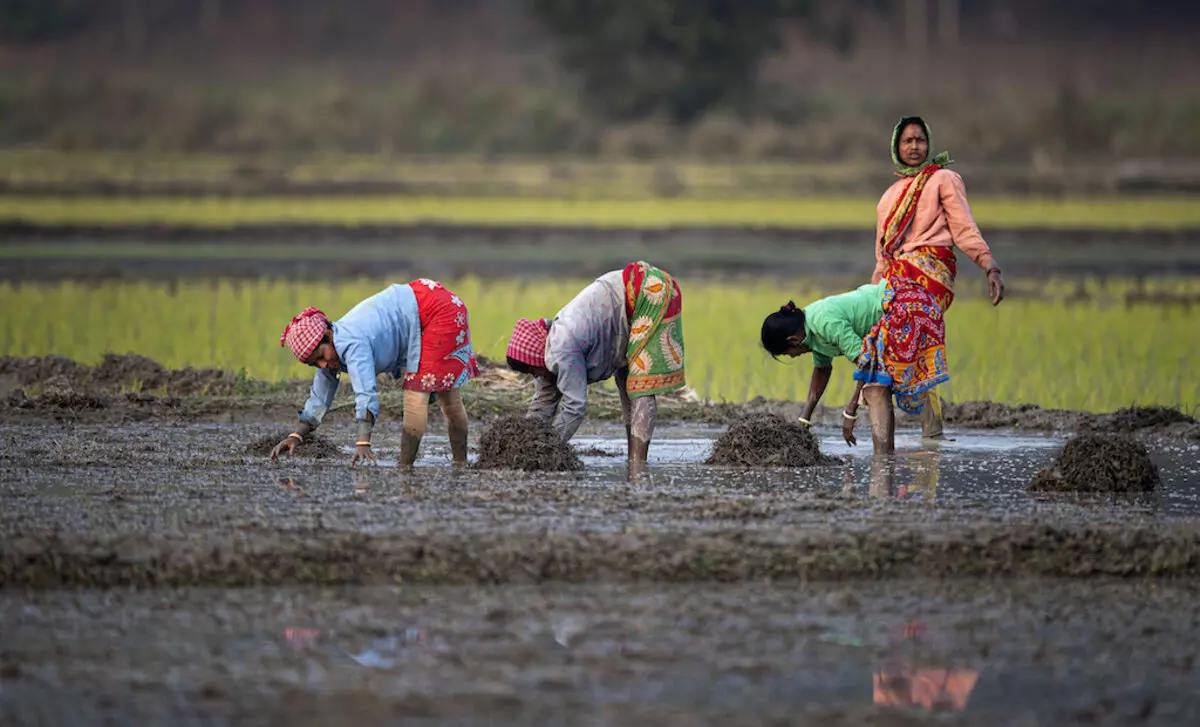
A lot of research has been done to understand the role of women in agriculture. It’s now fairly well established that the empowerment of rural women is the key to agricultural development, adequate food production and efforts to end hunger and poverty. However, despite this, women remain virtually ignored as key actors in agriculture and food production. Though women constitute nearly half (over 43%) the global agriculture labour force, they face major cultural and socio-economic constraints which prevent them from realising their full potential. There are so many handicaps that women have to deal with.
Women farmers work hard in the fields to grow the food that feeds the world but their contribution isn’t acknowledged. They are the “invisible workforce” which fails to get recognition from the government, media and industry. Instead of being seen as farmers, they are relegated to a lower category, as farm helpers. This prevents them from accessing opportunities and training in government schemes meant for “farmers”. While they do agricultural work equal to that of men, they are paid half the wages.
Recognising this as injustice, the Gene Campaign set up groups of women working in the field in Mahila Kisan Samitis. Establishing their identity as farmers gave them confidence to claim a place in government programmes. The samitis were the recipients of all training programmes conducted by the Gene Campaign on agronomic practices, improved millet cultivation, value addition, entrepreneurship and financial literacy.
Women’s property rights are either non-existent or restricted in most places. Women farmers usually don’t own farming land. When land is in their name, it was usually bought by men to claim welfare schemes meant for women. Such land is used and administered by the men of the family and the women know they are owners only on paper and have no real rights. The women often don’t have any papers in their name. This lack of official recognition denies them access to government schemes for farmers, institutional credit, farming inputs like fertilisers, farm equipment and market linkages.
Women farmers often have mobility or cultural constraints that restrict their access to markets, technology, seeds, fertilisers, credit, etc. They can’t access government mandis, the market where farmers gather to sell their produce, get information on government schemes and programmes, exchange information with other farmers and make connections with government officials.
Denying them all this due to cultural constraints and biases puts a limit and prevents them from optimising their farm productivity.
This is tragic on all counts. Evidence shows that if women farmers in developing countries had the same access to productive resources as men, they could increase yields on their farms by 20-30 per cent and raise the total agricultural output by 2.5-4 per cent. This would reduce the number of hungry people in the world by around 12-17 per cent.
The thrust to “modernise” agriculture by mechanisation has implications for women farmers, who constitute a large part of the agricultural workforce. Who really benefits from this focus on mechanisation? Both men and women farmers? Not really. Farm machinery is almost always made for men, keeping in mind their physique and muscular strength. This makes it unsafe and difficult for use by women, who are built much smaller. In addition, the new machines do new things like transplanting, which often displaces women from this labour-intensive work, which gave them incomes. While men take advantage of the mechanisation boom, women are left out of capacity building and training programmes, preventing them from using such machines in future too.
Half the pay and double the burden: Women farmers actually work harder than men. Apart from the demanding manual work in the field, they have multiple responsibilities in and around the home. Fetching water, firewood, fodder, often from long distances, managing household chores, childcare, etc. There is no remuneration for all this, and their agricultural work is either unpaid or underpaid. The additional burden of domestic duties with no support from the family takes a toll on their health. In developing countries across Africa, Asia and the Pacific region, women typically work 12-13 hours more per week than men.
It's a truism, often demonstrated, that when more income is put into the hands of women, the whole family benefits – there is improved household nutrition, better health and education.
Excluded from decision-making: Scientists, policymakers and others in the government usually tend to think of farmers as unskilled and lacking in knowledge, who have to be taught farming. This bias is several times worse in the case of women farmers. The fact is that both men and women farmers are repositories of a vast amount of knowledge about biodiversity, seeds, farming practices, water management, etc. Women have a different kind of knowledge base than men. Ignoring this knowledge in decision-making is foolish and self-destructive.
Women hold up half the sky... Empower them: Women farmers can show remarkable outcomes if they are given a level playing field. Giving them this level playing field does not require giant financial outlays, but it does require a giant change in societal bias and male chauvinism. It’s not so hard to bring change. A few doable steps:
*Start community awareness programmes to break patriarchal norms and enable women’s progress.
*Ensure proper access to healthcare and employment.
*Provide opportunities and encouragement for academic and vocational education.
*Introduce pro-women policies; facilitate land ownership and access to agricultural resources.
*Pay them equal wages.
*There is an urgent need to invest in mechanised farm machinery with the woman in mind. This should be appropriate to her form, reduce drudgery and be comfortable to use.
*Involve them in decision-making at both farm and policy level.
*Reduce and redistribute the household burden (this one may need persuasive change).
Dr Suman Sahai is a scientist trained in genetics and the founder-chairperson of the Gene Campaign, a research and policy organisation working on food and livelihoods