Shikha Mukerjee | In A Twist, Establishment On Run In SC, Parliament

The Opposition’s credibility to speak on behalf of harassed voters was upheld by the Supreme Court when it gave Mamata Banerjee the opportunity to speak on their behalf
The first week of February was exceptional for two reasons; first, the Opposition to the ruling BJP dominated the political scene, rolling out a narrative that ran counter to the hackneyed story of ghuspaithiyas, infiltrators and skullduggery by the Congress. Second, the Supreme Court and the Lok Sabha became spaces for the Opposition to hold the government to account.
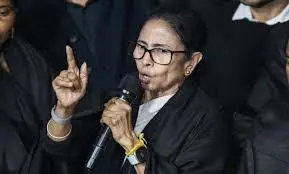
In an extraordinary first, West Bengal’s chief minister Mamata Banerjee appeared in the Supreme Court to argue her case before a three-judge bench led by Chief Justice Surya Kant on the Special Intensive Revision of electoral rolls underway under orders from the Election Commission. She asked for five minutes to present the points as a representative of 1.61 crore voters who had been listed for “hearings” because of “logical discrepancies” and 31.68 lakh voters who had been categorised as “unmapped”, because their names were not on the 2002 electoral rolls, when the last such revision was done. The Supreme Court gave her 15 minutes.
In those minutes, Mamata Banerjee became the representative of not just the harassed, frustrated, fearful and angry voters of West Bengal who have lived on tenterhooks ever since the SIR process began on October 27, when the Election Commission announced it, but of all voters undergoing the process in eight other states and three Union territories. In those minutes, the Election Commission was challenged to demonstrate that it was indeed an impartial independent institution responsible for holding free and fair elections, which is the bedrock of India’s democracy based on universal adult franchise.
The Opposition’s credibility to speak on behalf of harassed voters was upheld by the Supreme Court when it gave Mamata Banerjee the opportunity to speak on their behalf. In doing so, there were unintentional consequences of the political kind. It upended the ruling BJP’s claim of speaking on behalf of India’s “104 crore people”, which it habitually does in Parliament and on the campaign trail. It ensured that at least on one occasion and in one place, the Opposition got to tell its side of the story, and more importantly, without interruptions, hooting, barracking, distraction and obstruction.
As has become normal in the past 11 years, the Leader of the Opposition, Rahul Gandhi, was interrupted, obstructed, hooted and barracked by the BJP, Union ministers Amit Shah and Rajnath Singh, as well as Kiren Rijiju, and the man for all seasons, Nishikant Dubey. He was given time to formally reply to the President’s address in the Lok Sabha, at the start of the Budget Session. It is unprecedented that the LoP was not allowed to finish his speech, after three days of interruptions and adjournments, because the ruling party was adamant that it would not allow him to refer to the printed, but unpublished, memoirs of former Army Chief Gen. Manoj Mukund Naravane, Four Stars of Destiny.
The abnormal occurred when after heckling the Opposition, the BJP absconded. The pretext offered was that Lok Sabha Speaker Om Birla had “credible information” that Prime Minister Narendra Modi would have to face the Opposition who had, allegedly, planned to surround his seat. It is unprecedented that the Leader of the House runs away from the responsibility of addressing the House; Narendra Modi did. He replied to the President’s address in the Rajya Sabha.
When the Leader of the House fails to fulfil his role of addressing the House, namely the Lok Sabha, there is a fundamental problem in that failure. As the Leader of the House, the Prime Minister represents not just his party or the ruling coalition, but the collective of representatives of the people in the House. It will not be stretching the point to say that on this occasion, the Prime Minister chose not to fulfil his obligations to the Lok Sabha and therefore to the people, all the 104 crores whom he repeatedly claims to represent.
Whereas Ms Banerjee’s appearance in the Supreme Court was an extension of her formidable capacity to take things down to the people in the streets through her walkathons and dharnas, Mr Modi’s decision to scuttle off to the Rajya Sabha and duck facing the Lok Sabha reflects the actions of a leader who prefers to keep his person aloof and beyond the reach of the people, or rather their representatives, the Opposition MPs. The contrast is staggering.
For years, Mr Modi was projected as the man of the people; an OBC leader of modest origins and education, who has worked his way to the top. For years, Ms Banerjee has been projected as a street fighter, someone who inserts herself into a raging mob and is unafraid of being physically injured and a mass leader. Whereas Mr Modi is the man who walks behind the barricades, Ms Banerjee is the leader who walks through the barricades.
For West Bengal, Mamata Banerjee’s appearance in the Supreme Court is the equivalent of her taking the battle over SIR to the capital’s streets. She is being seen as the leader who will not be stopped from defending defenceless voters. In contrast, Mr Modi is a leader who is afraid of speaking to his House, even though he is the Leader of the House.
It is entirely likely that Mr Modi will bounce back from his self-inflicted embarrassment, since his popularity as the great helmsman of the BJP and a strongman Prime Minister remains undiminished and as yet unchallenged. But the disservice he has done to the position of Leader of the House will go down in the records as a precedent. Should he have made this one misadventure as part of his legacy as a three-term Prime Minister?
In future, chief ministers with law degrees, as competent or otherwise, as Mamata Banerjee have been set an example; if they believe in the fight for justice, then appearing before the Supreme Court is an option, even if it is a last resort. When images, events, actions go viral in minutes, Ms Banerjee heading for chamber one in the Supreme Court gets more traction than the Prime Minister doing his thing in the Rajya Sabha by complaining that the Congress, despite being a losers’ party, wants to dig his grave. The difference between two very popular leaders, with cult followers, is stark; Ms Banerjee leads the fight on behalf of the people; Mr Modi’s manoeuvres are to prop himself up as a victim of elite politics of the dynastic kind by projecting himself as a person of ordinary origins to gain sympathy, even though he has claimed that he was begotten through divine intervention.
Shikha Mukerjee is a senior journalist
