Shikha Mukerjee | Disquiet in West Bengal is the BJP’s real challenge

Suvendu Adhikari takes charge amid tension, polarisation and expectations of change.
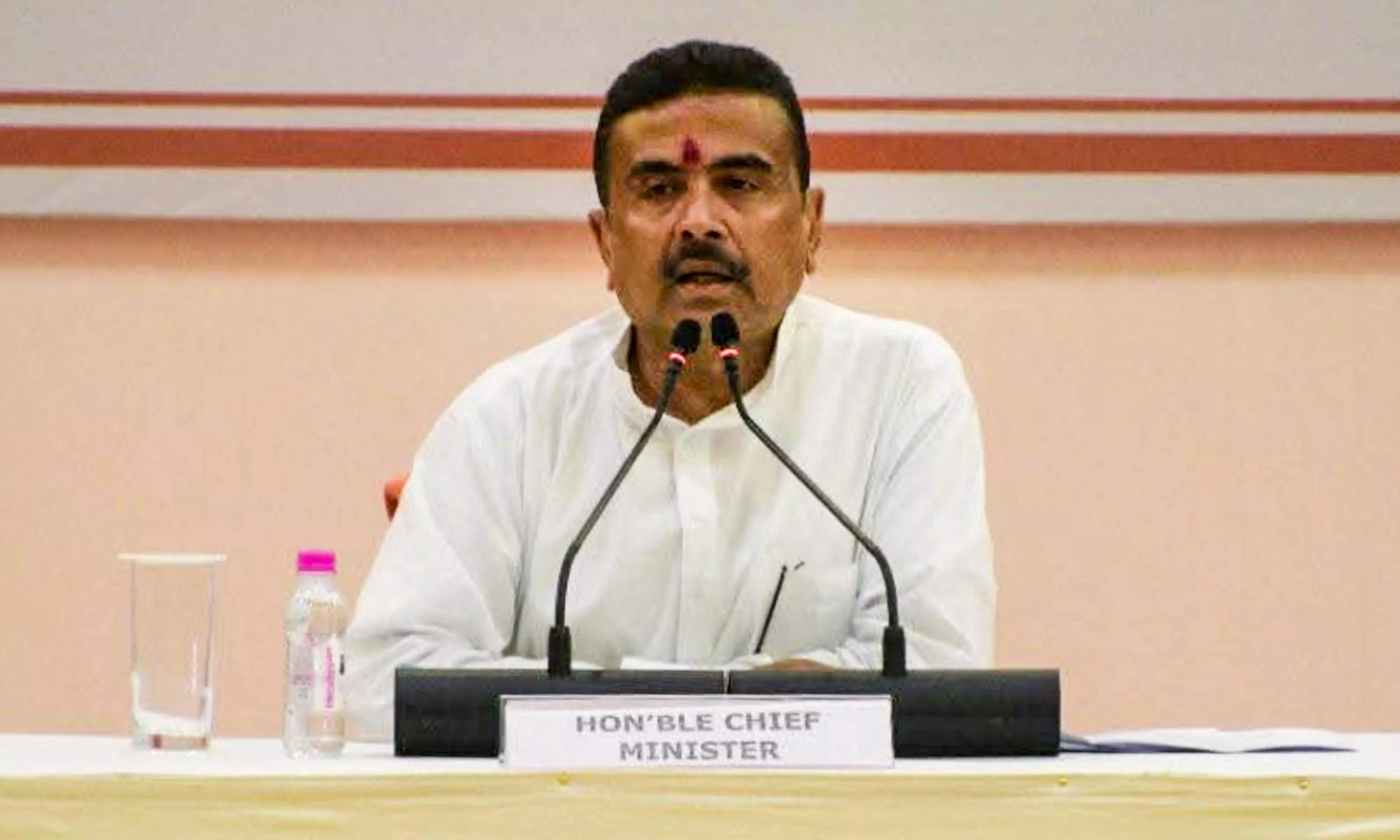
One day before the new BJP government headed by Suvendu Adhikari as chief minister took the oath of office at the historic Brigade Parade Grounds in the heart of Kolkata, the streets of the city saw yet another rally. This time, the call for peace and religious harmony was given by a coalition of the Left parties, led by the CPI(M) and its allies who had held power in the state for 34 years before Mamata Banerjee ousted them.
It was a quiet caution to the BJP, signalling that its victory and its power would be challenged by a counter-mobilisation of the people. There is disquiet and violence prevailing across West Bengal, reflected in the minor incidents of intimidation and violence that have erupted across the state.
These incidents cancel the relative peace that was maintained by deploying almost 2.5 lakh personnel from the Central security forces, armed with assault weapons and backed up by armoured vehicles, through the disputed election that excluded 34 lakh voters by interrogating their eligibility and denying them the right to vote.
To govern, the new government headed by Mr Adhikari has to figure out how it will tackle the ripples of tension and the outbreaks of violence to make good on the BJP’s promise of a new “Sonar Bangla” — gold hued with possibilities. Regime change has always been turbulent in the state, beginning with the transition in 1977 when the Congress was ejected and the Left Front coalition, led by Jyoti Basu, took power. The violence, destruction of political party offices and forcible occupation of the premises, pitched battles between the Trinamul Congress and the CPI(M) occurred after Mamata Banerjee’s victory in 2011. The pattern is being repeated, for now, on a small scale.
As the new government takes over, the frictions will increase and there is a prevailing dread that the currently dormant TMC will erupt to defend its support base and challenge the Suvendu Adhikari administration, to demonstrate that it is not powerless. Violence is a language that delivers a message of that the power to intimidate, injure, damage and destroy has not entirely dissipated after a lost election.
The difference between then and now is ideological; confrontations in the past were political. This time, the political polarisation is underpinned by communalism, the tension and the fear is of imminent violence against the Muslim minority by the triumphant Hindu majority. The BJP government’s priorities have been spelt out in its manifesto, which unlike other party manifestos, cannot be discounted, of “zero tolerance” for ghuspaithiyas, who must be “deported”, by “infiltrator-proofing” the border with Bangladesh. In other words, the population that will be intensively combed for illegal infiltrators, “anti-nationals” and national security risks, will be the 28 per cent Muslims in West Bengal, that the new chief minister has declared are not his people; they are excluded from his oath to govern without fear or favour.
On counting day, May 4, Mr Adhikari announced that he had won without Muslim votes. A day before he was sworn in, the Union Home Minister, Amit Shah, set a target of winning with the support of 60 per cent of voters in the next election. The subtext of the target and Mr Adhikari’s announcement is simple; a new Hindu consolidation must be initiated with the regime change.
Since the 1937 provincial elections under colonial rule, Muslims have always been in government, sharing power and representing the community. The May 9 swearing-in changed that history. The new government was of Hindu people, voted in as the majority by the Hindu people and would presumably work by prioritising the Hindu people.
The Adhikari government will be the first “double-engine sarkar” in West Bengal after a gap of 50 years. There are great expectations from this new line-up of strength, especially amongst the growing numbers of the emerging middle class that hover the brink of being poor and neo-bhadralok. The BJP has campaigned on the efficiency of the model of a state aligned politically with the rich and powerful Centre that can channelise development into West Bengal that has yearned to regain its lost glory as the rival economic powerhouse to Mumbai, by promising investment and job creation.
For now, as chief minister, Mr Adhikari does not have to worry much about the details of policy and administration. The BJP has a template that it will unroll, as it has done in other states. And Mr Adhikari has a role model in how to sustain the Hindu versus Muslim narrative in Himanta Biswa Sarma and his inflammatory propaganda.
It has been the BJP’s contention that West Bengal is effectively bankrupt, living on borrowings even as the Trinamul Congress government distributed money to appease sections of voters and buy up loyalty. If the state is bankrupt, will the Centre bail out the new government? Or will be do what it has done in other states, relax the borrowing limits and sink the state into deeper debt?
Mr Adhikari’s biggest concern is to put together a government that is seen to be hard at work for beneficiaries of the party’s manifesto promise of doubling the cash transfer to women to Rs 3,000 a month, even as it must change the impression that governments work only for the poor through doles to, among others, educated unemployed youth, making them work-averse.
Not all voters have great expectations. Those who are angry and disappointed with Didi for encouraging a party-controlled government that abused power and siphoned public money, establishing a regime of “cut money”, “tola baji” (extortion racket), hope that as an entirely new political entity, the BJP will go slow in funnelling power and access to money to its local-level leaders. The apprehension is how long can the new party, with a deficit of local leaders, function without acquiring the enforcers it needs to run the political machinery that establishes its dominance across West Bengal’s rural and urban settlements, where illegalities proliferate and push the TMC into fatal decline.
Anti-incumbency against the TMC led by Mamata Banerjee eased the BJP’s ascent to power. The BJP is a relatively unknown quantity that will enjoy a honeymoon period, when whatever is does will not be critically evaluated. The BJP’s best option is to keep diverting public attention away from its performance in government by leveraging the Hindutva sentiment it has successfully generated, for as long as it can, because governance in West Bengal is difficult as his predecessors in office discovered.
Shikha Mukerjee is a senior journalist
