Shikha Mukerjee | Congress’ Fading Grandeur and Momentum of Inertia

Opposition in the Lok Sabha, the Congress, has been consistent in facing off against the BJP
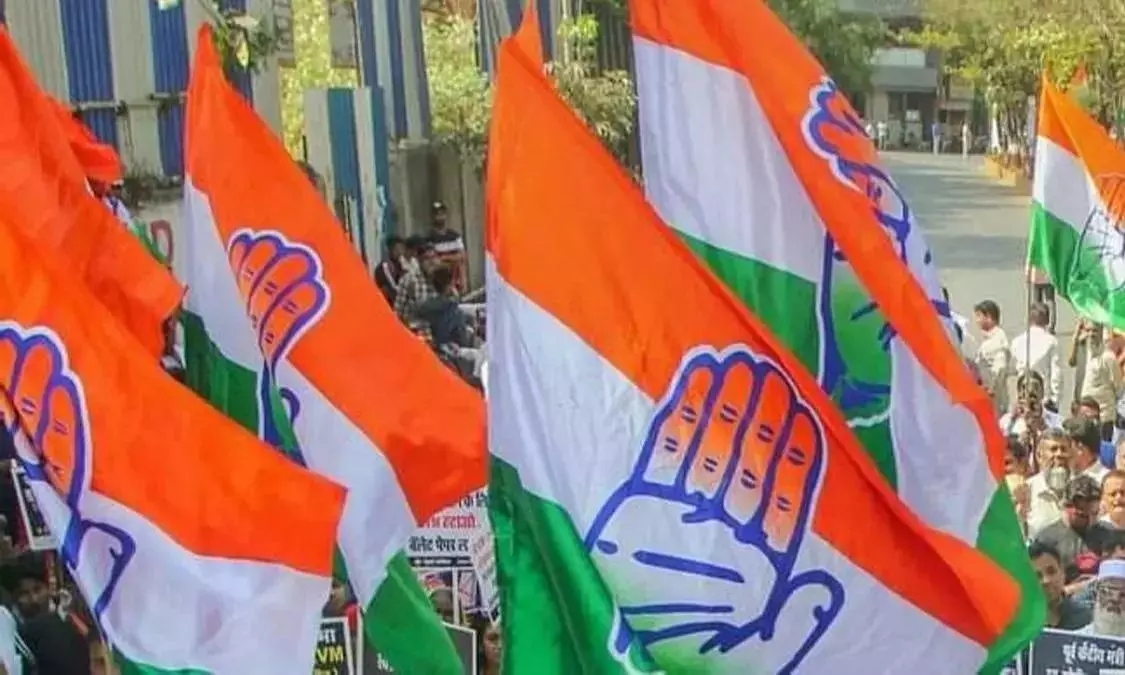
Its grandeur is fading; it’s an old party that nevertheless has a significant presence in Indian politics.
As the principal Opposition in the Lok Sabha, the Congress, that has been consistent in facing off against the BJP, is vested with the responsibility of heading a fractious block of parties, mostly regional ones and the combined Left, including its permanent foe in Kerala, the CPI(M).
Two election defeats are emerging as pivotal moments in altering the political equations and rearranging the landscape; the defeats in West Bengal and Tamil Nadu. It was smart of the Congress to bargain two ministerial positions and a Rajya Sabha seat to bridge the numbers deficit of the TVK, led by C. Vijay, which was ten seats short of a majority after it defeated the DMK. The adhesive that helped the Congress bond with Vijay was ideological; both see the BJP as the “ideological enemy”.
The inertia and the resistance to shifts and movement seems to have changed. It has enabled the Congress to respond to the devastating defeat of Mamata Banerjee and the TMC in West Bengal with a generosity and moral support that had seemed unlikely before the phone call from Rahul Gandhi and the embrace with Sonia Gandhi. Here too the common cause is the ideological enmity of Ms Banerjee and the Congress to the BJP.
The speed with which the TMC and Congress got down to the business of negotiating counter-consolidation of forces of the defeated against the BJP is surprising. Bred in the same petri dish, the Congress and the TMC have a capacity to waver in the hope of driving impossible bargains that has been frustrating to its friends and delighting its opponents, primarily the BJP. As speculation spiralled over whether a vanquished Ms Banerjee would look for refuge through a merger with the Congress, it became evident that there was much more happening within the INDIA bloc than could have been imagined before the fall of the TMC and the rise of the BJP in West Bengal.
In the current scenario, the Congress’ modest gains: winning back Kerala, working out the TVK partnership and pulling off a smooth change in Karnataka, installing D.K. Shivakumar, seems to have given it a fresh impetus to initiate a revised alignment strategy to the BJP’s rush to sign up new putschists from the TMC and possibly DMK, another breakaway block of Sharad Pawar’s NCP and Uddhav Thackeray’s Shiv Sena. With the Congress, it’s always possible this unusually proactive phase could be short-lived.
The Congress has a peculiar tendency to start pulling away from its allies and expects them to catch up. There are chances that the consultations, accommodations and adjustments that keep an alliance going, and not falling apart, may not happen simply because Rahul Gandhi is intent on pursuing his own agenda based on his personal understanding of what must be done.
Instead of listening to its voices, the Congress would be better off trying to read the nation’s pulse. There are diverse voices that are disgruntled with the BJP’s overwhelming presence. As Prime Minister Narendra Modi predicted before the West Bengal election, soon the Ganga would flow uninterrupted through saffron territory from its inception to its culmination; it does indeed flow through mostly BJP-ruled states. However, its influence is disproportionate to its ineffectual presence in South India.
For starters, there is the Cockroach Janta Party, that began as a savage satire on the unfortunate observations by Chief Justice of India Surya Kant. The party that has led the nation in demanding the resignation of Education Minister Dharmendra Pradhan for the NEET question paper leak has acquired a life of its own. Its presence threatens the idea that the BJP runs a corruption-free government. It has triggered a listing of all the exam scandals that have occurred in the Modi years, beginning with the Neet and the CBSE examinations in 2026.
The Congress, or rather Rahul Gandhi, has latched on to the upsurge in anger and disappointment of students and their families that gave the CJP the support it received to overtake the number of the BJP’s online supporters. There are other issues disturbing the nation: a tanking economy, food inflation, joblessness, fuel and LPG price increases, unemployment, low wages, contractual work rather than tenured jobs, India’s shameful failure to seek explanations from the United States about killer bombs in the Hormuz Strait are only a shortlist of what the public perceives as problems that affect lives and livelihoods.
There have been moments in India’s political life when the unlikeliest of partnerships have been birthed to eventually turn themselves into an alternative. The era of Third Fronts starting in the 1980s lasted till 2014. After 2014, Narendra Modi seemed well settled, even though the BJP headed a coalition under the NDA banner. In 2024, the BJP was reduced to a minority; and became dependent on the goodwill of allies like Nitish Kumar’s JD(U) and N. Chandrababu Naidu’s TDP.
In 2026, the BJP was defeated by the united Opposition of the Congress, DMK, TMC, Samajwadi Party and RJD in Parliament over its pre-emptive bid to change electoral politics by imposing delimitation of constituencies and simultaneously increasing the number of seats in Parliament and the state legislatures. Its current frenetic drive to add more allies to the NDA appears to be an exercise to offset the setback it encountered months ago.
The Congress and its friends are the only obstacle to the BJP’s feverish efforts to rapidly shrink the Opposition and hollow it out by encouraging a series of coups within regional parties in Maharashtra, West Bengal and Tamil Nadu. The Grand Old Party’s problem is its wandering and notoriously short attention span because its leadership is centred around Rahul Gandhi. If this were the 1990s, there were wily though principled strategists and coalition makers like the CPI(M)’s former general secretary Harkishan Singh Surjeet and West Bengal’s former chief minister Jyoti Basu, the man who never became Prime Minister.
The deficits in leadership must be plugged if Congress is finally getting down to the hard grind on building a counter-consolidation against the BJP. There are those who think that “free bird” Mamata Banerjee is ideally placed to lend weight to the endeavour. And there are those who believe she is a liability.
Not until the first steps are taken towards building an anti-BJP consolidation ahead of the 2029 general election will the nation really know if there is an emerging functioning alternative, whatever its name and whoever are its members.
