Shikha Mukerjee | Amid Fragile Unity In Bihar, ‘Friendly Fights’ Won’t Work

“Friendly fight” is a euphemism. The real status of the relationship within a coalition that engages in a friendly fight even in a few seats is one of irreconcilable differences
Elections are held to choose a winner. Ipso facto, there are no “friendly fights” in elections. Not even among partners within the same coalition of political parties, as the Lok Janshakti Party’s Chirag Paswan correctly pointed out.
“Friendly fight” is a euphemism. The real status of the relationship within a coalition that engages in a friendly fight even in a few seats is one of irreconcilable differences. It is an announcement that despite the estrangement, the parties are still willing to continue as partners to maintain a façade of fragile unity.
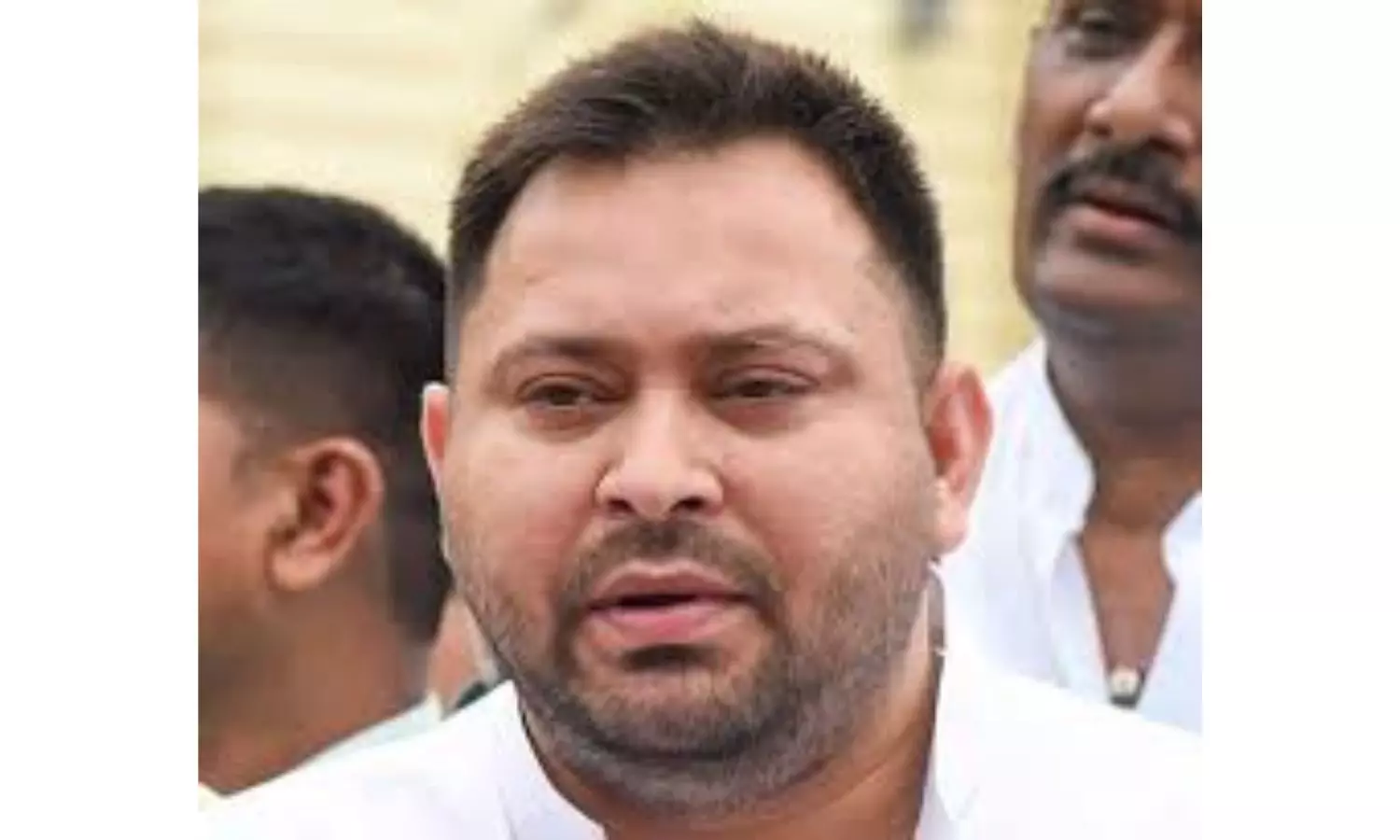
To maintain the brand of the Mahagathbandhan, essentially an alliance between the regional Rashtriya Janata Dal and the Congress, with other parties that come and go, sometimes with the BJP-led National Democratic Alliance and sometimes with the other coalition, a truce has been declared between Tejashwi Yadav and the Congress. The terms of the suspension of war has swung in full support of regional parties with the naming of Tejashwi Yadav as the Opposition alliance’s chief ministerial face and the addition of the “Malhar King”, Mukesh Sahani of the Vikassheel Insaan Party, declared as deputy CM if the Mahagathbandhan wins.
The last-minute damage control formula worked out by the Congress with the RJD is an admission by the Grand Old Party that it is the junior partner in the relationship. It is also a check on the delusional ambitions of state Congress leaders that spread the word that the only liability in the alliance was Tejashwi Yadav; what was left unsaid was that the Yadav clan, of Lalu Prasad, his wife and more than one of his children, was tarnished to the point that it should be excluded. The fantasy that the Congress was in comeback mode, after Rahul Gandhi’s Bharat Jodo Yatra and Vote Adhikar Yatra, seems to have been abandoned for now.
Despite the resolution of the leadership crisis, the problem of “friendly fights” has not been sorted out. How the RJD and the Congress figure out what to do with more candidates in the fray than seats in the Bihar Assembly will test the managerial skills of the two parties.
How the voter perceives the tactics of containment of the leadership crisis is unknown. It raises the question: can the Congress, RJD, VIP and Left appear as a credible alliance to the canny and calculated Bihar electorate that has seen the swings and shifts of local politics, where friends become foes overnight and then go back to being friends at a later date?
Coalitions, regardless of the diversity of ideologies, interests and ambitions, are engineered to advance the chances of several political parties with a common cause. In Bihar, the BJP’s common cause is to ensure that the NDA wins the 2025 Assembly election, defeating the Mahagathbandhan. For the Opposition alliance, the common foe is the BJP; except that till the sealing of the leadership deal on Thursday, the RJD and the Congress were involved in an ugly competition against each other, resulting in the invocation of the “friendly fight” formula.
Bihar’s political field has been reset after the battle has begun. The Mahagathbandhan has a chief ministerial face and a deputy chief minister and is likely to have another deputy chief ministerial candidate, even though she/he remains unnamed. It matters little that the BJP has not declared Nitish Kumar as its choice for chief minister. The BJP doesn’t have a leader in Bihar who measures up to either Nitish Kumar or Tejashwi Yadav. After years nurturing Bihar, the fact is that the BJP hasn’t really captured the imagination or the loyalty of a sufficient number of voters to give it the sort of returns on its investment that could be deemed a satisfactory profit.
The 2025 Bihar Assembly elections could turn into a free for all fight, not just for the Mahagathbandhan but also for the NDA, as there are resentful contestants, resentful non-contestants and resentful hopefuls within the parties constituting the coalition. There are candidates and hopefuls who did not get a ticket within the JD(U) and BJP; there are candidates, MLAs who were dropped from the list and hopefuls who did not get a ticket as well as disgruntled candidates who did not get a seat of their choice within the larger NDA.
If there is no clear “leading party,” a term that needs to be defined within the rickety idea of Bihar’s coalitions, and after the votes are counted and the list of winners is known, there could be a repeat of the disgraceful episode after the collapse of the 2022 Maha Vikas Aghadi in Maharashtra, when legislators were flown out of Mumbai and their constituencies to allow the BJP to stitch up a majority and position the NDA to capture the 2024 Assembly elections.
In Maharashtra, as in Bihar now, the fragility of the competing coalitions hinges on the ambitions and tensions between the “national parties” and their regional allies. The BJP has ambitions to be the one party that wins all elections, in all the states and make itself the default choice as the big party in general elections. To get there, the BJP’s best grease to keep the vote machine going has been to convince voters that the “double engine sarkar” model is the best deal that they can get.
The BJP, like the Congress, needs to communicate a fiction, that it is representative of the ever-increasing diversity of small, mini and micro identities that continue to assert their presence and demand a share in power. Limited by the rigidities imposed on it by its ideological foundations and the loyalties it has nurtured within the constituency of Hindu majoritarian voters, the BJP cannot be a replica of the old Congress, that was a loosely structured platform of multiple interest groups, communities and even ideologies.
The idea of representing the aspirations and interests of voters is not what elections are for.
Coalitions are a necessary strategy for political parties or rather individual “leaders” to ensure they can bargain when the votes are counted and a government needs to be formed. That is, there are no permanent friends or enemies, any more. Defection by an individual winner or even loser is no longer a betrayal or to be despised. It happens frequently and predictably; and in Bihar, even before the polling, it has begun. It can be a reflection of pragmatic choices or it can be disparagingly described as opportunism; it is about individual or group personal aggrandisement and not about lofty thoughts like representing the vulnerable, the marginal or the extremely backward.
