Shashi Warrier|The Silent Generation & the Grandparent App

When all we wore was cotton. When we didn’t have colourful clothes because we didn’t have synthetic dyes.
Raghavan showed up after a gap of nearly a month. When he did show up, he seemed downcast. “What’s up?” I asked, leading him into the drawing room to give him a bottle and a glass.
“My father passed last month,” he replied. “He was nearly ninety, and his mind was going, but there’s still a gap in my life.”
“Of course,” Prita said, bringing him a plate of his favourite samosas, fresh from the pot. “Condolences. Parents always leave a big hole in your life when they go, no matter how old and infirm they are, and how old and mature you are.”
Raghavan was reaching for a tentative samosa when the doorbell rang, and, sure enough, it was Murthy and his nose. “Come in,” I said, “and help perk Raghavan up. Lost his father last month.”
“Sure,” he said. Inside, he offered Raghavan his hand. “Sorry for your loss,” he said. He paused. Then, “What do you miss the most about him?”
“A lot,” replied Raghavan, “but there’s one regret emerging.”
“What?” asked Murthy.
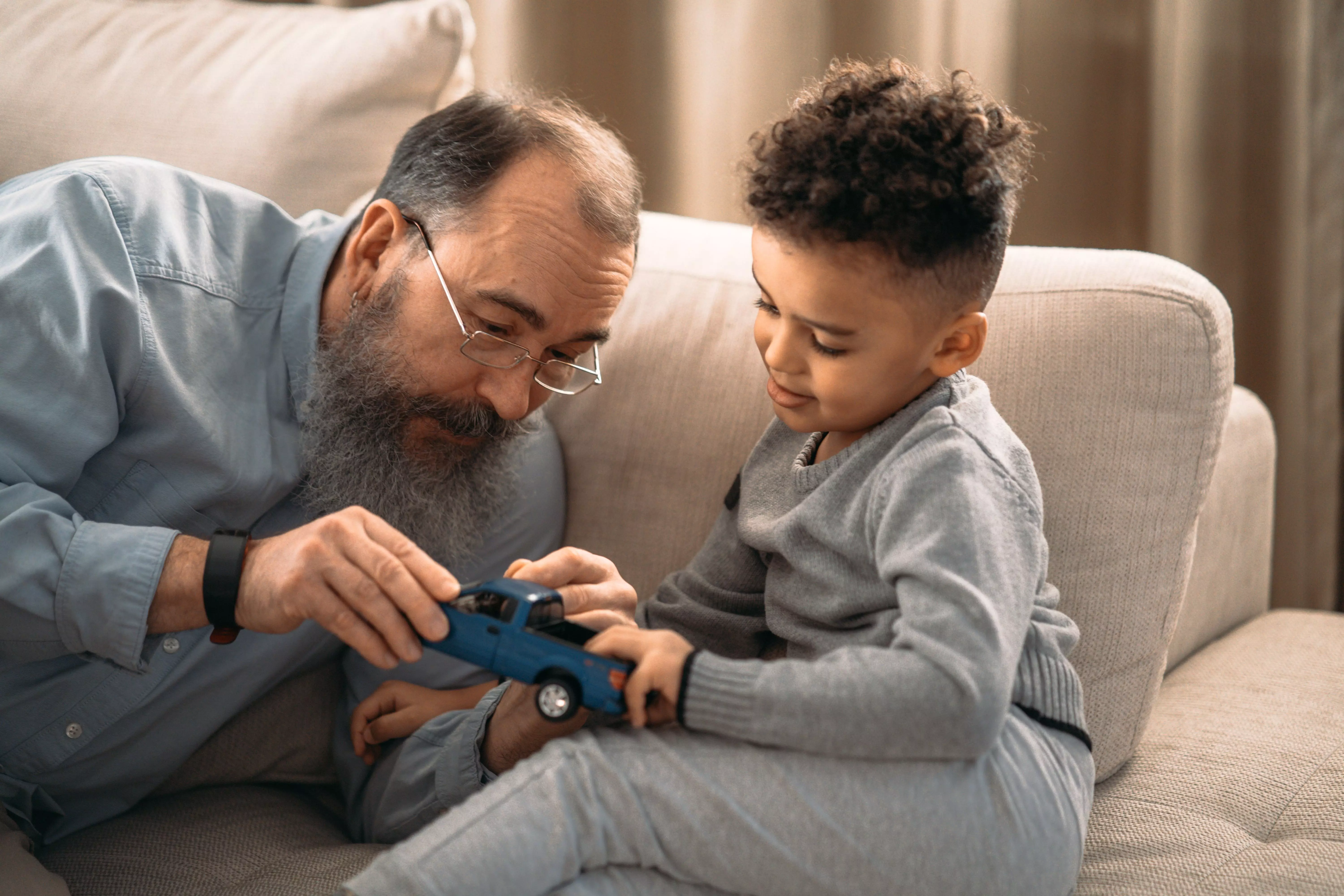
“That he didn’t get a chance to get close to my children,” replied Raghavan. “Unlike my kids, I spent plenty of time with my grandparents, not just the occasional holiday.”
“What difference does that make?” asked Murthy.
“You learn more about change,” replied Raghavan, “because your memory stretches back a generation beyond your parents. Another quarter century or even more.”
“Give me an example,” said Murthy. “I don’t understand.”
“Lots of things,” said Raghavan, his voiced tinged with nostalgia. “From my grandparents I know of times when all dairy was natural. When all we wore was cotton. When we didn’t have colourful clothes because we didn’t have synthetic dyes. When all paneer was from milk. When all honey was honey. When autoimmune diseases, heart disease, cancer, and obesity were all rare. When music was special.” Raghavan smiled. “When you had to wait in line to pay your electricity bill, and there was only one TV channel available, the government’s. When people used to wait for 8:30 pm on Wednesdays for Chitrahaar, a half-hour program of Hindi movie songs on national TV...”
“So there were fewer options,” said Murthy, “and less convenience. Again, what difference does that make?”
“You remember the early 1990s, when the economy opened up a little,” said Raghavan in a tone so solemn we didn’t think it appropriate to interrupt or question him. “When foreign things began to come into the country. Your children don’t. So they assume it was always like it is today. They can’t imagine that there was a system where you had to wait six years to get a new scooter, and you had a choice of just two or three brands. Or having a landline was a luxury, and you had to wait years for a gas connection.
“If you go back to the 1980s, there a time when cement and steel were rationed, and were every builder’s nightmare. Or when newsprint — paper for newspapers and magazines — was rationed and the simplest way for the government to censor a publication was to cut off its supply of paper: and there was only one TV channel in the whole country, Doordarshan.
“But I learnt about British India from my grandparents, and about the two world wars, and how Gandhi affected the morality of the general public. We know how common people burnt and boycotted British goods on the street, and women gave jewellery for the Independence movement.”
We took a moment to absorb all this. Then Prita asked, “What brought this history to your mind?”
“President Trump,” replied Raghavan. “He’s been ranting at the UN, he’s been courting Xi Jinping, he’s been backing the Pakistanis, and all the while sweeping inconvenient truths under the White House carpet.”
“So what?” asked Murthy.
“If you’d spent time with your grandparents, like I did, you wouldn’t find it all that surprising,” replied Raghavan.
“What do you mean?” asked Murthy.
“Back in 1960,” said Raghavan, “the head of the USSR’s government, Nikita Khrushchev, made a fiery speech in the UN General Assembly. They say he took off his shoe and thumped the table with it during that speech. That’s the gold standard for theatrics at the UN.
“And the debate was about just the kind of thing we talk about these days: a heated debate on colonialism and the Congo. The USSR — you need your grandfather to tell you that there was such a country — introduced a resolution saying colonialism must go, and the Philippine delegate, one Lorenzo Sumulong, argued that the Soviets were doing what they were accusing colonists of doing.
“That was pretty much the opposite of what Khrushchev wanted. He was furious, or at least he pretended to be so. They say he pounded the table with his shoe. The thing is, Westerners thought it meant that Soviets were crude. That’s exactly what most of the world thinks of Trump, more so now than during his first term. The boot — or shoe — is on the other foot now. Except that Khrushchev was much less crude than Trump. He acknowledged the next day that he might have offended Sumulong, but said that the Philippines’s statement had offended him as well.”
“The history lesson is all very well,” said Murthy, “but so what?”
“When young people see that it’s happened before, they don’t fear it so much,” said Raghavan. “If they know that good times and bad times come and go, they tend to panic less, they tend to be more mature.”
“Maybe you should do a grandparent app,” said Prita. “With today’s AI tools, that’s the simplest way to fix this!”
