Sanjeev Ahluwalia | Yuan Presents A Renewed Challenge To Dollar Order

China’s trade policies are devious (think non-trade measures and barriers) but relatively kosher. Being the most competitive manufacturer helps. Acting in national interest, it scuppered competing exports by subsidising export manufacture and infrastructure whilst skimping on consumer benefits and welfare
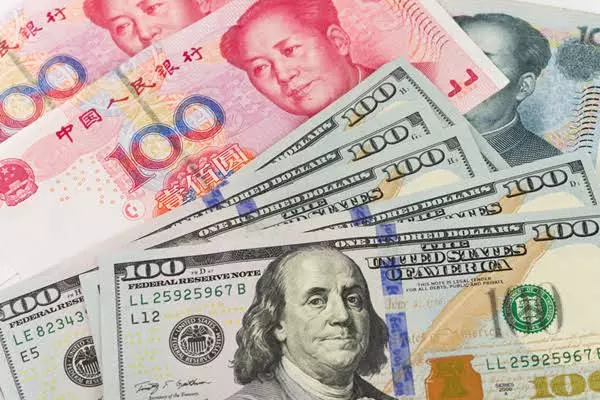
Replace the words “Yuan” and “China” in the title with “Dollar” and “America” and you have what US treasury secretary John Connally said in 1971 to European finance ministers. The adage remains true, except that there are now two currencies the world must worry about.
The US dollar — curated over eight decades of careful branding as a reference currency, central to a stable, global financial system and now the contender — the yuan, held steady by the trade competitiveness of China and a closely managed exchange rate regime. The yuan depreciated by 15 per cent against the US$ over the period 2014 to 2024, even as China contributed one third (US$1.2 trillion) to the global increase in merchandise export. It also has the largest reserves in the world, about US$ 3.4 trillion.
China’s trade policies are devious (think non-trade measures and barriers) but relatively kosher. Being the most competitive manufacturer helps. Acting in national interest, it scuppered competing exports by subsidising export manufacture and infrastructure whilst skimping on consumer benefits and welfare. China does not encourage consumption, in keeping with its per capita income levels, by defraying the cost of living or exceptional life events, accessing education, healthcare or old age pensions. The average Chinese consumer must save for these eventualities.
Hyper domestic savings are partly the result of financial repression. Regulated purchase of government bonds by Chinese banks — like the RBI’s Statutory Liquidity Ratio, which sequesters 18 per cent of a bank’s net liabilities into cash, gold or government bonds, low interest rates for domestic savers and exchange controls to dissuade capital flight, all generate a flood of enforced savings. These are funnelled by Chinese banks into manufacturing, creating over-capacity and a frenzy of hyper competition with exports the only option. Rock bottom export prices destroy competing trade, creating global imbalances in market access- a masterful version of state supported capitalism.
The paltry scale of personal consumption in China — 31 per cent of GDP — in a nearly high-income economy, comes as a surprise. Compare this with the United States where consumption accounts for 68 per cent of GDP. Even in Iower-middle income India, it is 62 per cent. Americans might be spendthrifts given that their per capita income is 8X of China’s. But it is not just the Americans. Closer home, Malaysia has a per capita national income lower than China (0.9x) but consumption is, like India, at 62 per cent of GDP.
Exceptionally low consumption in China is not driven by the lack of resources. It is a policy designed to divert savings into investments for exports. The Chinese could have consumed more, like the Malaysians, if they had access to more public goods like pensions, or good health and education facilities outside major cities, access to which is tightly regulated with penalties for unauthorised entry. Unsurprisingly, “save baby save” is the lot of the average Chinese consumer.
In India, State policy transferring income to families is more generous and the “bite” of tough but inequitable laws is masked by poor implementation. Squatting on urban public land — for a price paid informally — is a safety valve for rural folk to self-urbanise, hoping a kindly government might legitimise their stake. Government schemes for subsidised food are now portable. Entry to cities is open for all with no travel restrictions. Travel by rail (general glass) whilst of indifferent quality, is compensated by ubiquitous cross-country connectivity, frequent services and rock bottom ticket prices making it cheaper than travel by public bus. Unsurprisingly, much of the travel is from rural areas to cities, to avail better work opportunities, education or medical care.
Why did India not adopt an economically efficient path as China has since the 1980s? One admits it grudgingly, but India never had China’s trump card — a disciplined one-party system — socially oppressive but highly, albeit often coldly, efficient. China copied and scaled up, the subsidised manufacturing and export production model from the 1960s developmental policy of Japan and subsequently South Korea. What is solely Chinese is their long-term vision of global political and economic dominance — targeting America’s dominant position post 1945 till the 1960s and again its unipolar moment post 1989, once the Soviet Union splintered.
China is unlike any other country, in moulding public behaviour via a curious melange of mass subservience mixed with public faith in a top-down system, which dextrously decentralises political responsibility and fiscal power for economic development. This builds widespread support for the party. The most egregious, cases of public corruption, are carefully distanced from the party and punished. Selectively but routinely, sacrificing inconvenient insiders, reinforces the public’s trust in the party.
South Asians, in general, are not in thrall of the Chinese development model. Nor for that matter are Taiwan, South Korea or Japan. India remains a rapidly evolving petri-dish intent on translating traditions into modern practices, aligned with equitable development. The Union backstops all public debt as the lender of last resort. But expenditure norms are not common across all levels of government. Panchayats and city governments are as necessary as Parliament or state Legislative Assemblies, but they remain underfunded and incapacitated administratively. Spending priorities remain warped. Digital India is a prime developmental meme, but publicly funded physical infrastructure takes precedence, even as privatisation remains frozen.
China offers powerful lessons in economic management, government effectiveness and diplomacy. Its unique combination of native business smarts with facilitating economic policies is worth emulation. Such realism would benefit India. Consider our listless policy for the 300 odd million workers in MSMEs. The notion that MSMEs can somehow continue to contribute one half share, even as our merchandise exports more than double from US$ 440 billion in 2025 to US$1 trillion by 2030, is fanciful. Aggressive mergers and incentivised production at scale, is preferable to graduate the 300 million workers and MSMEs to the better regulated formal sector, where firm productivity and worker benefits improve. AI integration in enterprises, can pave the route to formalisation.
Should we, pillorise the yuan and the centrally directed economy it represents? Prudence suggests waiting till the yuan playbook is fully revealed. The yuan appreciated by six to seven per cent against the USD since 2025, while the INR depreciated by 14 to15 per cent. Differential impact of the Iran war explains some of this. For now, assume that what you cannot change must be endured. Just adjust please.
Sanjeev Ahluwalia is distinguished fellow at the Chintan Research Foundation and was previously in the IAS and the World Bank.
