Sanjeev Ahluwalia | Efficiency, Yes; Strategic Resilience Is Critical Too

Over the decade ending in 2024, not only did global investment in energy increase from $2 trillion per year to $3 trillion, the share of investment in fossil fuels reduced from about two-thirds in 2015 to one-third by 2024, with a corresponding increase in the share of non-fossil fuels: mainly renewables
The “open economy” phase of globalisation -- which started in the 1980s -- was all about enhancing economic efficiency, ending friction losses from trade and investment barriers, dulling the economic pain from selective use of national sovereignty to create tax barriers, impose exchange controls and limits on foreign investment. The global consensus favoured adopting developed economy practices like market instruments over direct fiscal intervention by governments in the real economy.
This development model is now severely threatened by three unforeseen imperatives. First, the demands of climate action have infused renewed urgency to State action. Publicly funded incentives for decarbonisation, enhanced outlays for climate adaptation, research and development in digital technology, defence and space applications have become widely accepted, legitimate public policy concerns.
The United States is ploughing a lonely furrow by rejecting the science behind climate change. This has not appreciably altered the drift of global financing away from fossils fuels and towards low carbon options.
Over the decade ending in 2024, not only did global investment in energy increase from $2 trillion per year to $3 trillion, the share of investment in fossil fuels reduced from about two-thirds in 2015 to one-third by 2024, with a corresponding increase in the share of non-fossil fuels: mainly renewables. Consider that even West Asian economies -- who have the most to lose if oil loses its economic value -- have not stepped off the pedal to diversify their economies away from their oil wealth. The ongoing debilitating war between the US, Israel and Iran has only served to bolster their resolve for economic diversification, though their near-term investment objective is to make their petroleum supply routes resilient to enforced stoppages.
Second, best-practice economic principles for policy action by developing economies have mutated since the 1990s, when they were first espoused. The World Bank confirms that developing country interest in efficient, “active” industrial policy is growing. This is unsurprising. The spectacular success of directed development in China offers a hard-to-ignore model of State-led development. This is despite top-down managed economic progress having downsides: like creating structural political deficits by shifting the power balance in favour of the State versus citizen autonomy. But this fear no longer creates significant misgivings. Presumably, a full stomach is better than the freedom to choose how to starve.
Is rapid growth -- Chinese style -- also wasteful? Incremental capital output ratio (ICOR) is a broad-brush metric to assess the efficiency of growth. It is calculated as the incremental capital required to generate a unit of growth -- so lower estimates imply higher capital efficiency. ICOR levels have increased in China over time from around 3 to 4 prior to 2008 to 5-6 post 2011. India grew slower than China but has a similar trajectory. ICOR increased from 4 in the 2000s to between 5 to 6 after 2011.
However, there are caveats to be acknowledged in cross-country comparisons.
Over a defined period, an increasing ICOR suggests higher capital intensity to achieve a unit of output. But it could also merely reflect a structural change in the terms of trade-driven by technology- in favour of capital (machines) and away from labour. The capital and material intensity of Artificial Intelligence is a contemporary concern as is the associated re-valuing of labour. As the world increasingly depends on capital and machines, ICOR is likely to increase, at least till the investments start generating commercial returns by being applied to real-world use cases. And opinion is divided as to by when that might happen.
ICOR as a metric of efficiency works best if starting conditions are broadly similar across economies. Lower levels of institutional capacity initially and the poor quality of infrastructure assets could also cloud the signalling value of ICOR. Heavy start-up investment outlays can only be amortised over time. Think of investment-heavy Metro trains, on which ridership -- as a proxy for value creation -- becomes optimum only over time as more stations are added, interconnecting lines built and last-mile connectivity at interchange points are resolved, including transport security for women and the aged. Till this optimal point is reached, the ICOR would remain very high.
Third, the double whammy of expensive oil and decarbonisation outlays is likely to drive economies to try and do more with less, which is a positive for economic efficiency. One outcome of these twin pressures might be a heightened search for hybrid collaboration regimes -- catchily dubbed as variable geometry – where economies choose a set of trading and investment partners and negotiate preferential terms via conditional give or take -- also now known as “deals”. Mini-lateral groups can fix a specific problem common for all participating members – like balancing employment with technology regeneration. Plurilateral arrangements within larger multilateral fora like the WTO can cater to members whose interests converge and who are willing to proceed at a faster pace than the general body of the WTO.
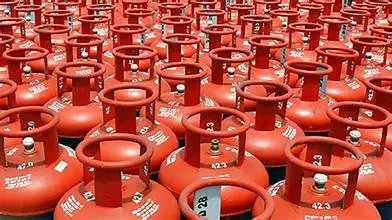
Access to freely-traded global oil resources is of particular interest to India, which imports about one-half of its natural gas consumption, two-thirds of the demand for LPG -- a cooking fuel for price-sensitive households and four-fifths of crude. Access to rare earths and critical minerals is another choke point, which can delay decarbonisation by restricting supply or driving up the cost of access to these building blocks for batteries and semi-conductors. Reframing of multilateral rules, which retains the existing institutional power to ensure compliance but encourages variable composition and speed for group decisions, seems appropriate.
Supportive State policy in India will be crucial to embed principles of economic efficiency into the twin objectives of decarbonisation by 2070 and the bridging objective of resilience against energy supply shocks. Front-loading private enterprise in the institutional matrix for conceiving the magic policy mix would be useful.
Designing explicit tax structures to incentivise “resilience” and penalise “carbon emissions” could attract new investment. At present, tax policy implicitly favours resilience and penalises carbon emissions. The cess on coal is significantly lower than the VAT charged by state governments on petroleum products, if related to the volume of ensuing carbon emissions per ton of energy. Embedding such policy choices explicitly aids a better understanding of the rationale for differential tax rates and avoids the hazard of the system being gamed for unintended benefits.
The writer is Distinguished Fellow, Chintan Research Foundation, and was earlier with the IAS and the World Bank
