SANJAYOVACHA | Zhu Rongji And His Role In Rise Of 21st Century China | Sanjaya Baru
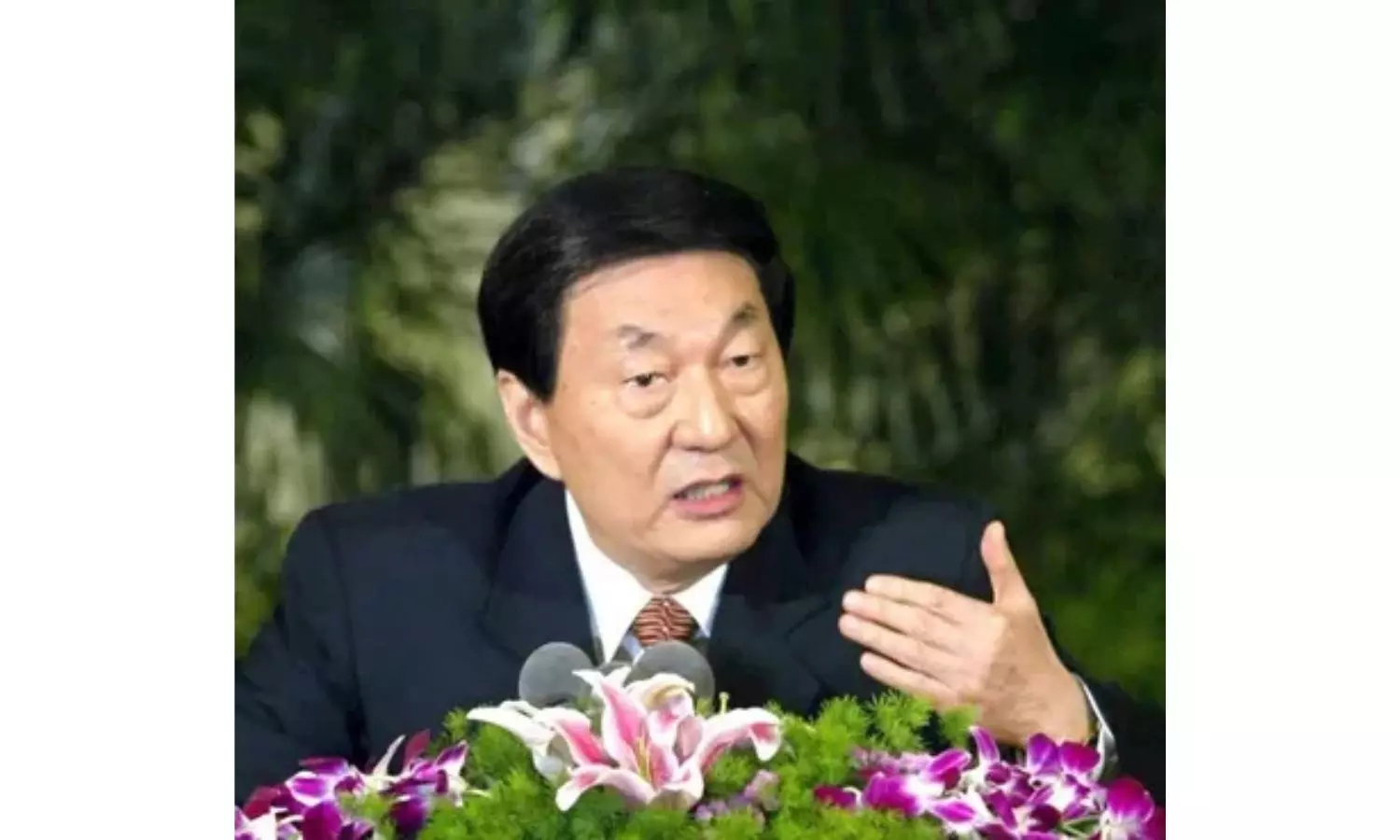
To an Indian unfamiliar with China’s recent history, Zhu Rongji would be best described as a combination of Manmohan Singh, P. Chidambaram and Montek Singh Ahluwalia, all put together, for his contribution to China’s economic transformation
During my first visit to China in the early 1990s I was taken around a village across the river from Shanghai and told that this area would one day become a modern metropolis. Viewing all the plans that I was shown, I returned to write a column titled “A Manhattan of the East”. The plans were for nothing less.
Revisiting Pudong across the Shanghai bund a decade later, I stood in awe of the transformation planned and executed within a decade. In April 2001 leaders from around the world arrived in Pudong New District to attend the Asia-Pacific Economic Cooperation (Apec) summit meeting.
The man who was placed in charge of the transformation of Shanghai by Deng Xiaoping, the architect of China’s modernisation and globalisation, died last week at the age of 98. To an Indian unfamiliar with China’s recent history, Zhu Rongji would be best described as a combination of Manmohan Singh, P. Chidambaram and Montek Singh Ahluwalia, all put together, for his contribution to China’s economic transformation. From the late 1980s till the early 2000s, Zhu Rongji was responsible for a wide range of national policy initiatives including trade liberalisation, fiscal stabilisation and privatisation of state-owned enterprises.
Equally, Zhu was responsible for the transformation of Shanghai from a colonised port town through which British imperialists pushed opium to dope and enslave a nation into Asia’s Manhattan, a bustling globalised metropolis. Zhu was able to do more for Shanghai in a decade then what a half a dozen chief ministers have been able to do so far for a city like Hyderabad.
Trained to be an economist, Zhu joined the faculty of economics at Tsinghua University. Like many intellectuals and members of the Communist Party of China, Zhu had also been forced to quit his job and go to a village to work as a labourer during the Cultural Revolution. At the end of the Mao Zedong era Zhu, like Deng and hundreds of others, was rehabilitated and allowed to return to his earlier profession.
As Deng’s biographer Ezra Vogel records in his monumental tome, Deng Xiaoping and the Transformation of China: “Deng had known Zhu in Beijing earlier, when Zhu had been deputy head of the State Economic Commission, and Deng recognised that he was a rare talent who combined bold political leadership skills, a strategic understanding of how to improve the economy, and an unusual confidence in pursuing reforms.”
Returning from a visit to Shanghai in February 1990, Deng had told China’s Prime Minister Li Peng to prioritise the development of that port city and suggested that Zhu be made responsible for this task. As Vogel records, Deng told Prime Minister Li and Chinese President Jiang Zemin: “Why do people support us? Because over the last ten years our economy has been developing… If the economy stagnated for five years or developed only at a slow rate …. What effects would be produced? This would be not only an economic problem but also a political one.” He then went on to speak about the need for sustained economic reform and ended by observing: “It is of prime importance to develop Shanghai. That city is a trump card.”
The man who monetised that trump card was Zhu. He was then named governor of the People’s Bank of China, during which term he was required to manage the consequences of the Asian financial crisis of 1997-98. China’s regional and global financial profile grew as a consequence. In 1998, Zhu succeeded Li as Prime Minister and in his five-year term (1998-2003) he undertook wide-ranging economic and fiscal reforms at home and oversaw China’s entry into the World Trade Organisation.
If Deng was the political and intellectual architect of post-Mao China, Zhu was the technocrat who attended to the details. It is not surprising that Zhu’s obituaries have appeared across the world duly noting his contribution to the modernisation and globalisation of the Chinese economy.
In an essay I wrote on “Henry Kissinger and the Selling of China” in a volume I co-edited titled, A New Cold War: Henry Kissinger and the Rise of China, I discuss in detail the bargaining that went on between the United States and China for China’s admission into the World Trade Organisation.
With Kissinger’s support on the US side, Zhu played a key role in persuading the Clinton administration to agree to China’s admission into the WTO, a decision that accelerated China’s rise as a global trading superpower.
As I record in my 2021 essay, Kissinger played an important role in convincing the US leadership at the turn of the century that the US ought to treat China as a “normal trading” nation and agree to its entry into the World Trade Organisation. The US and China were at the time in the midst of negotiations on the terms of that entry.
Kissinger lent his weight to China’s admission stating that China’s membership of the WTO “should be in the interest of China, of the United States and of the world community”.
Kissinger concluded his address stating: “I cannot consider that we can have stability and progress in Asia if China and the United States are in a cold war with each other.’ Zhu and Kissinger convinced Washington DC that maintaining a cooperative relationship between China and the US would be in the interest of both nations and, indeed, the entire world.
Things have come a full circle after a quarter century with President Donald Trump talking about a “G-2” with China on the eve of his last meeting with President Xi Jinping even as he launched a trade war. While the world has changed dramatically over the past two decades, one of its foundational features today is the place China has acquired for itself in world affairs. In the public mind, most well-informed people are now aware of the leadership that Deng Xiaoping provided to enable this rise of modern China. Few, however, are aware of Zhu’s role. Unlike most politicians he went into retirement in 2003 after just one term as PM. He has rarely made public appearances since then. A modest man with a superhuman legacy.
Sanjaya Baru is a Distinguished Fellow, United Service Institution of India and Takshashila Institution
