REFLECTIONS | Will Burnham, As PM, End ‘Roller-coaster’ UK Politics? | Sunanda K. Datta-Ray

All this underlines Britain’s need for a massive building programme. Some 134,000 households, comprising 350,000 people, are in temporary accommodation; 1.3 million households languish on housing waiting lists. The housing benefit bill has rocketed to more than £36 billion. Around 400,000 houses were being built annually in the 1960s heyday of council house building, in contrast to just over 12,000 in 2025
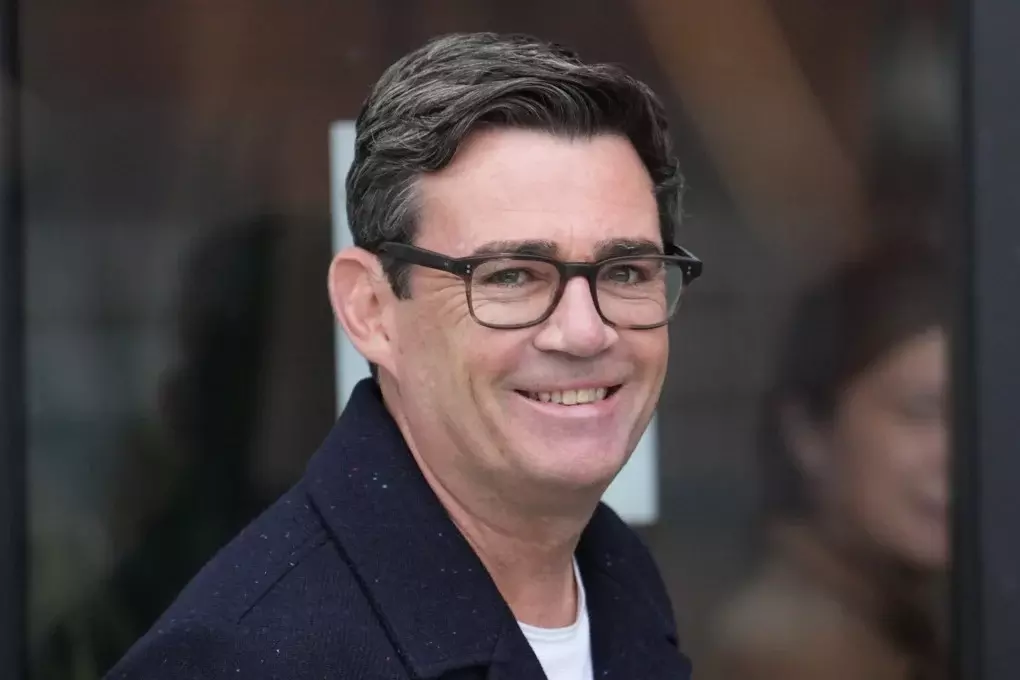
After meeting King Charles III on Monday, Andy Burnham, the Labour Party leader and former mayor of Greater Manchester, took over as Britain’s seventh Prime Minister in 10 years. The pledge of “political stability” in his very certain subjects and an unwillingness to face questions from the media worrying”, like The Guardian newspaper’s political editor, Pippa Crerar, obviously can’t have had any experience of Narendra Modi’s India.
Perhaps an avalanche of details will come gushing out later. For now, the MP from Makerfield in Lancashire is on a high, perfecting a magic that already holds audiences spellbound. Even the magic is practised. He looked casual enough stepping off the Manchester train at Euston station but he had travelled First Class as befits His Majesty’s first minister-in-waiting, and stuffed in his shoulder bag was a jacket to make the round-necked T-shirt that he was wearing look less informal before reaching London.
As was only to be expected of a “distinctively Labour” (his term) politician, he has always championed strong commercial and cultural ties with India, having been a key supporter of the Manchester-India Partnership and planned high-level mayoral trade missions to India. According to former UK-India FTA chief negotiator, Harjinder Kang, Mr Burnham’s transition to London will not disrupt the positive trajectory of UK-India relations. He is expected to remain “bullish” on India, continuing to prioritise bilateral investment and negotiate economic partnerships.
Addressing the Labour faithful soon after reaching London, he was careful, like Harold Wilson on the stump, not to forget the rounded North Country Os that indicate class even more than region. But he emphatically declared himself “pro-business”, criticising those who had “centralised” political power and “privatised” economic power. His government would ensure that everyone had more power to work better.
He calls the strategy “Manchesterism”, a form of devolution with Burnham characteristics. That includes problems like energy, water, housing, roads and transport, reorganising Manchester's tram and bus systems and being hailed throughout Britain as “King of the North”. After campaigning for more furlough funding for Northern communities during the Covid-19 pandemic, he was unsurprisingly re-elected in 2021 and 2024.
All this underlines Britain’s need for a massive building programme. Some 134,000 households, comprising 350,000 people, are in temporary accommodation; 1.3 million households languish on housing waiting lists. The housing benefit bill has rocketed to more than £36 billion. Around 400,000 houses were being built annually in the 1960s heyday of council house building, in contrast to just over 12,000 in 2025. Given public funding constraints and labour shortage in construction, it may not be easy to deliver “the biggest council housing building programme since the postwar period”.
Mr Burnham himself intends to remain living in Manchester when he is Prime Minister, spending at least one day a week working from his northern headquarters in Manchester.
As mayor and minister (for health from 2009 to 2010 under Prime Minister Gordon Brown) and as a “soft socialist” (more echoes of Nehruvian politics) planner, he was convinced that regional devolution is the key to growth and prosperity. Like Nehru, Mr Burnham is a Cambridge man, having been an undergraduate at Fitzwilliam College where he read English.
Not that everything is hunky-dory. For the right-wing Sunday Telegraph, Mr Burnham’s plans are “egotistical nonsense”. Nothing could have offended Nehru more, for instance, than his threat in 2015 to resign from the Shadow Cabinet if Labour supported leaving Nato, which Jeremy Corbyn, former Labour leader, had talked about.
Graham Stringer, one of 24 Labour MPs (out of 403) who did not nominate Mr Burnham as leader, told a television programme that a “whole series of major policies are still a mystery”. In his view, Mr Burnham “owes it both to the Parliamentary Labour Party and the country to be more explicit”.
Others complain that “regionalism” can be abused by invoking reform and regeneration to pander to vested interests. In any case, regionalism cannot buck basic socioeconomic trends that sweep across the whole country, affecting some parts more than others: deindustrialisation, low investment and productivity, and inadequate public services (notably health and education). Addressing these problems is a national challenge requiring long-term strategies, in which any government is but one player among many.
Quick fixes -- whether grandiose (Brexit) or trivial (a secondary operational headquarters in Manchester) -- are useless. Like nationalism, regionalism can also legitimise prejudice and rancour, conflicts occurring not in the fractious international community, but in what some natives now call the Disunited Kingdom.
Flexibility helps, and Mr Burnham’s apology in June 2008 to the director of the pressure group Liberty, Shami Chakrabarti, now Baroness Chakrabarti, who threatened to sue him for libel for smearing her reputation in an article in Progress magazine was evidence that he is far from dogmatic. As is to be expected of a Labour leader, he is also not hidebound. Several politicians of South Asian lineage were prominent at his first London speech.
Given the UK’s size and effective modern communications, it doesn’t matter whether Mr Burnham’s decisions are made in Manchester or Downing Street if they don’t deliver the change that voters crave. He made the proposal calling his proposed Northern office the “nerve centre of a rewired Britain” on June 29, and set out three “clear tasks” for it -- to increase public ownership of essential utilities such as water, energy and housing, to re-industrialise swathes of the country, and to regenerate towns, prioritising places that had been left behind.
“This is the dawn of a new era, not just for this city region but for politics in our country,” he explained. “It has been too London-centric for too long. The old political and party structures haven't delivered for all people and for all places. ... Greater Manchester is going to take control. We are going to change politics and make it work better for people.”
For the British, however, the proof of that pudding will really be in the eating.
