Pradeep S. Mehta | How to Sustain the Modi Effect to Achieve Goal of Viksit Bharat

Jobs, research, resilience and stronger institutions are seen as keys to enduring growth
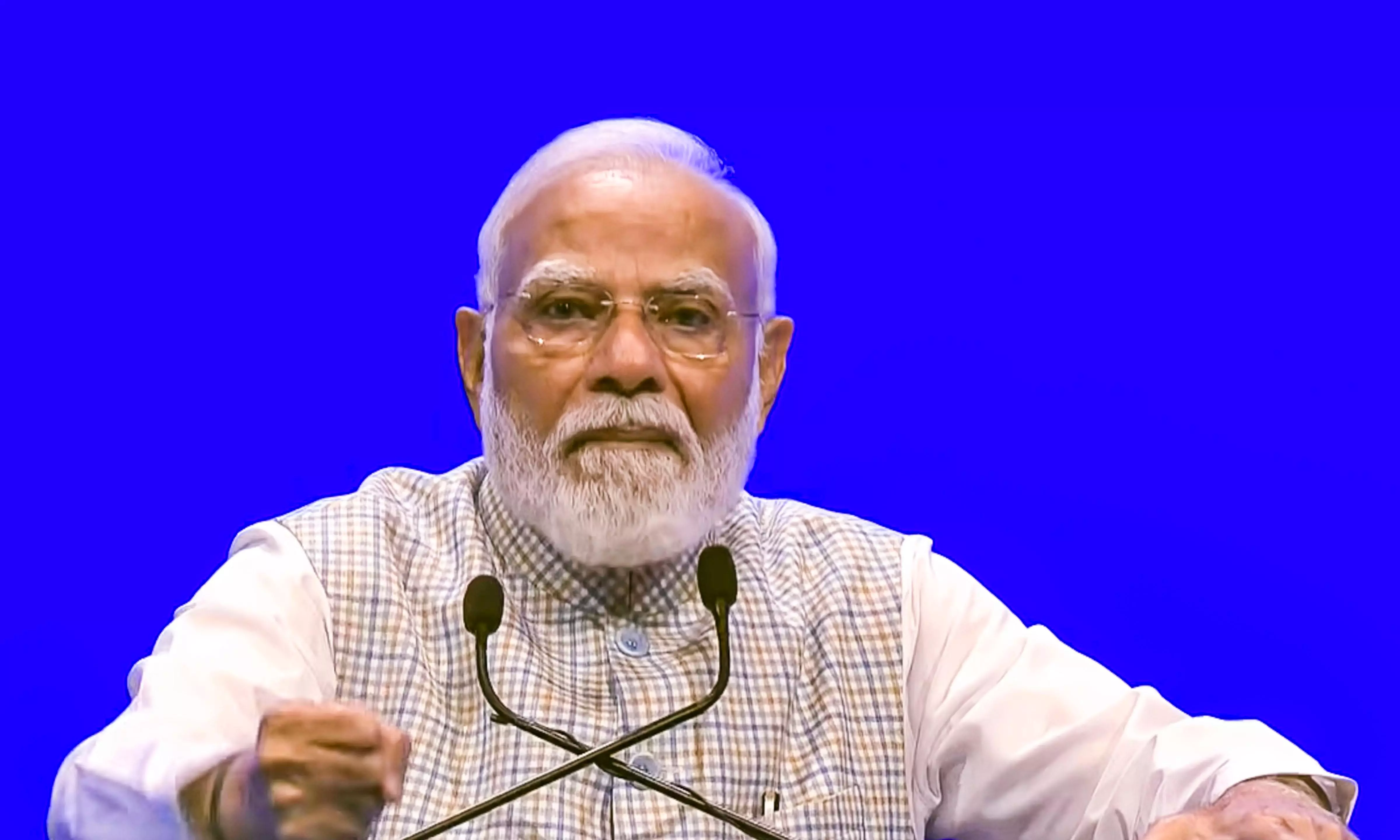
The case for a “Modi Restoration” rests on carrying the vision of Viksit Bharat beyond individual programmes and embedding it in India’s democratic institutions across generations. We have not had a leader like Mr Narendra Modi, who is celebrating 25 years in public life, since long. The task now is to make that his vision endures through productive, quality jobs, investment in people and research, and institutions reinforced to work together. The Meiji lesson remains relevant: National ambition must be supported by capabilities that sustain progress through changing circumstances.
Development is increasingly becoming a cross-sectoral affair. Manufacturing requires energy, transport, finance, technology and skills; disruption in one can affect them all. Catastrophic changes like environmental disasters, geopolitical conflicts and cyberattacks can compound each other. Such polycrises calls for anticipating risks and preparing responses before emergencies arise.
Preparation requires testing assumptions. What if automation raises output without creating sufficient employment? What if an energy shortage coincides with floods and cyberattacks? Counterfactual thinking compares policy choices with alternatives; scenario testing examines possible disruptions and better options. Thus, resilience must be accompanied by adaptability and the capacity to improve through out-of-box thinking.
Let’s begin with small enterprises, the backbone of our economy and society. Their participation in value chains connects industrial expansion with local suppliers, employment and household incomes. India’s Export Promotion Mission, with an approved outlay of Rs 25,060 crore for 2025-26 to 2030-31, recognises their interconnected financing, compliance and market-access constraints. Its success will depend on whether smaller firms can secure buyers, meet standards, fulfil orders profitably and receive payments promptly.
Stronger links with large firms who can be incentivised for helping smaller suppliers meet quality standards, reporting requirements and delivery schedules may work. Access to technology and technical guidance can also build their capacity to undertake higher-value activities. Budgetary support and trade partnerships create opportunities; coordinated implementation determines their value.
Mineral security presents similar opportunities. The National Critical Mineral Mission supports domestic capabilities as clean-energy technologies increase demand for strategic materials. AI and subsurface mapping can guide exploration, alongside viable processing, reliable transport and environmental safeguards. Recycling batteries, electronic waste and industrial scrap can recover valuable materials, provided collection and processing are safe. Both require coordination across mining, manufacturing, energy and urban management, with attention to workers’ health.
Research underpins these capabilities. Figures as of July 2026 show research expenditure reaching 0.84 per cent of GDP in 2023-24, compared with 0.64 per cent in 2020-21. Further investment should strengthen connections between universities, public laboratories and enterprises. Smaller firms need access to research facilities and expertise; researchers need dependable funding and professional freedom.
The August 2026 Periodic Labour Force Survey recorded labour force participation among those aged 15 and above at 55.6 per cent, including women’s participation of 34.8 per cent. These gains, including their progress, must translate into better earnings, productive employment and opportunities for advancement.
NITI Aayog’s 2026 skilling report highlights the substantial number of young people outside education, employment and training. This underscores the need to connect education with livelihoods. Apprenticeships, industry partnerships and affordable retraining should respond to changing demand in an adventurous way, because the existing methods have not delivered. Success should be measured by whether those trained secure and sustain productive employment, rather than simply by the number of schemes or apprenticeships undertaken.
Alongside finance, technology and skills, a predictable regulatory environment is a catalyst for development. Optimal regulation requires assessing economic, social and environmental consequences together. Regulatory Impact Assessment provides a systematic way to examine the need for intervention, compare alternatives and assess likely costs, benefits and unintended consequences before rules are adopted. It can, therefore, help identify approaches that advance development while safeguarding businesses, workers, consumers and environment.
These priorities require institutions capable of working together. Industrial incentives cannot compensate for unreliable electricity, inadequate skills or delayed approvals. Inter-ministerial coordination must, therefore, extend beyond consultation to shared outcomes, aligned budgets, compatible information systems and clear responsibility for resolving bottlenecks. Coordination between Union ministries, state governments and sectoral regulators can help prevent conflicting requirements and duplicated compliance.
Such coordination depends on preserving and strengthening our existing institutions. Professional judgement and institutional memory deserve protection alongside accountability. Decision-makers need “skin in the game”: responsibility for implementation and longer-term consequences, with room for honest experimentation and correction. Competitive federalism can help states test approaches suited to local conditions, while national coordination spreads successful practices. Without political prejudices, the Union government must enter into a growth compact with all states.
Two institutional reforms are a must: judicial reforms to cut down delays, and administrative reforms which can make the civil service accountable, with lateral entry and lateral exits.
Both the above reforms can help improve the institutional effort, beyond doing business to improving ease of living. GDP measures economic output, but cannot adequately capture development, the security of livelihoods, access to essential services, quality of employment and ability to withstand illness or other shocks also matter. Growth and welfare are two sides of the same coin: development.
Direct cash transfers can provide immediate support to vulnerable communities, but lasting security requires sustainable financing, reliable healthcare, quality education and productive livelihoods. These strengthen people’s ability to work, learn and nurture entrepreneurship, making welfare a foundation of sustainable development.
Government, industry and other stakeholders should thus work hand in hand to review critical dependencies, diversify suppliers and markets, and test contingency arrangements. Preparedness must become an institutional practice, supported by evidence, coordination and regular evaluation.
This is where resilience, adaptability and anti-fragility meet: withstand disruption, adjust as conditions change, and use experience to improve. A well-thought-out Modi Restoration will endure when these practices become part of everyday institutional decision-making, enabling economic progress to widen opportunity and improve lives across generations.
Pradeep Mehta is the secretary general at CUTS International, a 40+-year-old global public policy
research and advocacy group. Tasmita Sengupta, senior research associate,is the co-author of this article.
