Pavan K. Varma | SIR A Massive Fraud By EC Against India’s Poor

But for the vast numbers of the deprived and underprivileged, the perspective is radically different. For them, democracy is a visible avenue for empowerment and status
It is a fact that the elite classes in India vote in lower percentages than the poor. The reason is that for relatively privileged Indians, the incessant cacophony of democracy is often tiresome. Elections are seen almost as a democratic compulsion in which there are too many of the unwashed masses, too much linguistic vulgarity, and too many unbearable claimants to power. What is worse, to win, politicians have to accommodate and cater to the needs of those very people who are below the hierarchical superiority of the well-to-do. That is why for the middle class and above, voting is often an optional exercise.
But for the vast numbers of the deprived and underprivileged, the perspective is radically different. For them, democracy is a visible avenue for empowerment and status. Many of them may be illiterate, but collectively, they have a keen sense — most of the time — of who can best represent them. They know that whoever may be in power, the opportunity will come, every five years, to throw them out or — at the least — express their disapproval. The only weapon they have for this is the vote. That is why elections for them are pivotal.
To deprive the poor and vulnerable of their rights as a voter is to take away from them the only link to participate in a system where otherwise they are marginalised. It is to cut the umbilical cord to their political relevance. For those on the lowest rung of the ladder, the right to vote is why they retain hope above the waterline of despair. In a country like India, where the gap between the haves and have nots is both blatant and growing, and socio-economic inequity is near institutionalised, electoral disenfranchisement can ignite that despair into anarchy and rebellion.
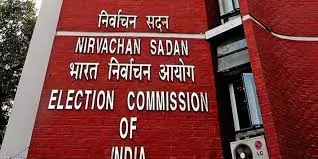
This is the essential point that the Election Commission of India (EC) must understand while implementing the Special Intensive Revision (SIR) exercise. Nobody questions the autonomous authority of the EC under the Constitution to conduct free and fair polls. Nor can one question its prerogative to ensure the shuddhata or purity of the electoral rolls. But if this is done in the ill-timed and badly executed manner of the SIR, there is a genuine fear that legitimate voters will be disenfranchised, even if some unentitled voters are deleted.
The Supreme Court (SC) during the hearing on this matter on July 10, while not arbitrarily diluting the autonomy of the EC, raised three exceptionally relevant questions. Firstly, why is the EC not accepting, as always, the Aadhaar card, voter card or ration card as proof of identity? This point was strongly reiterated by the SC on the next hearing on July 28 when it said that the ECI should ensure ‘mass inclusion not mass exclusion’ of voters, and if this is not done, the apex court will step in. The EC would do well to heed this warning. Secondly, why is the EC conducting an SIR in June, just a few months before the elections? The last SIR was conducted in 2003. Why suddenly decide to do it in Bihar now, and that too so late? Surely, in a state where the electorate is as large as eight crores, sufficient time is required to conduct the exercise efficiently and credibly? And, thirdly, how has the EC usurped the right to determine citizenship, when that is under the purview of the Union home ministry?
According to the 2011 Census, roughly 50 per cent of women and 40 per cent of men in Bihar are illiterate. As per the Caste Census in Bihar of 2023, conducted by the NDA government in power in the state, only three per cent of dalits, five per cent of the extremely backward classes — EBC or ati pichchadas, and seven per cent of Muslims have passed Class XII. Together, these three categories, constitute the majority of the population of Bihar. Given this, how will such a large number of people who can neither read nor write, or are but minimally literate, navigate the rampantly corrupt local bureaucracy to get the new documentation required by the EC within the short time available?
Moreover, Bihar has the highest rate of out-migration among all Indian states. Lakhs — if not crores — of Biharis are migrants in other states. How will they, living and working in miserable conditions in far flung parts of the country, arrange for their documentation? At best, they manage to visit their homes only once or twice a year, either during a festival like Chhath, or because of some contingent family reasons. They have thus far taken their voter legitimacy for granted, but now they are being told that through a process of new and complex documentation they have to prove that they are citizens.
The truth is that there is complete panic and confusion on the ground, as the helplessly poor desperately seek enfranchisement. The EC’s inflated statistics of completion of SIR are far removed from ground realities, as any truthful EC functionary will tell you. To meet the EC’s unrealistic time deadline, BLOs are merrily doing what they wish to, sometimes stamping unfilled forms, at others accepting unauthorised documentation, and still worse, omitting to enumerate entire groups of villages or communities. The annual floods in north Bihar, which have left large numbers inaccessibly marooned, is another hindrance. The entire exercise, as witnesses report, is a massive fraud, sought to be somehow executed in an unsustainably compressed time period to fulfil the EC’s statistical diktats of having “completed” the exercise. What is unforgiveable is the lack of transparency. The EC should put up on a public website the names it has deleted, the reasons therefor, and those that it has added and on what basis. The time window that has currently been provided to voters for appeal or rectification, is too small, but even to avail it voters must know whether they are in or not.
I am reminded of the line: “Hum unki yaad mein aksar unhi ko bhool gaye.” In targeting illegal migrants, which it should, the EC has seriously threatened large numbers of legitimate voters. That is a disaster, because the poor have little else than the ballot box.
