Pavan K. Varma | Resignation of Pradhan: What Took Him So Long?

Madhavrao Scindia, as civil aviation minister, resigned in 1992 after the crash of a leased Russian aircraft, although there was no loss of life. The resignation was accepted. Nitish Kumar resigned as railway minister after the Gaisal train disaster in 1999, in which nearly 300 people died
In the parliamentary elections of 2014, Nitish Kumar’s JD(U) got just two seats out of 40. I was with him when he decided to resign as chief minister and take moral responsibility for the debacle. Soon the news spread, and party leaders and MLAs thronged his residence to persuade him not to do so. The JD(U) still had a comfortable majority in the state Assembly, and there was no compulsion for Nitish to resign. But he was adamant. An unsuspecting Jitan Ram Manjhi then became CM.
What Nitish Kumar did was a matter pertaining to politics. But the principle is the same: Authority and accountability are inseparable. A public office is not merely a privilege but a burden of responsibility. A minister is not expected to resign only when he has personally committed an illegality, or when an inquiry had established his direct culpability. He could resign because something grave had gone wrong in the department he headed.
Constitutionally, the position is clear enough. The Council of Ministers is collectively responsible to the Lok Sabha, and individual ministers hold office during the pleasure of the President, in practice on the advice of the Prime Minister. But constitutional accountability is only the minimum requirement. There is also a moral and political accountability which cannot be reduced to a clause in the Constitution. A minister is entrusted with a portfolio because he is presumed capable of exercising supervision over it. If that system suffers a catastrophic failure, the minister cannot simply say: I did not personally do it; some subordinate officer did.
That was once understood in India, and there are many such examples in our democratic history. The most celebrated example is Lal Bahadur Shastri. As railway minister, he offered his resignation after the Mahbubnagar accident in 1956, in which more than a hundred people died. Prime Minister Jawaharlal Nehru initially persuaded him against it. But after the Ariyalur railway disaster later that year, which killed over a hundred people, Shastri resigned. He had not caused the accident. Yet he believed that as the minister responsible for the grave failure, he had to bear moral responsibility. His resignation became one of the defining examples of political probity in independent India.
T.T. Krishnamachari resigned as finance minister in 1958 in the aftermath of the Mundhra scandal, involving the controversial investment of LIC funds. The issue was not that Mr Krishnamachari had personally enriched himself. The larger question was whether the minister could disclaim responsibility for the functioning of his ministry. He could not.
V.K. Krishna Menon resigned as defence minister in the aftermath of India’s disastrous performance in the 1962 war with China. Again, resignation was not a judicial verdict of personal guilt. It was an acknowledgement that the person at the apex of a crucial ministry could not indefinitely remain insulated from the consequences of institutional failure.
Madhavrao Scindia, as civil aviation minister, resigned in 1992 after the crash of a leased Russian aircraft, although there was no loss of life. The resignation was accepted. Nitish Kumar resigned as railway minister after the Gaisal train disaster in 1999, in which nearly 300 people died. The resignation was an explicit acceptance of moral responsibility. Mamata Banerjee did something similar in 2000 after the Howrah-Amritsar Mail accident in Punjab, in which more than 40 people were killed. She said she regarded it as her moral duty to resign. Prime Minister Atal Behari Vajpayee, however, did not accept her resignation.
Union home minister Shivraj Patil and Maharashtra chief minister Vilasrao Deshmukh resigned after the grave security failures responsible for the Mumbai terror attacks of November 2008, explicitly owning moral responsibility. The higher the office, the greater the obligation to answer for what happens under one’s watch.
The Prime Minister is, of course, constitutionally entitled to decide whom he wants in his Cabinet. A minister’s resignation cannot become a weapon that the Opposition brandishes after every administrative failure. Nor should ministers be sacrificed merely because a political adversary demands it. Government cannot function if every accusation automatically becomes grounds for dismissal.
But the opposite extreme is equally dangerous: The notion that a minister should remain in office unless a court, investigative agency or parliamentary committee establishes personal culpability. That reduces ministerial accountability to merely theory. Democracy requires something more.
A minister is not a bureaucrat. Bureaucrats administer; ministers lead, supervise, defend policy and accept political responsibility. If a system fails spectacularly, it is hardly sufficient to suspend a few officials and announce a committee of inquiry. The minister must ask himself whether his continued presence strengthens public confidence in the system or weakens it.
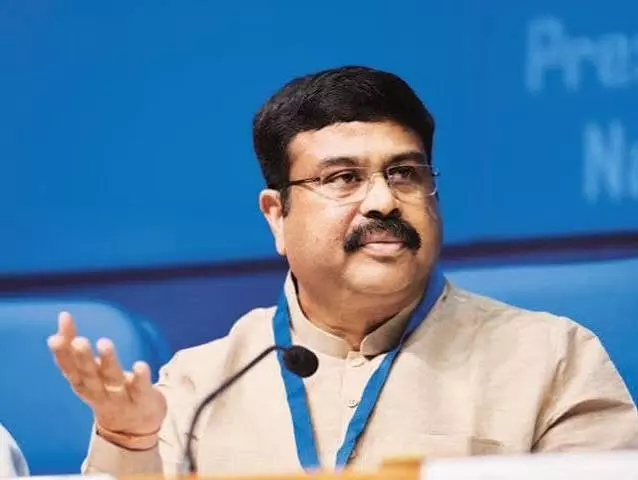
Which brings us to Dharmendra Pradhan. The Neet-UG controversy was not a minor administrative inconvenience. It involved allegations of paper leaks, irregularities and compromised examination procedures affecting the future of lakhs of young Indians. The education ministry itself was compelled to order investigations; the NTA’s conduct came under intense scrutiny; and the Supreme Court had to intervene in the matter.
The issue, therefore, was not whether Mr Pradhan personally leaked a paper. That would be a wholly different question, to be determined by investigation and law. The question was whether the minister responsible for the country’s examination architecture should accept political and moral responsibility when that architecture spectacularly failed. It was unfortunate that for very long Mr Pradhan did not, because resignation in such circumstances is not an admission of criminal guilt. It is an affirmation of accountability.
Instead, the prolonged refusal to accept the moral dimension of the controversy conveyed an altogether different message, that responsibility would travel downward, to the National Testing Agency, officials and bureaucrats, but need not necessarily travel upward to the minister.
Dharmendra Pradhan has finally done the right thing by resigning. But the question that will persist is: Why did he take so long? For his own image, and of the government, he should have done so much earlier. Public office is not a shield against accountability; it is the reason accountability exists.
