Pavan K. Varma | Hold Census, Try Forge A Delimitation Consensus

The last major delimitation exercise was based on the 2001 Census, although the number of seats in the Lok Sabha remained frozen. India’s population has changed dramatically since then. Urbanisation has accelerated. Migration patterns have altered demographic profiles. New economic centres have emerged. Electoral boundaries in many places no longer reflect contemporary realities
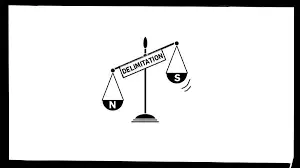
The government plans to bring a fresh Delimitation Bill in the next session of Parliament. There is a strong constitutional and democratic rationale for doing so. Democracies periodically redraw electoral constituencies to ensure that representation remains broadly aligned with demographic realities. The foundation of representative democracy is the principle that each citizen’s vote should carry roughly equal weight. Over time, population shifts create significant disparities between constituencies. Some MPs represent far larger populations than others. Such imbalances weaken the democratic principle of equal representation. Delimitation seeks to correct these distortions.
Indeed, many would argue that delimitation is already overdue. The last major delimitation exercise was based on the 2001 Census, although the number of seats in the Lok Sabha remained frozen. India’s population has changed dramatically since then. Urbanisation has accelerated. Migration patterns have altered demographic profiles. New economic centres have emerged. Electoral boundaries in many places no longer reflect contemporary realities.
Yet, delimitation is not merely a matter of arithmetic. It touches upon the delicate balance between population, political power, federalism and national unity. States such as Tamil Nadu, Kerala, Karnataka, Andhra Pradesh and Telangana have, over decades, invested heavily in education, healthcare and family planning. Their fertility rates have fallen significantly. Their population growth has stabilised. Simultaneously, these states have emerged as major contributors to national economic growth and tax revenues. If delimitation is conducted strictly on the basis of population, these states fear a reduction in their relative political influence in Parliament. States in northern India, where population growth has remained higher, would gain proportionately greater representation.
Whether this perception is fully justified is beside the point. Politics is not only about facts; it is also about psychology. Nations are held together not merely by constitutional provisions but by a sense of fairness. No democratic adjustment, however technically sound, should come at the cost of weakening the emotional bonds that hold the Union together.
There is also the question of whether delimitation can or should proceed without an updated census, which was due in 2021 but postponed due to Covid. Logic would suggest that it cannot. Delimitation is fundamentally a population-based exercise. If the objective is to ensure accurate representation, then the most current and authoritative population data must be available before any exercise begins. Conducting delimitation without a census would invite accusations that the process rests on incomplete or outdated information.
Moreover, delimitation is not merely about the number of seats. It also involves determining where constituency boundaries will lie. Such decisions can profoundly influence electoral outcomes. Consequently, the body entrusted with this responsibility must command universal credibility. The Delimitation Commission should therefore be constituted in a manner that inspires confidence across the political spectrum. It should be chaired by a retired Supreme Court judge of unimpeachable integrity. The Election Commission should be fully represented. States should have a consultative role. Parliamentary parties should be allowed structured participation. Public hearings should be mandatory. All proposed changes should be made public, with sufficient time provided for objections and revisions. The commission’s proceedings should be conducted with maximum openness. Transparency is often the best antidote to suspicion.
For all of these reasons, I would urge the government to invest in building a consensus around the delimitation exercise through a constructive discussion with all political parties. One possibility is a phased implementation spread over several electoral cycles. This would allow political systems and public opinion to adjust gradually rather than confront a sudden redistribution of influence. Another option could be some form of weighted representation. This need not violate democratic principles if designed thoughtfully. Federal systems around the world often combine population-based representation with mechanisms that protect regional interests. The United States Senate, for instance, gives equal representation to states regardless of population. Germany's Bundesrat similarly incorporates federal balancing mechanisms.
India need not replicate these models, but it can certainly learn from their underlying philosophy. The objective would be to ensure that states which have successfully achieved developmental goals are not rendered politically disadvantaged as a result. Perhaps, it may be wiser to refer the bill to a select committee of Parliament where it can be debated further. A select committee would provide a structured forum for detailed examination. Constitutional experts, former election commissioners, demographers, economists and representatives of state governments could all present evidence. Such scrutiny would not weaken the legislation. On the contrary, it would strengthen its legitimacy. There is no virtue in haste on a matter that could reshape India’s federal balance for decades.
The central lesson from India’s history is that durable solutions emerge not from unilateral assertion but from enlightened compromise. The genius of the Indian Republic has always lain in its capacity to accommodate diversity while preserving unity. Whether in matters of language, regional aspirations, cultural identities or economic disparities, India has survived and flourished because its leaders recognised that consensus is often more valuable than speed.
Delimitation must therefore be approached not as a mathematical exercise but as a national conversation.
The principle of equal representation remains important. Democratic legitimacy requires that representation broadly reflect population realities. Yet the concerns of the south are equally legitimate. They arise not from parochialism but from a deeply felt belief that developmental success should not translate into political disadvantage.
The challenge before the government is therefore not whether delimitation should happen, but how it should happen.
A census must come first. A credible and transparent commission must be established. The bill should be examined by a select committee. Alternative mechanisms, including forms of weighted representation or phased implementation, should be seriously debated. Most importantly, every effort must be made to reassure the southern states that their voice will not be diminished in the councils of the nation.
India’s democracy is strongest when it combines principle with prudence. The country has repeatedly demonstrated that difficult questions can be resolved through dialogue, accommodation and mutual respect. The delimitation debate, which involves the core issue of how electoral representation is structured, demands precisely such statesmanship, since the continuing unity of the country can best be sustained not by fiat but by trust.
