Pavan K. Varma | Does America Ever Learn The Lessons Of History?

Instead of recognising these growing fault lines, Washington chose to see only what suited its interests. The Shah was perceived as a bulwark against communism and a guarantor of oil supplies
History, when ignored, has a curious habit of returning as tragedy. In this context, the question that arises today, with renewed urgency, is whether the United States of America has ever truly learned the lessons of its own history.
For over seven decades, the United States has exercised unparalleled influence over global politics. It has possessed the power to shape alliances, orchestrate interventions and determine the fate of governments thousands of miles away from its shores. But the troubling pattern that emerges from this record is not one of wisdom born from experience. Instead, it reveals a persistent tendency to believe that complex societies can be moulded through external pressure, regime change or the installation of compliant rulers.
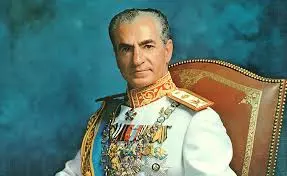
Few examples illustrate this more vividly than Iran. In the decades before the Iranian Revolution of 1979, the United States and its Western allies placed their weight firmly behind the Shah of Iran. Mohammad Reza Pahlavi was seen as a reliable ally in a strategically vital region. Iran possessed immense oil reserves, and ensuring access to these resources was central to Western geopolitical calculations. The Shah, with his Western education, his glamorous court and his enthusiasm for rapid modernisation, appeared to be the perfect partner.
Yet beneath the glitter of Tehran’s palaces, another Iran existed. It was the Iran of the bazaars, the clerics and the deeply rooted cultural and religious traditions of Persian society. The Shah’s aggressively Westernised lifestyle and authoritarian governance alienated large segments of his own people. Political dissent was suppressed, traditional institutions were marginalised, and the rapid pace of social change created profound anxieties among ordinary Iranians.
Instead of recognising these growing fault lines, Washington chose to see only what suited its interests. The Shah was perceived as a bulwark against communism and a guarantor of oil supplies. That he was becoming increasingly detached from the sensibilities of his own nation seemed, to American policymakers, a secondary concern.
The result is now part of modern history. The Iranian Revolution of 1979 swept away the monarchy and replaced it with a theocratic republic that has remained deeply suspicious of the United States ever since. What Washington had hoped would be a pillar of stability became a focal point of decades of hostility and geopolitical tension.
Nor is Iran an isolated case. In Turkey, the West enthusiastically celebrated the legacy of President Kemal Atatürk (1923-38), the founder of modern Turkey, whose sweeping reforms sought to transform a traditional Ottoman society into a secular, Western-oriented republic. Atatürk’s vision was undeniably bold, yet his model of governance also carried an implicit assumption — that a largely conservative and religious society could be permanently steered by an elite secular establishment closely aligned with Western values.
For decades, this seemed to hold. The Turkish military repeatedly intervened in politics to blindly mimic alien value systems, while the US and Western governments applauded these interventions. But societies have memories and cultural identities cannot be indefinitely suppressed. Over time, the political energies of conservative and religious Turks found expression in new forms of democratic mobilisation. The rise of Recep Tayyip Erdoğan and the increasingly assertive conservative politics of modern Turkey represent, in many ways, a reaction to decades of perceived elite domination. What was once presented as a model Western-aligned democracy has evolved into a far more complex and contested political landscape.
In Vietnam, American policymakers believed they could contain communism through military intervention and the support of a fragile South Vietnamese regime. The result was a devastating war that cost millions of lives and ended with the very outcome Washington had sought to prevent.
In Iraq, the invasion of 2003 was justified on the grounds of eliminating weapons of mass destruction and bringing democracy to the region. The weapons were never found, the state collapsed, and the resulting instability fuelled sectarian violence and the rise of extremist movements.
Libya offers another cautionary tale. The Western-backed intervention that toppled Muammar Gaddafi in 2011 was celebrated as a victory for humanitarian principles. Yet the aftermath has been one of prolonged chaos, rival militias and a fractured state.
Equally troubling is the record of American support for unpopular regimes when it suited its geopolitical interests. In Chile during the Cold War, the United States backed forces that overthrew a democratically elected government. In South Africa, Western governments continued to maintain relations with the abhorrent apartheid regime ignoring its moral bankruptcy. The same pattern is evident with Pakistan too, notwithstanding its rogue record on supporting international terrorism and toppling democratically elected governments.
Today, under the presidency of Donald Trump, a new and troubling dimension is a growing attempt to legitimise the doctrine of regime change as an acceptable instrument of foreign policy. Such thinking reflects a profound misunderstanding of what nations truly are. Iran, for instance, is not merely a government that can be replaced through external pressure. It is an ancient civilisation with a rich cultural heritage stretching back millennia. Its population of nearly 90 million people inhabits a vast and complex landscape. Its political system, whatever its flaws, draws legitimacy from internal dynamics that cannot be easily manipulated from abroad.
America seems to believe — and now even more so under Trump — that possessing overwhelming military and economic strength gives it the licence to do whatever it wants, international law be damned. It also suffers from the delusionary conviction that Western political models represent a universal template for all societies. When powerful countries openly contemplate overthrowing governments they dislike, they send a message that the rules governing international conduct apply only to the weak, not to the strong.
Nothing of this should be construed as a tirade against the American people. Their belief in democracy is genuine, and their country’s technological innovation, cultural influence and economic dynamism are undeniable. But the US state, in conjunction with its all-powerful military-industrial complex, has repeatedly made mistakes based on a hubris that refuses to learn the lessons of history.
The question, therefore, remains as urgent as ever: When will America finally learn the lessons of history?
