Pavan K. Varma | As Dust Settles On Verdict, Questions Linger In The Air

This phenomenon is not new. Indian voters are among the most politically discerning in the world. They may tolerate shortcomings for a while, but over time they seek accountability. The emotional attachment between voter and party in India is often far less permanent than political commentators imagine
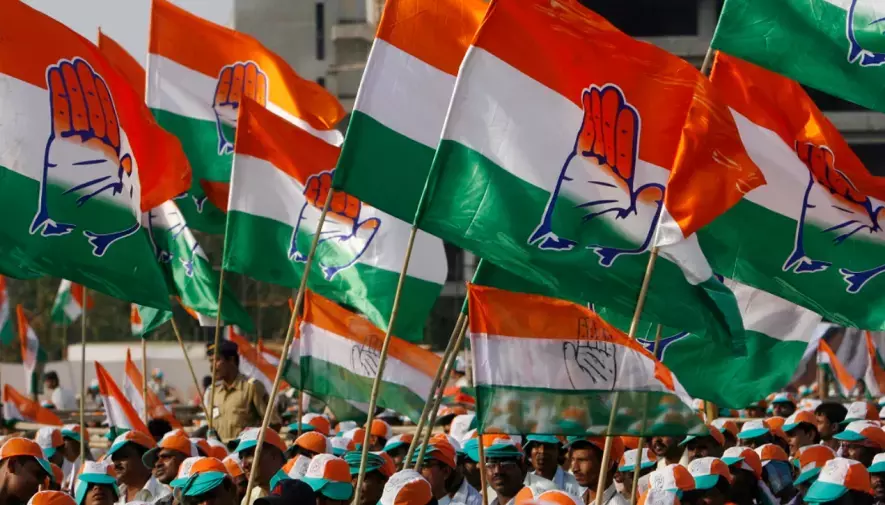
In the aftermath of the recent Assembly elections in India, four broad conclusions emerge with unmistakable clarity: the role of anti-incumbency, the remarkable organisational achievement of the BJP, the transparent disunity of the Opposition and, finally, a deeply troubling question relating to the disenfranchisement of lakhs of voters in the name of electoral procedure. Taken together, they reveal much about the changing nature of Indian politics and the health of our democracy.
The first lesson is that anti-incumbency remains a potent force in Indian electoral politics, irrespective of the stature or charisma of regional leaders. In Kerala, the ruling LDF faced visible erosion of support after years in office. In West Bengal, despite the formidable political instincts of Mamata Banerjee and the deeply rooted social architecture of the TMC, there was unmistakable fatigue against a party accused by critics of arrogance, corruption, and excessive politicisation of governance. In Tamil Nadu too, the DMK encountered the limits of incumbency, notwithstanding its welfare schemes and administrative experience.
This phenomenon is not new. Indian voters are among the most politically discerning in the world. They may tolerate shortcomings for a while, but over time they seek accountability. The emotional attachment between voter and party in India is often far less permanent than political commentators imagine. Beneath the rhetoric of ideology lies a practical electorate that asks a simple question: has governance improved my life? When the answer becomes uncertain, impatience grows.
Yet, if anti-incumbency was one defining feature of these elections, the second — and perhaps more striking — takeaway was the extraordinary rise of the BJP in West Bengal. It deserves acknowledgment even from its severest critics. Political honesty requires one to concede achievement where achievement exists.
The BJP began its journey in Bengal as a marginal player with barely a visible footprint. For decades, the state’s politics revolved around the Left and later the TMC. Bengal’s political culture, intellectual tradition, linguistic pride and historical memory did not naturally appear conducive to the BJP’s ideological appeal. And yet, through relentless organisational work, booth-level expansion, cadre mobilisation, social engineering and political perseverance, the party transformed itself into the principal challenger and now the victor in the state.
This did not happen accidentally. It required extraordinary determination and grit. The BJP leadership identified Bengal as a strategic frontier and pursued that goal with unwavering focus over many years. One may disagree with its politics, its rhetoric, or even aspects of its ideological orientation, but one cannot deny the formidable efficiency with which it built its machinery. Politics, after all, rewards stamina as much as inspiration.
Indeed, one of the reasons for the BJP’s continued national success lies precisely here: it fights every election with missionary intensity, while many of its opponents appear confused about whether they are even in the contest.
Which brings us to the third and perhaps most consequential conclusion: the complete bankruptcy of the Opposition.
The Opposition today resembles a fractured mosaic of competing egos, regional compulsions and tactical incoherence. It speaks incessantly of unity against the BJP, yet behaves in a manner that ensures division. In West Bengal, the Congress inexplicably fought against the TMC, despite repeatedly proclaiming at the national level that Opposition unity is indispensable to preserving democracy. In Kerala, the Congress-led UDF and the Left fought each other with customary bitterness, even though both claim to be part of a larger anti-BJP platform nationally. The contradiction is glaring.
What exactly is the Opposition’s strategy? Is it to defeat the BJP or merely to preserve isolated pockets of regional relevance? The Congress Party, in particular, appears trapped in a strange political delusion. It wishes simultaneously to lead the Opposition and weaken its potential allies. The result is self-destruction masquerading as principle.
In Bengal, the Congress secured roughly three per cent of the vote. That percentage is almost equivalent to the margin separating the BJP and the TMC. In Haryana earlier, the Congress failed to forge an understanding with the AAP, whose vote share hovered around five per cent — again, roughly the difference between victory and defeat. These are not minor arithmetic details; they are decisive political realities.
The tragedy is that democracy requires a credible Opposition. Not for the sake of one party or another, but for the health of the republic itself. A robust democracy demands scrutiny, accountability, debate and ideological alternatives. When the Opposition becomes weak, confused, or directionless, the entire democratic structure suffers imbalance.
The fourth and most disturbing issue emerging from these elections concerns the reported disenfranchisement of nearly 27 lakh voters because their documents could not be verified under the SIR exercise. Irrespective of the technical merits or administrative rationale behind the exercise, this development represents a serious blot on Indian democracy.
The right to vote is not a bureaucratic favour bestowed by the state. It is a constitutional entitlement of every citizen above the age of eighteen. To deprive citizens of this right because administrative procedures were delayed, inadequately implemented, or poorly communicated is profoundly troubling.
The gravest aspect of the matter is that the fault did not lie with the voters themselves. If the verification exercise was not initiated in time, or if institutional mechanisms proved incapable of handling the scale of scrutiny required, then the responsibility rests with the authorities, not the electorate. Democracy cannot punish citizens for administrative inefficiency.
Equally disquieting was the observation attributed to the Supreme Court of India that such voters could exercise their franchise “next time”. But democracy does not function retrospectively. A citizen deprived of voting in one election has suffered an irreversible democratic injury.
There is something morally unsettling about treating disenfranchisement with procedural casualness. For millions of poor Indians, voting is perhaps the only moment when the state recognises them as equals. The ballot is their instrument of dignity. To deny that right is to weaken the emotional contract between citizen and Republic. India’s democracy has survived because ordinary people, despite hardship and inequality, continue to believe that their vote matters. That faith must never be undermined.
The verdict of the people has been delivered. But the deeper questions raised by these elections will linger far longer than the celebrations of victory or the bitterness of defeat.
