Pavan K. Varma | After Dhankhar, Is Post of V-P Compromised?

Health cited for resignation, but mystery grows over his silence and missing public presence
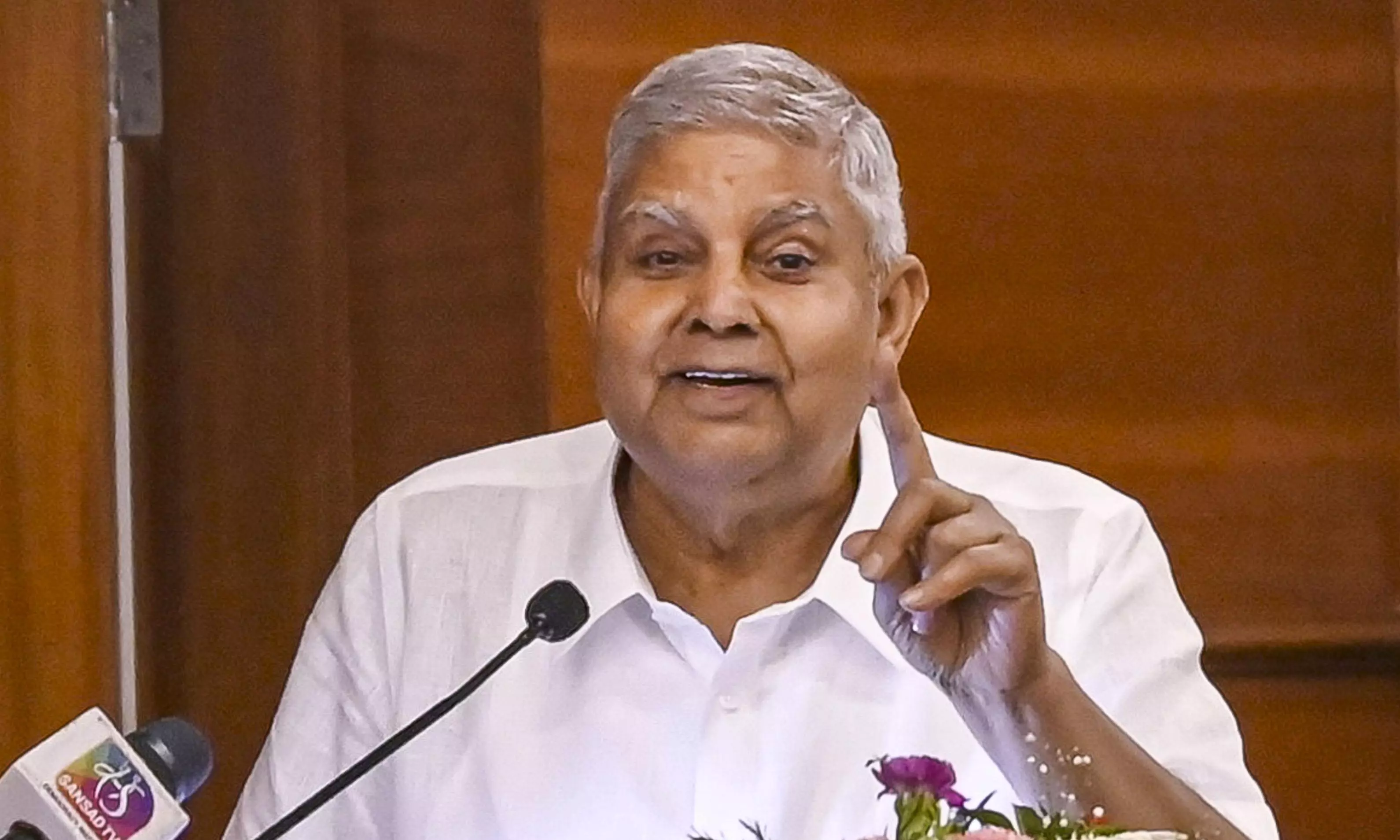
As we await the nomination of a new Vice-President, the mysterious resignation of former vice-president (V-P) Jagdeep Dhankhar on July 21, the first day of the Monsoon Session, appears to have been forgotten. Some people say that even his whereabouts are unknown.
As a nation we have short memories, and suffer from a strange collective amnesia about past events the moment they are overtaken by the next headline. We live from one breaking news to another, and there is no shortage of these. But the resignation of a sitting V-P — for the first time since India’s Independence — is not a trivial matter. The V-Ps who had resigned before had done so only because they were candidates for the Presidential elections. In his resignation letter, suddenly issued late at night, Mr Dhankhar cited health reasons. Perhaps, that could be true. But facts as known in the public realm, do not indicate that he was seriously unwell. He had recently undergone an angioplasty, a fairly routine procedure, and hardly serious or life threatening. At 74, he was not that old either. Also, there is no evidence that after his resignation he was admitted to hospital.
In fact, far from appearing indisposed, on the day he resigned he had a full and active day. As chairperson of the Rajya Sabha, he scheduled a meeting of the Business Advisory Council (BAC) at 12.30 pm, which was attended by Opposition leaders, and the BJP, represented by J.P. Nadda, Leader of the House, and Kiren Rijiju, minister of parliamentary affairs. None of those who attended have indicated that he seemed ailing, or anything less than his usual energetic self. The meeting was inconclusive and was scheduled to reconvene at 4.30 pm. But when it did so, there was one significant difference. Nadda and Rijiju did not attend. That very evening Mr Dhankhar resigned.
Obviously, there seems to be more than merely health reasons for this sudden development, all the more so since Mr Dhankhar’s office had announced his public engagements for the next week. What was the reason then for a person holding the second highest Constitutional post in the country, with two years more to go, to take the unprecedented step of abruptly resigning? By all accounts, he had been a V-P who was sensitive to the wishes of the ruling party, even though he was not obliged to be. Earlier, as governor, West Bengal, he remained constantly and publicly at loggerheads with chief minister Mamata Banerjee, much to the liking of the BJP. Perhaps, for his combative role in acting according to the BJP’s expectations, he was rewarded with the post of V-P, although even on merits, he was an eminent lawyer well versed on the Constitution.
As chairperson of the Rajya Sabha, his apparently partisan support for the Treasury Benches, led to the Opposition moving an impeachment motion against him, again a first in our parliamentary history. He had expelled Opposition members, and even fulsomely praised the RSS in the House. What did he do wrong then to annoy the BJP, as is clear by the non-attendance of Nadda and Rijiju in the BAC meeting at 4.30 pm on July 21?
There is speculation that the BJP did not like it when he admitted an Opposition proposal for the impeachment of Justice Shekhar Yadav of the Allahabad high court, who had allegedly made undignified communal statements. It is also said that his “error” was to accept the Opposition motion for impeachment of Justice Yashwant Varma, which the BJP wanted to take the credit of doing. Or, that his strident stand on parliamentary supremacy versus the judiciary was embarrassing for the government. It is also true that he was decidedly vocal about farmers not getting their due, which may have been perceived by the ruling party as irksome. Either way, it seems fairly apparent that he had done something that was not to the liking of the very party that was instrumental in making him the V-P.
If this was not the case, and his was an emotional over-reaction to something not seriously unpalatable, surely the Prime Minister or other senior leaders in government would have, at the very least, asked him to reconsider his decision and withdraw his resignation. But none of this happened. On the contrary, the President, who acts on the advice of the government, accepted his resignation with alacrity. In fact, there were reports in the media that all BJP MPs had been asked to sign on blank forms, with a view to moving, if required, a formal impeachment against the V-P. The impeachment process requires a resolution to that effect passed by a majority of members in the Rajya Sabha (RS), and endorsed by a simple majority in the Lok Sabha. The BJP-led NDA alliance has reached the majority mark in the RS, and, of course, has an overwhelming majority in the LS.
The really worrisome issue, if any of this is true, is the sanctity of an apolitical Constitutional post. If its incumbent can survive only if he subverts his oath of being apolitical, and can be allegedly arm twisted if he is disinclined to do so, then all those who helm independent institutions are even more dispensable if they don’t toe the ruling party line. Moreover, is not a person on a constitutional post, mandated to be above party politics, not allowed to have, within limits of constitutional propriety and public decorum, his or her independent views on national issues?
The trends towards compromising independent institutions, and those who lead them, is not new. The Congress and other governments have been equally guilty about using unethical methods to do so. All governments, while swearing by the Constitution, want pliable institutions. What does this mean for our democracy? If democratically elected governments themselves abdicate their duty to preserve the letter and spirit of the Constitution, then we can only hum again the popular song from the film Amar Prem: “Maanjhi jo naav duboye, use kaun bachaye? If the boatman himself sinks the boat, who can save it then?”
