Pavan K. Varma | A Better India Would Review, Not Ban Satluj

Yet it would be equally simplistic to conclude that because bans are often ineffective, every cinematic representation deserves unquestioned acceptance. Freedom of artistic expression does not place a work beyond criticism
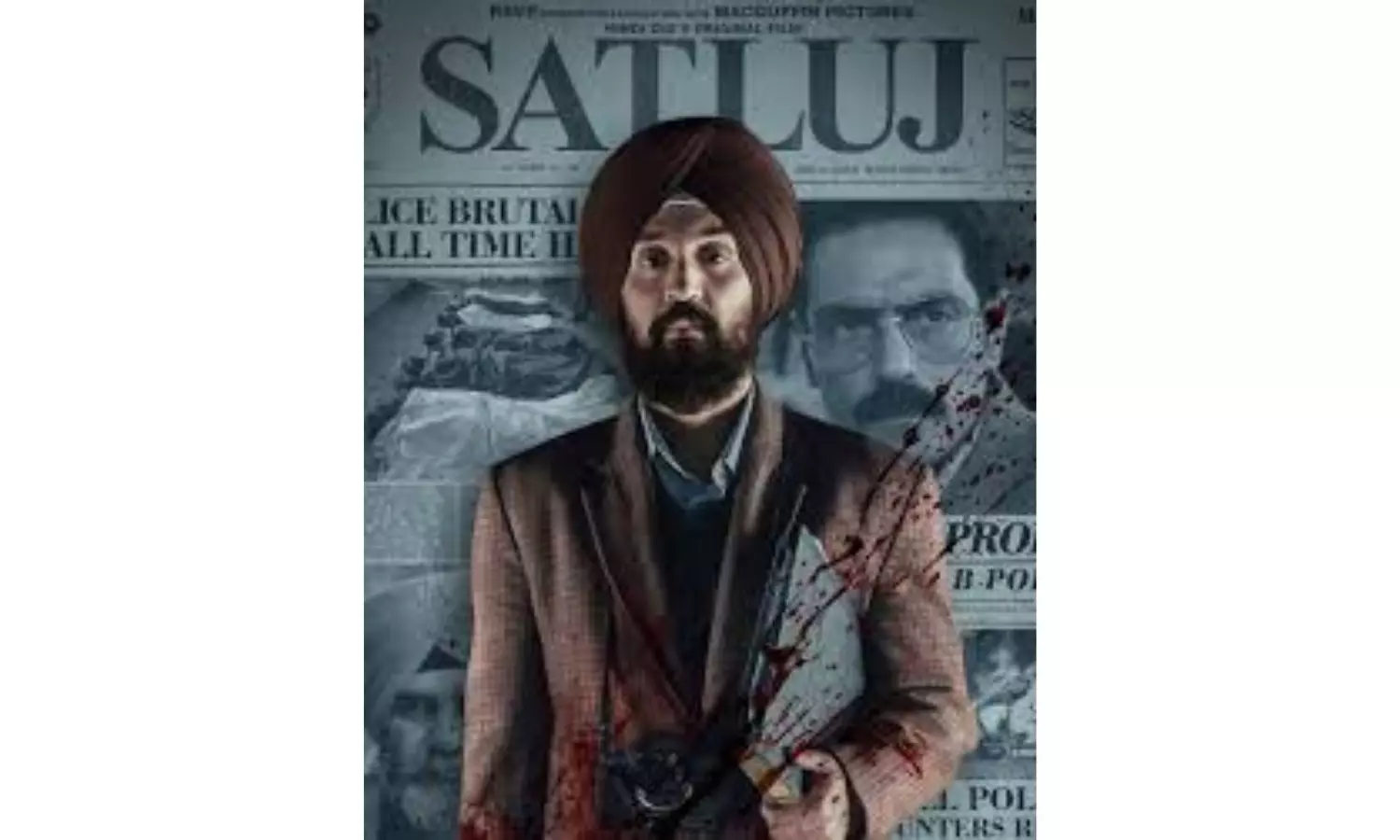
Since Independence, no secessionist movement has succeeded against the Indian nation. This is a tribute both to the safety valve of democracy, and the firm response of the state when compelling circumstances so warranted. The controversy surrounding the film Satluj has to be seen in this context. Does artistic freedom include the freedom to present a deeply selective version of history regarding one of independent India's bloodiest insurgencies? Equally, does the State possess the constitutional authority to prevent the exhibition of such a work if it believes that it distorts historical reality and threatens public order?
These are difficult questions because they pit two democratic goals against each other: freedom of expression and the responsibility to preserve public order and national integrity. There is a persuasive argument that banning a film is often counterproductive. In the digital age, censorship rarely succeeds. On the contrary, prohibition frequently creates martyrdom where none existed. A film that may otherwise have attracted only a limited audience suddenly acquires the aura of forbidden truth, and pirated copies circulate widely.
Yet it would be equally simplistic to conclude that because bans are often ineffective, every cinematic representation deserves unquestioned acceptance. Freedom of artistic expression does not place a work beyond criticism. Indeed, democracy demands precisely the opposite. Works dealing with traumatic episodes of national history must be rigorously interrogated — not because they question the State, but because they claim to represent historical truth.
The Punjab insurgency was not an ordinary political movement. It was an armed secessionist campaign that sought to break away a sovereign part of India through violence and lawlessness. According to official estimates, over 12,000 civilians, about 1,800 security personnel, a sitting chief minister Beant Singh, and 8,000 militants were killed. Independent estimates place the total even higher. Among those killed were thousands of entirely innocent civilians: schoolteachers, shopkeepers, farmers, journalists, government officials, religious leaders, passengers travelling on buses and trains, and ordinary villagers who simply happened to be in the wrong place at the wrong time.
One act of terrorism remains etched permanently in India's collective memory. On June 23, 1985, Air India Flight 182, the Kanishka, was blown up over the Atlantic Ocean by Khalistani extremists. All 329 people on board perished, including 268 Canadian citizens, 27 British citizens and 24 Indian citizens. It remains the deadliest act of aviation terrorism before the attacks of September 11, 2001. The conspiracy was conceived outside India, demonstrating that the Khalistani movement had already acquired dangerous international dimensions.
Pakistan was deeply involved in this threat to India. Its ISI actively trained, armed and financed militant groups operating in Punjab. Camps across the border provided sanctuary and logistical support. Weapons crossed into India with increasing frequency. Radio broadcasts and propaganda sought to inflame separatist sentiment. The insurgency was an externally assisted attempt to destabilise the Indian Union.
Many militant organisations degenerated into criminal enterprises. Kidnappings for ransom became commonplace. Extortion was institutionalised. Traders were forced to pay “taxes”. Those who refused were executed. Police personnel were assassinated. Village leaders were murdered on suspicion of colluding with the government. Fear became pervasive in Punjab. The State, therefore, confronted an extraordinary situation. It was not dealing with peaceful political dissent or constitutional protest. It was confronting organised armed groups determined to overthrow constitutional authority through terror.
None of this absolves the State of responsibility where excesses occurred. Credible allegations of fake encounters, enforced disappearances and extra-judicial executions have been documented by journalists, civil liberties groups and judicial inquiries. A constitutional democracy cannot permanently suspend the rule of law. Every unlawful killing deserves investigation.
But exceptional insurgencies often require extraordinarily difficult operational choices. All democracies have grappled with similar dilemmas — from Britain's struggle against the IRA to Spain's campaign against ETA and Sri Lanka's war against the LTTE. There are occasions when the republic has to act firmly to prevent an armed insurrection in the name of civil liberties.
The Naxalite movement of the late 1960s and 1970s offers an instructive parallel. Faced with an armed revolutionary movement committed to overthrowing the State through violence, governments employed methods that frequently stretched conventional policing. Whether every such measure was justified remains open to debate. But few would argue that the republic could simply have allowed an armed insurrection to proceed unchecked in the name of civil liberties.
This is precisely where the debate over Satluj assumes significance. If a film chooses to focus exclusively on alleged State excesses while virtually erasing the systematic campaign of terror unleashed by armed militants, it presents distorted history designed to incite, not objectively explicate. A one-dimensional narrative that humanises only one side risks becoming propaganda rather than art.
The Cinematograph Act, 1952, empowers the Central government, acting through the Central Board of Film Certification (CBFC), to certify films for public exhibition subject to reasonable restrictions, which include, inter alia, the sovereignty and territorial integrity of India. It is equally true that the Supreme Court, through successive judicial pronouncements, particularly its decision in S. Rangarajan v. P. Jagjivan Ram (1989), has emphasised that films should not ordinarily be suppressed merely because they are controversial or unpopular. The court held that freedom of expression cannot be curtailed unless there exists a proximate and reasonable apprehension of serious public disorder. Mere disagreement with a film’s perspective is insufficient justification for prohibition.
But the same jurisprudence does not prevent robust public criticism, scholarly rebuttal or the demand that historical works meet standards of fairness and factual integrity. Nor does it prevent the CBFC from requiring modifications where a film is demonstrably likely to undermine public order or threaten the sovereignty and integrity of India within the framework of Section 5B.
Even so, the better response to Satluj could have avoided outright prohibition. But there is a need to expose its omissions. No account of Punjab’s agony can erase the thousands of innocent Indians murdered by Khalistani terrorists. History deserves neither censorship nor selective memory. It deserves the whole truth.
