Parsa Venkateshwar Rao Jr | Sardar Patel, BJP and Idea of India: The Ideological & Moral Gulf Is Wide

Mr Singh praised Nehru as “Rashtra Purush”, saying the first PM led the country at a critical juncture and gave a new direction. He said it was because of Nehru India was the largest democracy in the world, and it was not confined to the elites
In the 11 years that he has been in power, Prime Minister Narendra Modi and his government had to observe the 150th birth anniversary of Gandhi in 2019, Nehru’s 125th birth anniversary in 2014 and the 150th birth anniversary of Sardar Vallabhbhai Patel, which falls on October 31, 2025. Prime Minister Modi had declared that the country should be free of open defecation to mark the 150th birth anniversary of the Father of the Nation. The government claims that 100 million household toilets had been constructed and six lakh villages are now open defecation free (ODF). On October 2, 2019, Mr Modi wrote an opinion piece in The New York Times paying glowing tributes to Mahatma Gandhi.
On the occasion of Nehru’s 125 th birth anniversary, Mr Modi did not participate in any meeting marking the event. A brief statement was issued by the Prime Minister’s Office, in which Mr Modi tersely said: “Today we mark the 125th birth anniversary of our first Prime Minister, Pandit Jawaharlal Nehru. My tributes to him. We remember Pandit Nehru’s efforts during the freedom struggle and his role as the first Prime Minister of India.” It was Rajnath Singh, then Union home minister, who had headed the committee for the celebrations and participated in the meeting to mark the occasion.
Mr Singh praised Nehru as “Rashtra Purush”, saying the first PM led the country at a critical juncture and gave a new direction. He said it was because of Nehru India was the largest democracy in the world, and it was not confined to the elites.
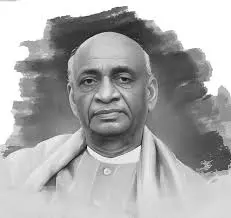
The government plans to mark the 150th birth anniversary of Sardar Patel, who Mr Modi and the BJP salute as a foil to Nehru, but this is patchy at best. There is the Sardar@150 Unity March from different parts of the country, and a parade by the Border Security Force at Kevadia in Gujarat, the site of the gigantic Statue of Unity of the Sardar.
The BJP did not cherish the memory of Nehru though Rajnath Singh paid glowing tributes. Mr Modi’s apparent hero worship of Gandhi was a political ploy on the part of the Prime Minister who knew that the BJP, and its ideological mentor, the RSS, had no recognised nationalist credentials. Mr Modi should have invoked Vinayak Damodar Savarkar and M.S. Golwalkar. But he is aware that they do not have the stature and charisma of Gandhi. Nor could he proclaim the inheritance of Syama Prasad Mookerjee and Deen Dayal Upadhyaya. They too did not carry the gravitas of a Gandhi, a Nehru and a Patel.
The second RSS supremo, M.S. Golwalkar, and his lieutenants, did not conceal their hatred of Gandhi in the run-up to freedom and Partition. It was this open hostility of the RSS towards Gandhi that made Patel ban the RSS immediately after his assassination. When the ban was lifted a little later, Patel imposed strict conditions on the organisation, and insisted it should shed its secrecy and run its affairs openly. Despite its ostensible openness, however, the RSS is not a transparent organisation. The RSS has no soft corner for Gandhi, Patel or Jawaharlal Nehru.
Among the trio, the BJP and Mr Modi personally feel much closer to Sardar Patel because they believe that among the top Congress leaders, Patel was the only tough Hindu politician in contrast to Pandit Nehru and the “inauthentic” India that he, in their eyes, represented. What, however, troubles the BJP leaders in embracing Patel is the Iron Man’s unflinching loyalty to Gandhi, and his genuine affection for Nehru. The differences between the two ardent lieutenants of Gandhi were never hidden, and they did not use them to play power games against each other. The exchange of letters between Patel and Nehru over Purushottam Das Tandon’s election as Congress president reveals the deep bond of fellowship that allowed them to state their opposed views to each other in letters.
The BJP detractors of Nehru forget that it was Sardar Patel who got Article 370 passed in the Constituent Assembly despite Nehru’s absence. Patel did not want to let down Nehru and the unity of the government and the Congress Party. The BJP believes that by abrogating Article 370 they have demolished Nehru’s legacy. They do not realise that by their vengeful act they have besmirched the memory of Patel as well. Patel and Nehru were again together in handling the “tribal raids” from the Pakistan side, which led to Kashmir acceding to India. The other myth that was assiduously spread by many right-wing Hindus and scrupulously secular scholars like A.G. Noorani was that Patel overruled Nehru in pressing for the police action in Hyderabad in 1948. Nehru and Patel were in one mind about the approach to the Hyderabad issue.
Patel was absolutely clear in his mind that India cannot be a state for Hindus, and that Muslims are an essential part of Independent India. He categorically rejected the RSS view that India should be a Hindu state and Muslims cannot have a place in it. Patel was never the ideological liberal who waved the flag of secularism. But he knew that there can be no India without Muslims, Christians and other religious minorities. India’s unity was the supreme ideal for Patel, but that unity was not based on religion. The BJP and Mr Modi grudgingly talk about India’s cultural and religious diversity, much against their instinctive dogma of Hindu superiority. They are reluctant to talk about the principles that Gandhi and Patel had adhered to. That is what explains the symbolic homage to Mahatma Gandhi through Swachh Bharat and to Patel through Sardar@150 Unity March.
