Parsa Venkateshwar Rao Jr | Future Gridlocks Lurking Behind The IndiGo Mess

The fleet and the crew were working more shifts than they should have been. It is nice old capitalist rule: push the workers to breaking point and rake in the profits
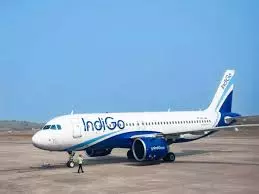
When the going is good, it is considered bad manners to raise questions about logic and rationale. The expansion of people travelling by air in India has been impressive from 2014 to 2025. The number of passengers has risen from 103 million in 2014 to 350 million in 2025, and the number of airports from 74 to 162 in the same period. IndiGo, the low-cost carrier, had emerged as the dominant player, with a 53 per cent share of the air traffic. But it was happening in an uncharted manner.
The fleet and the crew were working more shifts than they should have been. It is nice old capitalist rule: push the workers to breaking point and rake in the profits. There had to be some intervention, and it came when the pilots protested, citing the fatigue factor, which posed an acute safety problem not just to the pilots but to the passengers as well. The government directed that pilots could not do more than two landings at night, and gave time for the airline to comply. The deadline came, and there was the inevitable breakdown and chaos because IndiGo failed to comply. The government panicked and suspended the rule. The airline could not, however, go back to its maximal 2,300 flights and it was now forced to scale it down to 1,500 flights per day. It will affect over 80,000 passengers. It looks as though a tussle between the successful IndiGo and a helpless government, which loves the growth factor but it cannot ignore the alarm signals as the system gets overheated, as it were. IndiGo and the Directorate General of Civil Aviation (DGCA) are shuffling their positions to restore an uneasy normalcy.
The young and articulate civil aviation minister, Ram Mohan Naidu of the Telugu Desam Party (TDP), a key ally in Prime Minister Narendra Modi’s National Democratic Alliance (NDA) government, where the BJP is only the single largest party with 240 seats, falling short of 32 seats to have a majority of its own, flailed his hands when he stated in the Rajya Sabha that the expanding civil aviation sector has space for three or four major airlines, hinting that the monopoly that IndiGo enjoys is not good or healthy. The government is not able to make up its mind whether it wants a few big players or many small ones. When it comes to the banking sector, the government wants a few big players. And unwittingly or wittingly, it seems to favour the few big players idea, as can be seen in the benign expansion of the Adani Group, and the Reliance and Tata industrial empires. This is at the root of the BJP’s economic thinking. As far back as 2002, as law and commerce minister in the Atal Behari Vajpayee government, Arun Jaitley had explained that the Monopolies and Restrictive Trade Practices Commission (MRTPC) was a hurdle in the growth of the economy because Indian enterprises were not allowed to become big enough. The Competition Commission that was created to replace MRTPC is left to deal with insolvency cases and inter-corporate disputes. It does not deal with the basic issue of whether the principle of fair competition is followed or not. The truth seems to have now dawned on the government that monopolies can mean danger, which is quite evident in the case of IndiGo.
The economic thinking of the Narendra Modi government has never been realistic enough. Prime Minister Modi is now flying on his vision of Viksit Bharat 2047, which foresees a developed India by the time the country celebrates the centenary of its Independence. It is estimated that by 2047 India would have 350 to 400 airports, it would create 10 million-plus jobs and the numbers of air travellers will reach 1.1 billion annually. Visions become flights of fancy when they are charmed by statistical estimates. In the early days of this government, the fancy was that flights should be affordable, so that the man or woman on the street could fly, with the catchy acronym -- Mr Modi loves acronyms -- UDAN (Ude Desh Ka Aam Nagrik). Aircraft are not flying broomsticks. India would need a lot more planes to fly a billion people every day by 2047. The boost to the GDP is not very substantial. The sector contributed $53.6 billion in 2023-24, which accounted for 1.5 per cent of the GDP and 7.7 million jobs.
There is the climate change and carbon footprint issue. There is already afoot the sustainable aviation fuel (SAF) pathway through feedstock options, which includes non-fossil fuel components. It is still in the nascent stage. But it is a question that cannot be brushed aside. It is possible that in the not-so-distant future there will be a technological breakthrough that will enable individuals and airlines to fly electricity-run planes in the manner of electric cars, buses and other vehicles. While
there are plans to manufacture planes in India, apart from creating facilities for the maintenance, repair and overhaul (MRO) of civilian aircraft, not much homework being done on how to handle the growing air traffic. India is a large enough country which needs air connections. Flying from New Delhi to Bengaluru in three hours is indeed more efficient that travelling for 33 hours in a train.
The plans to create the manpower and infrastructure to sustain the increase in air traffic are missing. Suggestions on austerity are not welcome in growth-addicted societies. Therefore, ways have to be found in meeting the rising demand of consumption. The government is not in a happy situation. It has to manage growth without hampering it. The IndiGo episode is an example of how growth should and should not be managed. Too many rules would create a bureaucratic stranglehold. But the anarchy that would ensue without any rules is no less dangerous. Civil aviation could be one of the many starting points where the government and private sector think tanks should be glued to the drawing board to come up with detailed blueprints. While the number of planes that can hover over airports can be a lot more than can be imagined, the capacity of airports to cater to aircraft on the ground is quite limited. The details are indeed untidy and uncomfortable. But there is no way to avoid dirtying your mind even if the AI-run quantum computers are to do the number-crunching.
