Mohan Guruswamy | The Battle For Bihar: Democracy Is Dead… Long Live Democracy!
The democratic path depends most upon one human quality: restraint. From restraint flows the spirit of accommodation, which leads to the path of reconciliation
The Bihar election once again brings to the fore the quality of India’s democratic debate. Bihar often prides itself as the home of the Licchavis, the first practitioners of collegial governance and rule by discussion in about 7-5th century BCE. Their institution of discussion and obtaining general consent was the “gana sangha”. Of the 16 mahajanapada (great states) in ancient India, two located around today’s Vaishali followed the gana sangha form of government. The electioneering in Vaishali by Union home minister Amit Shah and RJD’s CM nominee Tejashwi Yadav was a different form of discussion than what took place in the mahaganasabha of the Licchavis. There was much name calling and extravagant promises, almost certainly impossible to keep, but meant to lure people’s support. This was democracy without restraints. The Buddha, who delivered his last sermon in Vaishali before his Parinirvana, wouldn’t recognise what transpired for democracy in Vaishali these past few weeks.
The democratic path depends most upon one human quality: restraint. From restraint flows the spirit of accommodation, which leads to the path of reconciliation.
Democracy is the only political system that seeks to reconcile diverse aspirations and demands to maximise their fulfilment.
Though mankind has known the spirit of democracy from time immemorial, the formal system of democracy is relatively recent. We seem to be still learning to live within it. Not surprisingly, every now and then, the democratic system is subjected to challenges, usually from within the fold.
The errant ways of our political leadership at national and state levels is a matter of grave concern. The lack of intelligent and sensible debate in Parliament portends bad days for our democracy. Even the few who care to attend Parliament seem to be doing so more with the intention of making propaganda by deed by resorting to un-parliamentary, mostly unsavoury, ways. No party seems without some blame attached it, for this seems to have become the norm these days.
Even the treasury benches, who should know better, seem to be caught up in this frenzy to make small points at great cost to our democracy. Is it any wonder that few matters get discussed in depth and at length in Parliament these days? The Budget, for instance, gets little attention. The finance ministers say more to CII and Ficci before and after the Budget is announced as if the Budget is only intended for them. As more importance is given to this constituency, more important and vital ones like the farm sector, the rural poor and the educated young get little attention and commitment in terms of resources.
A State that ignores the majority, especially a needy majority, and an increasingly angry and restive majority at that, does so at its own peril. The stresses and strains are showing everywhere around us. Not a day passes when some long-felt demand doesn’t result in an explosion of fury. Coercion begets more coercion, and soon the mob and State are fused together by paroxysms of violence. All restraint is thrown to the ill winds and with it goes the semblance of democracy. The ill winds have torn to shreds the sails of democracy meant to take the ship of state towards prosperity and national unity.
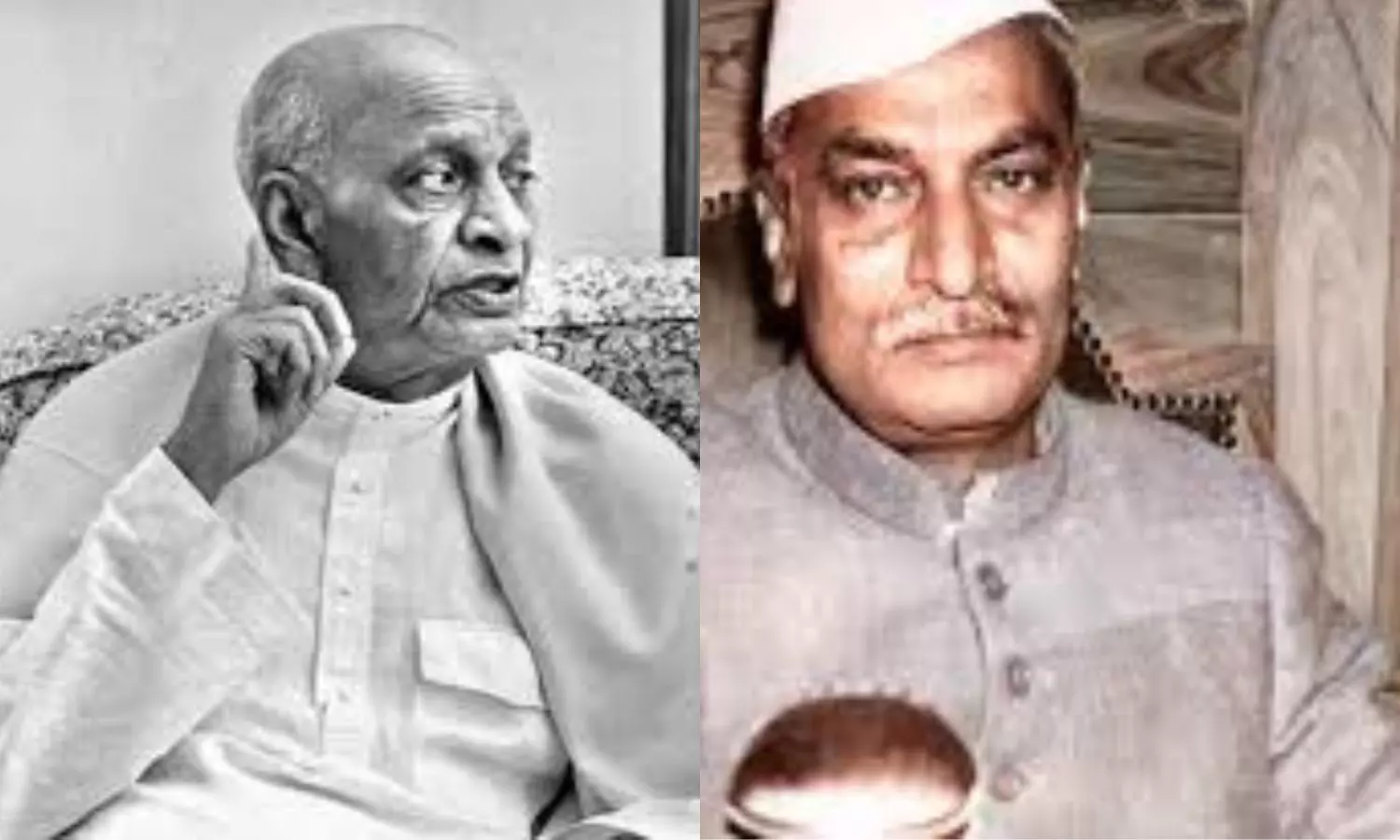
There is little purpose in citing instances, but even by today’s deplorable standards, the recent happenings in the Lok Sabha are a disgrace. The great leaders who founded our democracy, men like Jawaharlal Nehru, B.R. Ambedkar, Rajendra Prasad, Sardar Patel and Maulana Azad, would not recognise what is happening in the Lok Sabha these days. The House hardly meets. Good and qualified people no longer want to be part of a leadership that has made loot its prime purpose and does not care for political niceties and social courtesies.
Social justice has become the justification to perpetuate injustice, as if injustice in the name of one caste will set right all earlier wrongs, socially sanctioned or otherwise. The result is a government that doesn’t care about economic development and growth, forgetting that it alone can bring change to our society. It is distressing that the Centre, which has a responsibility to guide and help the states along the path of democracy towards constructive change, has abandoned its responsibilities for what it thinks is for the political advantage of its party. It is wrong in its assessment, but by the time it realises this it may be too late?
All recent economic trends point towards accretion of wealth and the benefits of policy by a small minority. We now not only have one of the highest income inequalities in the world, but the regional imbalance indices are even worse. Even one of the country’s worst droughts had not succeeded in awakening the government to the plight of the vast majority of our people who live under the shadow of the monsoon. The government’s attitude is reflected in its latest Budget which has nothing worthwhile for the poor and rural majority except a few doles that mostly don’t reach down to them.
Even worse is the limited focus of the national media, more so the English print media and television, on the concerns of a small and self-centred elite that propounds the so-called market reforms and so-called liberalisation only to help itself even more. The stock market loot and the sea of non-performing assets that have almost drowned the banking system are a lasting testimony to the concerns of this section for which the government mostly toils. In a true democracy the concerns and wants of the majority will be the focus of the State. Is it then surprising that people are increasingly resorting to coercion just to be heard?
Mohan Guruswamy is a scholar and author. The views expressed here are his own.
