Mideast War Test for India’s Strategy, Economic Strength

India, which imports over 85 per cent of its crude oil, with nearly half historically sourced from West Asia, is profoundly vulnerable.
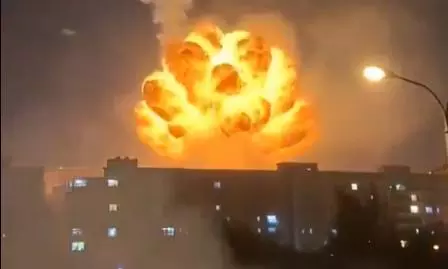
The US-Israeli strikes against Iran, besides being another regional flare-up, have come as a systemic shock to the Eurasian geopolitical and economic architecture. For New Delhi, the crisis lands with the force of a perfect storm, testing its strategic autonomy and economic resilience to the core.
The most immediate and visceral impact is on the macroeconomy, channelled through the price and composition of its energy imports. India, which imports over 85 per cent of its crude oil, with nearly half historically sourced from West Asia, is profoundly vulnerable. The spike in Brent crude directly exacerbates India’s current account deficit and exerts depreciative pressure on the rupee, widening the fiscal arithmetic the Union government must manage. However, a purely volumetric analysis of oil disruption misses the deeper, more insidious threat.
The threat is not just about quantity but quality. Iranian light crude, with its optimal API gravity of 33–36 degrees and moderate sulphur content, occupies a unique and critical niche in the global refining matrix. It is the ideal blend crude that global refineries, specifically designed to maximise middle distillate yields like diesel and gasoline, have optimised for.
It is not interchangeable with the ultra-light US shale (WTI), which fails to produce the necessary barrel composition, nor the heavy, high-sulphur Venezuelan grades that require different capital-intensive infrastructure.
The ghost networks of trade and finance running through the financial hubs of the Middle East for over two decades existed precisely because this specific molecular profile is irreplaceable for refining economics. Removing it from the global system forces every refinery into a sub-optimal throughput blend, eroding refining margins and increasing production costs even if headline crude prices stabilise. This molecular dependency is the hidden tax this conflict imposes on the petrochemical industry, from transportation fuels to petrochemical feedstocks. Though well-suited to process heavy and sour crude oil, the gains of much-advanced Indian refineries with high Nelson Complexity Index (NCI) are offset by a heavy import dependence coupled with a capricious purchase policy.
Beyond the refinery gates, the conflict tears through the fabric of India’s broader economic engagement with West Asia. The region is a market for Indian engineering goods, pharmaceuticals, textiles and basmati rice. The escalating hostilities have already disrupted the sea routes through which a significant portion of this trade transits. Freight and insurance costs have skyrocketed, rendering many shipments unviable and forcing delays that spoil perishable goods and breach contract timelines. Indian rice shipments face immediate disruption, with consignments stalled and letters of credit becoming harder to negotiate.
Concurrently, the $60 billion annual remittance lifeline from the six million-strong Indian diaspora, concentrated in the Gulf Cooperation Council (GCC) states, confronts jeopardy. A conflict-induced slowdown, if not recession, in the Gulf, driven by oil price volatility and investor flight, would directly translate into job losses and salary cuts for Indian expatriate professionals and blue-collar workers.
The stability mask of the GCC has been ripped off, exposing the hard security reality that their economic diversification — the giga-projects, the futuristic cities like NEOM, the tourism golden visas — is built upon a foundation which may now be perceived by global institutional capital as the proverbial Damocles sword. Iranian retaliatory strikes impacting areas near US bases in host nations confirm that the GCC’s security umbrella is porous.
For sovereign wealth funds and private equity, the long-term capital commitments required for urban development become untenable when the risk of ballistic missile fragmentation or a maritime drone attack on a desalination plant enters the risk matrix. The ambitious post-oil economy of the Arabian Peninsula will now bear the double burden of war reconstruction and a structurally higher risk premium demanded by investors.
Nevertheless, to portray Gulf Arab states as passive victims would be disingenuous. Besides Tel Aviv, the GCC countries too were deeply alarmed by Iran’s nuclear progress and its network of proxies. A US-Iran deal would have fundamentally altered the regional balance of power in Tehran’s favour.
In their calculus, a decisive, even if destabilising, blow to Iran’s programme was preferable to the slow erosion of their own security under a nuclear shadow. To whatever extent and to whatever ends they did facilitate the US and its anti-Iran campaign by housing military bases and providing overflight rights, they are the co-architects of the very crisis that now threatens to consume their economies. The retaliation they feared is now their reality, with Iranian missiles and drones targeting facilities in their territory.
The perceived endgame of Donald Trump, in this context, appears less about a decisive victory and more a function of a superpower in managed decline attempting to impose costs on its adversaries. The strikes, from one analytical vantage, are acts of a power seeking to disrupt rather than deter or resolve. By sowing chaos and raising the threshold for Iranian retaliation, Washington may calculate that it complicates the strategic environment for its primary competitors, China and, to a lesser extent, Russia, who have deepened their economic and security ties with Tehran.
It is a strategy of setting the cat among the pigeons for Asian and European powers who rely on the stability of the Persian Gulf’s energy flows and trade routes.
The diplomatic tightrope for India is now excruciating. India cannot accept the principle of regime change by force and the flawed premise of peace through coercion. Strategically, the conflict has dealt a body blow to two of India’s most significant connectivity initiatives. The Chabahar Port project now appears stillborn, a strategic opportunity ceded to competitors. More critically, the India-Middle East-Europe Economic Corridor (IMEC) lies in tatters. The IMEC’s logic depended on the seamless integration of Gulf logistics and stable regional politics. A conflict zone stretching from the West Bank to the Persian Gulf and further into the Indian Ocean may render the corridor unviable.
For India, the path forward is fraught with peril. The FTA negotiated with the UAE and one under negotiation with the GCC now operate in a diminished context, their potential undermined by trade disruption and economic contraction. The positives of enhanced market access are counterpoised by the paralysis of the very trade routes they were meant to facilitate.
The task for Indian statecraft in the months and years ahead would be to construct, from the waning edifices of American hegemony, Iranian resistance, Gulf glitz, and Israeli adventurism, a new framework for Indian engagement that protects national interests and secures economic prosperity without compromising strategic autonomy.
The only certainty is that the tightrope has never been narrower, and the fall, on either side, would be portentous.
