Manish Tewari | US Rendition Of Maduro Against International Law

It was the unilateral use of force against a sovereign state, followed by the abduction of its sitting head of state, without international authorisation
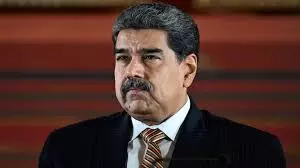
On January 3, 2026, a massive US operation across northern Venezuela culminated not only in air strikes and widespread power outages in Caracas, but in the extraordinary rendition of President Nicolás Maduro to the United States to face criminal charges. Air strikes, communications disruptions and civilian casualties accompanied what Washington has sought to frame as a law-enforcement action against an alleged criminal. In reality, the episode represents something far more serious — a frontal assault on the foundations of public international law and a moment that underscores the final convulsions of the so-called “rules-based international order”.
This was not merely an act of hostility against a disfavored regime. It was the unilateral use of force against a sovereign state, followed by the abduction of its sitting head of state, without international authorisation. If such conduct is permitted to pass without consequence, then the post-1945 legal architecture governing inter-state relations stands effectively dismantled.
Article 2(4): At the core of modern international law lies Article 2(4) of the United Nations Charter, which prohibits the threat or use of force against the territorial integrity or political independence of any state. This is not a technical provision or an aspirational norm, it is the bedrock rule upon which collective security rests.
The charter permits only two narrow exceptions to this prohibition — action authorised by the UN Security Council under Chapter VII, and the inherent right of self-defence under Article 51 in response to an armed attack. The US operation in Venezuela satisfies neither. There was no Security Council mandate authorising force, nor any credible claim of an armed attack by Venezuela triggering self-defence. Criminal allegations, however grave, does not constitute grounds for an “armed attack” under international law.
To argue otherwise is to erase the distinction between law enforcement and warfare- a distinction the Charter was explicitly designed to preserve.
No self-defence, no mandate, no legal cover: The attempt to justify the raid as a form of transnational law enforcement is legally untenable. International law does not permit states to unilaterally enforce their domestic criminal jurisdiction through military force on foreign territory. Arrangements like extradition, mutual legal assistance, and international tribunals exist precisely to prevent such abuses.
The International Court of Justice made this clear decades ago. In Nicaragua v. United States (1986), the Court rejected expansive interpretations of necessity and self-help, reaffirming that the prohibition on the use of force is a norm of customary international law binding on all states. The judgment underscored a simple principle — political objectives or moral claims do not generate legal authority to use force.
By acting outside the Security Council and the absence of any lawful trigger for self-defence, the United States has effectively claimed an exemption from the charter’s most fundamental constraint.
Abducting a sitting President: Even more alarming than the use of force itself is the forcible seizure of a sitting head of state and his transfer to a foreign court. Under well-established international law, incumbent heads of state enjoy personal immunity (ratione personae) from the criminal jurisdiction of foreign domestic courts.
The International Court of Justice reaffirmed this principle in the Arrest Warrant case (2002), holding that such immunity is essential to ensure the sovereign equality of states and the effective conduct of international relations. It is not a reward for virtue, but a functional necessity of the international system.
By abducting President Maduro and placing him on trial in US courts, Washington has not merely violated Venezuelan sovereignty; it has openly repudiated a cornerstone rule that protects all states, including itself, from foreign judicial coercion.
Domestic indictments not licences for kidnapping: The existence of US criminal indictments against Maduro — whether for narcotics trafficking, corruption or other offences does not alter this legal reality. Domestic law cannot override international obligations. If it could, every powerful state would be free to declare foreign leaders’ criminals and dispatch forces to seize them. That path leads not to accountability, but to chaos.
International law provides lawful avenues for addressing serious crimes — extradition pursuant to treaty, prosecution before international courts with appropriate jurisdiction or domestic prosecution after a lawful transfer of custody. What it does not permit is cross-border abduction backed by military force.
To ‘normalise’ such conduct is to replace law with power and procedure with coercion.
A precedent that endangers the entire system: The broader implications of this episode are deeply destabilising. If a permanent member of the Security Council can openly violate the charter and abduct a foreign President without consequence, the message to the rest of the world is unmistakable — rules apply selectively, and power decides legality.
Smaller and weaker states will draw the obvious conclusion that sovereignty offers no protection against the coercive reach of dominant powers. Others may emulate the precedent, citing “exceptional circumstances” of their own. The cumulative effect will be the erosion of the prohibition on the use of force into a discretionary norm, honored only when convenient.
This is precisely the outcome the UN Charter was meant to prevent.
What ‘rules-based order’? For years, the United States and its allies have invoked the language of a “rules-based international order” to criticise violations of international law by others. That rhetoric now rings hollow. A rules-based order cannot survive if its principal architects reserve to themselves the right to ignore its most basic rules.
The remedies to this crisis are difficult but unavoidable. International law lacks perfect enforcement mechanisms — the International Court of Justice cannot compel compliance and the UN Security Council is more than always paralyzed by geopolitics. Yet that does not absolve the international community of responsibility. What is required is a principled response with an independent multilateral scrutiny of the raid and rendition, serious deliberation within the Security Council, and recourse to judicial and political measures that uphold legality rather than mirror lawlessness. If democratic states truly value a rules-based order, they must demonstrate that commitment when the rules constrain power, not only when they discipline adversaries.
At a deeper level, this episode calls into question whether or not the current institutional framework is capable of limiting unilateral action by dominant states. Preserving international law demands fidelity even when compliance is inconvenient. If powerful states are permitted to operate outside of the limitations of the charter, i.e., on force, immunity, and non-intervention, then international law becomes a dead letter — neither respected in rhetoric, discarded in practice. Therefore, without limitations established by international law — anarchy shall prevail and gunboat diplomacy would be the norm once again rather than the exception.
