Manish Tewari | Global Shift In Mediation: Why West Can’t Call Shots

Today, a radical shift has occurred; European and Western actors are increasingly marginalised, while mediators are emerging from the Middle East, Asia and the Global South
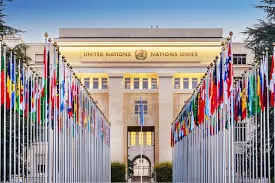
Throughout significant portions of the 20th century, peace processes and conflict resolutions across the globe were generally understood to occur within European contexts or mediated by Western actors. Significant examples are the Geneva Accords (1988) over Afghanistan and the Oslo Accords (1993) between Israel and the PLO that involved top-secret but protracted negotiations hosted by Norway. These exemplified the role of small, neutral European countries in negotiating some of the most intractable conflicts.
Switzerland was an ever-present presence in formal engagement, as it has a long tradition of neutrality and has been a favoured location for negotiation processes between global powers.
Today, a radical shift has occurred; European and Western actors are increasingly marginalised, while mediators are emerging from the Middle East, Asia and the Global South. Once seen as the ultimate authority in global peace processes, the United Nations, and its mediation efforts, are increasingly viewed as irrelevant.
The marginalising of traditional mediators is not just a function of declining economics or disinterest, but a more nuanced understanding of the geopolitical landscape shifting, the institutional frameworks failing, the elevation of transactional mediation, and the rise of new regional actors with their own leverage in today's fractured global landscape.
This signals a divergence from past norms and European venues, as well as Western peacemakers, lost favour and have been mostly displaced by actors who could offer practical solutions, access, and/ or leverage among the disputants.
The Age of European Mediation: In the wake of the Second World War, decolonisation left many unresolved issues across Africa, Asia and the Middle East, which have commonly been referred to as “ticking time bombs”, a legacy of the colonial powers. Smaller European countries like Switzerland and Norway became “honest brokers” in global disputes. Their neutrality and institutional experience positioned them as trusted convenors of peace. This tradition reflected Europe’s self-image as a neutral, rules-based mediator in a bipolar world order.
The Loss of Relevance: In the first quarter of the 21st century, the dynamics of global governance have seen a resurgence of regional powers and middle states returning as mediators of societal conflict. This has led to countries like Turkey, Qatar, the UAE, Saudi Arabia, and now China, emerging as global mediators. These states are utilising geographical proximity to failed states of civil conflict, regional and global weight and, importantly, pragmatic access to different actors in the conflict area.
These states are willing and able to engage in dialogue with both sides of a conflict and offer viable international conflict resolution processes that Europe increasingly lacks. Turkey recently mediated between Russia and Ukraine over the grain export crisis and Qatar was the go-between for both the US-Taliban negotiations that led to the Doha Accords of February 2020 and the talks between Israel and Hamas since October 2023.
Europe’s economic stagnation, domestic crises and rising global militarisation have constrained sustained peace efforts. Mediation started reflecting transactional priorities, with anticipated military and foreseeable economic returns overshadowing multilateralism.
The UN’s decline: Historically, the UN has been at the centre of peace negotiations but has repeatedly been stymied by internal politics and the veto power of the Security Council’s Permanent Five (P5). The stalled crises in Syria, Ukraine or Gaza have further undermined the UN’s credibility. Deadlocked mandates, contentious resolutions, and lack of enforcement signify points of institutional failure and a lack of legitimacy in UN-led mediation. In cases of longstanding conflict without a productive framework for compromise, the conflict prolongs, escalates or is resolved outside of traditional mediation.
Rise of Transactional Mediation: The Gulf monarchies represent the new model — mediation as practical, transactional, and by regionally based actors. These actors provide material incentives, humanitarian corridors and prisoner “swaps” that engage combatants’ interests, often without regard for inclusivity or transitional justice. Their willingness to negotiate with all parties, while providing logistics, security and monetary benefits contrasts with European mediators who were inhibited by their ideological orientation towards liberal values. Thus, mediation shifts from a process justifying social justice and inclusive peace to one concentrating on “elite bargains, zero-sum calculations and material concessions”, which provide immediate stabilisation instead of durable, legitimate peace.
The Ukraine debacle also accounts for Europe’s diminishing diplomatic role. Decades of voluntary European military subservience to the US coupled with the lack of a coherent pan-European strategic vision has left the Europeans virtually excluded from the Russia-Ukraine negotiating processes being midwifed by the US, despite the preponderant regional stakes.
The continuous denigration of opposing parties, the fractured priorities in Europe and the inability or reluctance to pony up the reconstruction euros and other such independent financial incentives has left it unable to bring any coercive pressure on to opposing parties while the US, Turkey, Qatar and Gulf states facilitate both quick mediation and ostensibly de-ideological solutions.
New agreements, such as the Saudi-Iran rapprochement mediated by China and the humanitarian prisoner transfers in the Ukraine conflict initiated by the UAE and Saudi Arabia, illustrate the growing prominence of convenors beyond Europe and the West. The Middle East’s experience with crises in the region and its pragmatic diplomacy offer pathways for negotiation, symbolising a qualitative change in the ethos and practice of mediation.
The Erosion of Liberal Peace: Europe’s liberal peace paradigm, comprising rights, multilateralism and inclusion, is increasingly marginalised in an era of realpolitik and transactional arrangements. Authoritarian actors and illiberal coalitions are disregarding or deliberately misappropriating the EU, conceptualising a hybrid model that ostensibly combines values-based rhetoric with pragmatic interest-based action. The limits of Europe’s ideological mediation are evident across both enduring crises, including Syria and Gaza, where condemnation of human rights violations, unfortunately, is counterproductive to both trust and neutrality. This is so where even silence on the moral duplicity of both the aggressors and disproportionate responders is seen as a betrayal of liberal and democratic values, especially in those societies that still accord both value and primacy to at least saying the right thing, if not doing so.
The marginalisation of European and Western mediators is a fundamental reality of geopolitics today. The rise of transactional mediation and non-Western convenors has meant the obsolescence of earlier models, while failing institutions, especially the UN, have underscored that such engagement needs to be re-imagined, either by reform or a fundamental reimagination of the structures of global governance.
Manish Tewari is a third-term Lok Sabha MP and former Union minister. X handle @ManishTewari
