Manash Ghosh | Can India-Bangladesh Ties Survive the BRICS Snub?

Dhaka’s refusal to engage Delhi raises concerns over strained ties and minority security
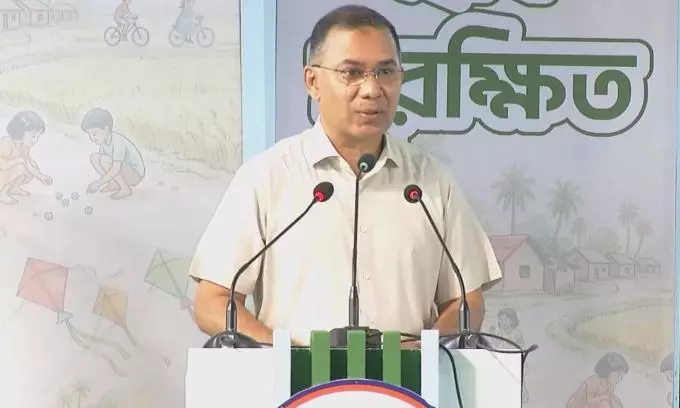
The on-again, off-again seesaw diplomacy that the Tarique Rahman-led BNP government resorted to over his proposed bilateral visit to Delhi at the invitation of Prime Minister Narendra Modi has brought the ties between the two closest neighbours to their nadir. The three Indian invitations were treated by Tarique and his government with such dismissiveness and unprecedented intemperance that it left none in doubt that the whole exercise was aimed at humiliating India and its Prime Minister so that both got the message that they could be kicked around by Dhaka at will with impunity. Tarique's unconventional brand of diplomacy in dealing with India has so far given the impression that he is not willing to dismount the high horse he has been riding since his party swept the polls. He is yet to realise that he has to get off that saddle fast if he wants to have a meaningful relation with India.
Never before has any Indian Prime Minister used his Lok Sabha Speaker and foreign minister as personal couriers for carrying his invitation to his Bangladeshi counterpart, requesting him to pay an official visit to India with his family. Not only did Mr Modi do this in his prime ministerial capacity but as Brics chairman, he also invited Tarique, who heads the regional maritime grouping — Bimstec — to attend the Brics summit.
Disregarding diplomatic niceties, none of the invitations evoked any official response from Dhaka. Media reports were the only source which kept Delhi posted about Tarique’s shifting stand on his visit which kept Delhi on tenterhooks, though, ironically, Dhaka was talking to our envoy Dinesh Trivedi daily for bailing it out from its deepening energy and food crisis. Incidentally, Mr Modi’s invitation was the first such offer that Tarique had received from a foreign PM and yet he chose to visit Malaysia and China first so as to demonstrate to his people that his decisions were not taken at India's behest. His other message to Delhi was Bangladesh could exist by ignoring India’s goodwill. Also, Bangladesh no longer favoured balancing its relation with India and China — it prioritised the latter over the former as China was its greatest benefactor. But, Mr Trivedi on his own tried to hasten the visit as there were pressing issues to be settled, including renewing the Ganga water treaty. His overriding concern was to normalise the extremely strained relations between the two countries.
India’s failure was that none of its policy planners — its last two high commissioners and other key functionaries of the India House in London who had closely interacted with Tarique and his emissaries — could see through his real purpose (while he was exiled in London) of desperately seeking their help which was not only to ensure his hassle-free return and taking over the reins as Bangladesh's elected head but also finishing his mother’s unfinished agenda of ridding the country of Hindus and other minorities and slowly but steadily obliterate the memories and traces of ideals and values representing 1971.
Tarique had also sent his emissaries to Delhi with the message that after Hasina’s ouster there was no possibility of her and Awami League “returning to power as both the party and its brand of politics had been buried for good and only the BNP government could protect Indian interests”. Unfortunately, our policymakers went along with this BNP and Jamaat line, which was blatantly fallacious from the Indian perspective.
But they did recount India’s “extremely disappointing” experience of 2001-6 BNP rule, when Tarique was the BNP government’s extra-constitutional authority and had promised to sell gas to India, despite knowing well that the country did not have exportable reserves. Also, during interactions, whenever references were made to his role in attempting to smuggle arms into India, the constant refrain was “it would not happen again”.
Making Hasina’s handing over to his government conditional for his Delhi visit was his attempt at killing many birds with one stone. He knew seeking Hasina’s return under the extradition treaty would never materialise because of the ways the Indian judicial system worked. Besides, his country’s entire political spectrum, especially the powerful pro-Pak lobby, considered the visit a trap laid by Delhi which would make him agree to conditions enabling Hasina and the Awami League to stage a comeback to national politics. Being a staunch Awami League baiter, he did not want to be known as its saviour.
Unfortunately, Delhi’s policy makers’ approach to placate the BNP at any cost has emboldened Tarique to dictate unacceptable terms for his India visit which none of his predecessors had ever done previously. After all, it’s not India but Bangladesh that has lost heavily by not attending the Brics summit and Tarique not going to India. The chance of his meeting the world leaders and building personal equations with them was a “missed opportunity”, for which he has been criticised both within and outside the BNP. Some have even said that he would soon have to “deeply regret” his Brics boycott decision which was an upshot of his intense dislike for India and harbouring of poor views about the Indian leadership.
A retired senior Indian diplomat wants Delhi to do some “plain speaking” to Tarique so as to have a well-negotiated settlement with Dhaka which would ensure Hasina’s safe return and restore inclusive politics, including lifting of the ban on Awami League’s working. The settlement has to follow the same pattern of government-to-government understanding and agreement which was reached before Hasina and her sister Rehana were flown out of Dhaka to India in a Bangladesh Airforce aircraft. It was the Bangladesh Army chief, Gen. Wakeruzaman who had contacted his Indian counterpart seeking help for her security and safe passage to India as Bangladesh’s uniformed services could not provide it. Tarique has also to be reminded that Hasina did not flee the country as a fugitive, though, his government was prompt in branding her so.
He has also to be told squarely that he has gone back on his promise to provide safety and security for the life and property of Hindus. But this community is now the worst victim of extortion, rape, arson and killing indulged in by his party cadres and jihadists as the recent gory Rangpur killings suggest. None of the actual perpetrators of this dastardly crime has so far been arrested and tried. The self-confessed killers of Dipu Das have been released on bail because of a weak charge-sheet filed before the court.
Hindu religious leader Chinmoy Prabhu and human rights activist Shahriar Kabir who had exposed Khaleda’s 2001 pogrom against Hindus have been rotting in jail for over two years on trumped up charges. Already a steady flow of Hindus into India has begun but Delhi, unfortunately, continues to play ball with Dhaka.
