K.C. Singh | Will BNP’s Big Win Lead To Reset Of Delhi-Dhaka Ties?

The BNP-led alliance reportedly leads with 216 seats out of 299 seats, with that led by Jamaat-e-Islami (JeI) having won 76 seats. JeI is questioning the election’s integrity and not yet conceding defeat
The Bangladesh general election on February 12 was crucial for that country as well as all its South Asian neighbours, including India. The last election in January 2024 was followed by rising disenchantment with Prime Minister Sheikh Hasina’s government. As the Bangladesh Nationalist Party (BNP), the then main Opposition, had boycotted the election, it had lacked legitimacy. This election ranks even worse as the Awami League, which ruled Bangladesh from 2009 to 2024, was barred from it.
The initial reports indicate the turnout was below 50 per cent. Former Prime Minister Sheikh Hasina, living in self-exile in India, saw the low percentage as a mass electoral boycott. She dubbed it a “voter-less, illegal and unconstitutional” election.
The BNP-led alliance reportedly leads with 216 seats out of 299 seats, with that led by Jamaat-e-Islami (JeI) having won 76 seats. JeI is questioning the election’s integrity and not yet conceding defeat. The principal competition was between two alliances. One, led by the BNP, under the leadership of Tarique Rahman, late Prime Minister Khaleda Zia’s son. After a 17-year exile in Britain, he returned in December, five days before his mother’s death. The other 11-party alliance is led by Jamaat-e-Islami, a traditionally pro-Pakistan Islamist right-wing party. That includes the National Citizens Party (NCP), formed by the student-protesters who brought Sheikh Hasina’s government down in August 2024.
The NCP’s current alliance with the JeI betrays their possible collaboration during the student protests, which required the support of existing political cadres to succeed. The protests were triggered by the Hasina government’s discriminatory recruitment policy, favouring the descendants of freedom fighters. Sheikh Hasina provocatively defended that, arguing she could hardly favour the progeny of “Razakars”, who collaborated with the Pakistani military before Bangladesh’s independence in 1971.
Before her ouster, Sheikh Hasina had said that a “white” nation was undermining her government. The United States was regularly criticising Bangladesh’s weakened democracy. Chief adviser and Nobel Peace Prize winner Muhammad Yunus sees the current election’s outcome as a “new dawn”. The “people have rejected the past”, to “build a new Bangladesh”. His leadership since the popular uprising of July-August 2024 does not inspire faith. He presided over an increasingly communally polarised nation, with the random targeting of minorities.
From India’s perspective, the BNP’s nearly two-thirds majority is the best possible outcome under the circumstances. JeI harbours strong anti-India feelings and has traditionally been under Pakistani influence. Any BNP alliance with them, as happened when the BNP last held power in 2001-06, would have made management of relations with Bangladesh more difficult, if not impossible.
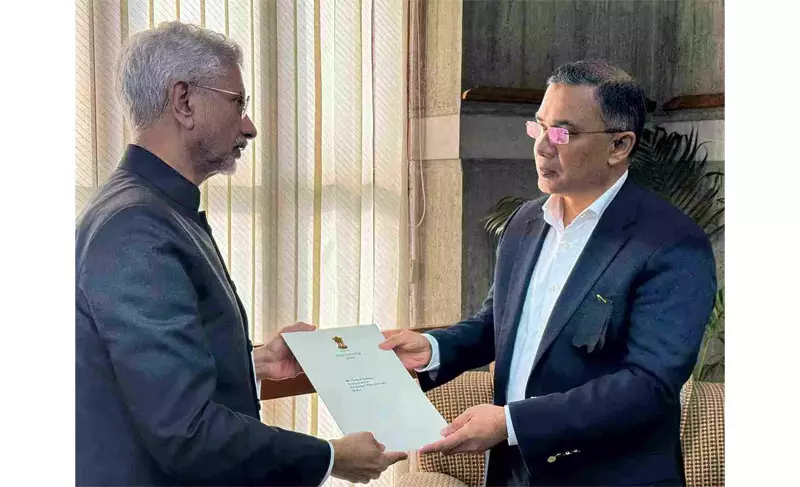
India’s external affairs minister S. Jaishankar had met Tarique Rahman, BNP’s president, during his Dhaka visit on December 31, 2025 for the funeral of his mother, former Prime Minister Khaleda Zia. Mr Rahman has promised to put Bangladesh on a “new path”. During the BNP’s last stint in power, starting 2001, the nation suffered widespread corruption, violence and human rights abuses. He was generally accepted as the real power behind the throne. He was jailed by the military caretaker government in 2007 on corruption and terrorism charges. He was released in 2007, ostensibly for medical treatment abroad.
The BNP’s manifesto states the party’s policy preferences. It promises a monthly cash payment to women and the unemployed, echoing the BJP’s Bihar electoral promises, albeit in breach of the election code. Women voters were in any case alienated from JeI’s Islamic, anti-feminist agenda. The other promises relate to digital innovation and entrepreneurship, a “Bangladesh before All” foreign policy, implementation of the July Charter (voted on separately in a parallel referendum), and the Teesta waters’ dispute with India.
The BNP is also reiterating the defence of democracy and human rights. But it also advocates the repatriation of Rohingya refugees to Myanmar. Pakistan and China had been cultivating the interim government of Muhammad Yunus. In April 2025, delegations of the JeI and the Communist Party of China had met. In June, the Chinese vice-minister for foreign affairs met the BNP’s secretary-general Mirza Fakrul Islam Alamgir. Pakistan’s deputy prime minister and foreign minister Ishaq Dar was in Bangladesh in August 2025. The Bangladesh Air Force Chief visited Pakistan, where he met Pakistan’s three service chiefs.
For the first time in over four decades, Bangladesh is electing a male Prime Minister. India faces an already expanding role of China as well as greater Pakistani influence. The US supported Muhammad Yunus’ heading of the interim government. They may support his continuing, perhaps as President. By quickly approving a trade deal, the US has achieved dual objectives. The US gets access to Bangladesh’s cotton imports market, at India’s cost, by removing tariffs from garments produced from that cotton. Indian exports of cotton fabrics to Bangladesh touch half a billion dollars. Besides rebalancing trade with Bangladesh, the US gets a toe-hold diplomatically, to counter the rising Chinese presence.
At present, the top six export destinations for Bangladesh are the United States, Britain and the countries in the European Union, with Japan next. On the other hand, the countries that export to Bangladesh in 2024 were led by China ($22 billion), India ($11.3 billion), Indonesia ($3.04 billion) and Singapore ($2.93 billion). Bangladesh’s largest import is of refined petroleum, which gives India an edge as a next-door supplier.
However, a return to the Sheikh Hasina period of bonhomie is impossible in the immediate future. Both because of past proximity to her and her father and her continuing exile in India, reestablishing trust will be tough. India will first have to help her move to another safe location. In addition, India must stop mixing domestic politics with foreign policy. The looming Assembly elections in West Bengal and Assam have led BJP to ignore communal polarisation. Unnecessary controversy over a Bangladeshi cricketer, chosen by Shah Rukh Khan’s IPL team Kolkata Knight Riders, demonstrates this mix-up. An already narrowing space for people-to-people links via sports was further shrunk. While the Indian media and public opinion explode over the lynching of Hindus in Bangladesh, similar ire is missing when Muslims similarly die in India. While Sheikh Hasina tolerated this paradox, the new BNP government will be unwilling or unable to do so.
The new context demands an evolved foreign policy in dealing with India’s neighbours. It also requires the containment of communal polarisation in India, especially at the leadership levels. A new dawn in India-Bangladesh relations is possible, but requires statesmanship at home and abroad.
