K.C. Singh | Iran War Stymieing New India-Taliban Relations

India then saw the Taliban as a Pakistani ally, if not proxy. Besides Pakistan, only two countries then recognised the Taliban regime, Saudi Arabia and the United Arab Emirates
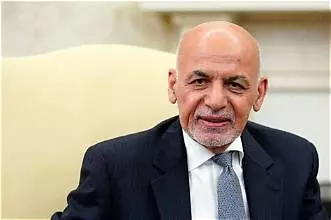
The Taliban government’s second term in Afghanistan, after being ejected by the US in 2001, completed five years on India’s Independence Day. Their first term began after capturing Kabul in 1996, with Pakistan’s active support. India and Iran opposed their rise by extending military and political support to the Northern Alliance led by Ahmad Shah Massoud.
India then saw the Taliban as a Pakistani ally, if not proxy. Besides Pakistan, only two countries then recognised the Taliban regime, Saudi Arabia and the United Arab Emirates.
After a 20-year US military presence in Afghanistan, the Trump administration during its first term signed a conditional peace agreement with the Taliban in Doha on February 29, 2020. The deadline for the withdrawal of the US and coalition forces was May 1, 2021. It was contingent on the Taliban desisting from attacking US forces and constraining the operations of Al Qaeda and other terrorist groups. The deal eventually landed on the desk of President-elect Joe Biden, who implemented it rather hurriedly. Consequently, the US left behind a huge arsenal of weapons, armed vehicles, drones and helicopters. They probably calculated that President Ashraf Ghani’s government, excluded from the Doha talks, would arrange with the Taliban a collaborative interim government. However, the popular support for the Ghani regime collapsed quickly, leading to Taliban seizing power on August 15.
There are multiple dimensions to the Taliban story. First comes the domestic scenario. Because of sanctions and Afghanistan’s severance from the global banking regime the economy is struggling. Also, since October 2025 critical border crossings with Pakistan, for people and traders, have been blocked. Open hostilities with Pakistan since February 2026 have worsened the scenario. Pakistani airstrikes have killed nearly 500 civilians. And since February 28 the Iran war has disrupted Afghanistan’s communication routes via Iran. Also impacted is humanitarian and development aid from abroad. From $4 billion worth in 2020 it has slumped to $1.2 billion in 2025.
Afghanistan is also coping with over four million Afghan refugees repatriated by Iran and Pakistan, constituting almost 10 per cent of its 45 million population. The Economist magazine argues that despite the economic and strategic challenges the Taliban has ensured stability and domestic peace, after decades of terrorism. It adds that the Taliban are “running a modern state” much better than they did during their first term (1996-2001). One reason is that the civil servants running affairs during the Ghani regime were not entirely purged. Most stayed on, providing administrative continuity.
However, the Taliban's main domestic problem emanates from their ideological approach to women. Over 160 decrees have been passed to deny women the rights to act independently, travel, study and work. According to a recent UN Women report, after surveying 5,000 Afghans, 55% of men and 65% of women felt worse off than they did pre-August 2021. Because women can no longer study to become doctors, a mounting shortage of female doctors is reducing female access to medical treatment. Female mental health is also suffering. According to Unesco, due to the bar on females attending schools after age 12, their “future becomes increasingly dark”.
In July, protests broke out in Herat, a western city with a large population of Shias and Tajiks. Popular chants sought “education, work, freedom”. The Taliban government is, apparently, not a monolith as it has many factions. But the supreme leader Sheikh Haibatullah Akhundzada, based in Kandahar like Mullah Omar in the 1990s, has centralised control. Using undeclared income from mining he has built an 8,000-member force loyal to him. So, for the foreseeable future, the regime is unlikely to evolve or liberalise.
As a landlocked country, Afghanistan’s relations with its two immediate neighbours, Iran and Pakistan, assume importance. During Taliban’s first term, maltreatment of Shia Hazaras, killings of some Iranian diplomats and the history of Iranian support to their opponents the Northern Front, affected relations with Iran. In fact, the two almost went to war. After the US’s troop withdrawal, the interests of both governments converged over suppressing the terrorist Islamic State of Khorasan Province (IS-KP). Iran also provided Afghanistan access for trade and supplies after the latter’s relations with Pakistan collapsed. Iran maintains active and diplomatic channels without recognising the Taliban regime.
Taliban-India relations have gone through a similar cycle. During the Taliban's first term, India was upset over their role in the IC-814 hijacking which ended at Kandahar. Additionally, there was the 2008 lethal attack on the Indian embassy in Kabul. India was also concerned about terrorist training camps in Afghanistan of ISI-sponsored groups targeting India. Thus, India was relieved when the US and its allies ejected the Taliban and occupied Afghanistan.
Taliban 2.0 has revived Afghanistan’s historical tension with Pakistan over the Durand Line, which artificially separates the Pashtun tribes of the two nations. More specifically the major irritant is Afghanistan providing refuge to fighters of the Tehreek-e-Taliban Pakistan who target Pakistan’s security forces, including the army. Its members are Pakistani Pashtuns.
This dynamic drew the Indian government towards Taliban, confirming the saying that the enemy's enemy can be a friend. The Taliban espouses Deobandi Islam, conceived in India in 1867. By 1967, there were 8,000 Deobandi schools globally. It is generally accepted that “Pashtun accepts half of the Koran”. The other half is “Pashtunwali” or unwritten pre-Islamic guiding principles, even overriding the Sharia law. That is why the Taliban foreign minister Amir Khan Muttaqi on his first India trip in November 2025 visited the Deoband seminary.
India now extends humanitarian and economic assistance to Afghanistan, without recognising the Taliban regime. However, engagement is being stymied by the Iran war. Indian investment in creating a new access to Afghanistan and Central Asia via Iran’s Chabahar port stands disrupted. India leaning towards the US-Israel axis in the Gulf may make Iran doubt Indian strategic reliability.
Thus, the new India-Taliban relations are important for balancing both Pakistan’s regional role and the expanding Chinese influence. But that is not possible without Iran facilitating access. In conclusion, Afghanistan, as a Saarc member, remains vital for regional stability and counterterrorism. A secular and liberal India will find it easier to sustain that engagement than a majoritarian India unmindful of human rights.
