K.C. Singh | Can US-Israel & Iran Find Middle Ground?

Retaliatory strikes and Hormuz threat deepen tensions, dim prospects of quick ceasefire
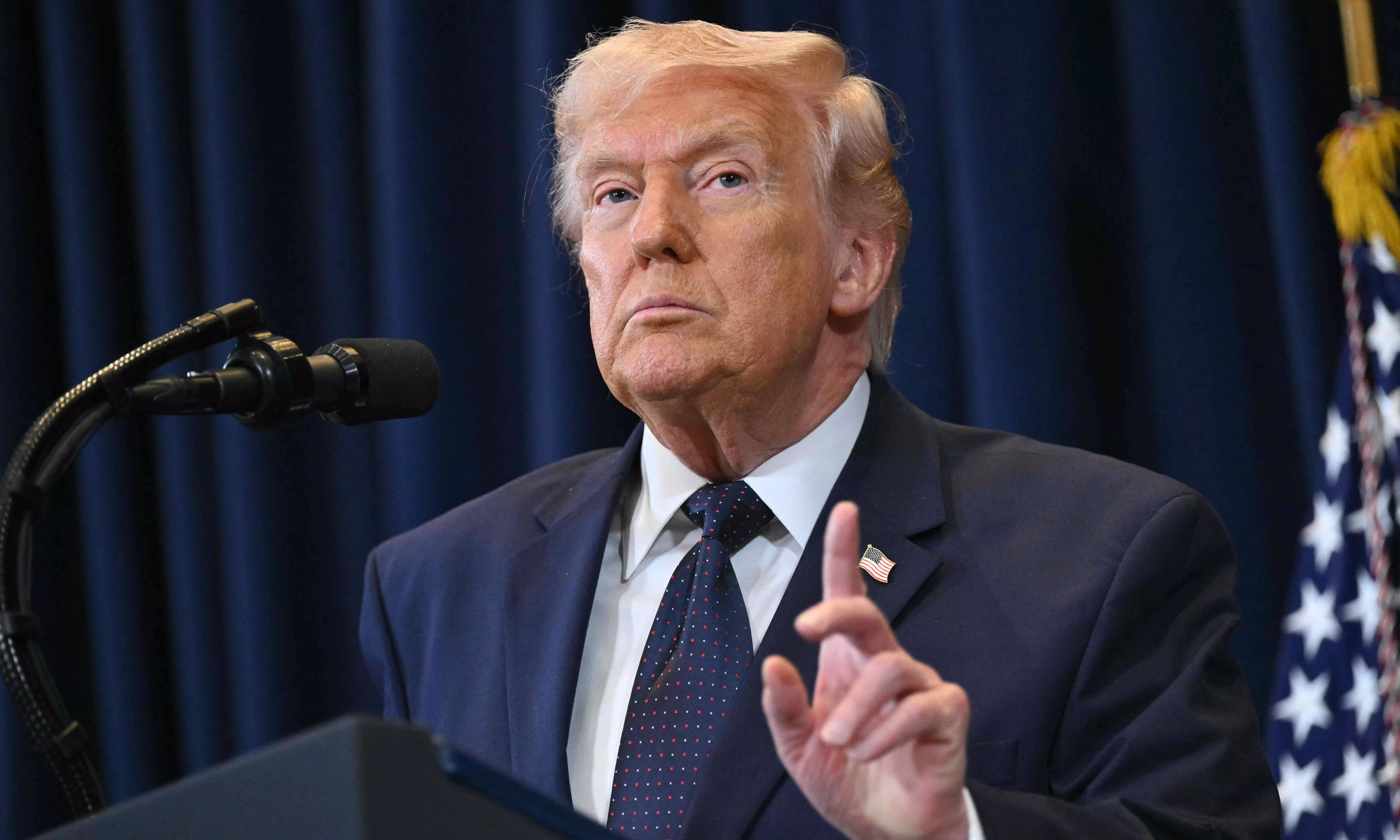
The ongoing conflict between Iran and the United States-Israel combine is now impacting the entire world’s economy. A debate, meanwhile, is raging over Washington’s real objectives and when, if at all, they are achievable?
It appears that the decision to assassinate the Iranian Supreme Leader, Ayatollah Ali Khamenei, rested on the very simplistic assumption that it would cause dissonance within the regime and a popular uprising. US President Donald Trump has been intermittently suggesting that, like in Venezuela, he should have a role in the choice of the next Iranian leadership. The US-Israel had also wrongly concluded, based on their experience after the June 2025 attack on Iran, that Tehran would be unwilling and unable to retaliate strongly. They thus expected Iran to rush to the negotiating table and accept a semblance of regime change.
As it turned out, Iran had prepared for these eventualities. Late Supreme Leader Ali Khamenei, as became apparent soon, had left behind a list of successors, not only for his own position, but also other important positions on the civilian and military sides. As early as March 2026, Iran had activated a “Decentralised Mosaic Defence” doctrine. This involved restructuring the Islamic Revolutionary Guard Corps into 31 autonomous units, and granting their commanders tactical independence. Iran already had advanced indigenous capability to produce drones, which it had been supplying to Russia for its Ukraine war. Additionally, Iran had upgraded their arsenal of missiles and stored them underground to escape expected aerial attacks.
Once the hostilities began, Iran simply followed its preconceived strategy. They tolerated the aerial attacks, depleting their Navy and Air Force assets. But they retaliated by using a combination of drones, in huge numbers, and missiles, stored in safe underground facilities. Their indigenous drones cost a fraction of the cost of missiles fired by Israel and the US to neutralise them. Moreover, beyond the first week, the defences of Israel, Gulf countries and the US faced the draining of their missile-defence assets. Consequently, the US has had to move parts of the Terminal High Altitude Area Defence (THAAD) from South Korea to restock the fast-shrinking air defences in the Gulf and West Asia.
The world wonders when, if at all, a ceasefire can occur. Wars normally end in two ways. Either when one side faces defeat and accepts it; or both sides reach a point of exhaustion and realise that future gains are outweighed by ongoing losses. The US-Israel expected the first outcome, after assassinating the Iranian Supreme Leader and hammering Iran with unending waves of armed missiles.
Iran bore the attack’s brunt and soon demonstrated its capacity to retaliate. That leaves only the second possibility. Ali Larijani, secretary of the Supreme National Security Council of Iran, posted on March 11 on social media that the “Strait of Hormuz will either be a strait of peace and prosperity for all or will be a strait of defeat and suffering for the warmongers”. Iran calculates that disrupting the daily transportation of 20 million barrels through that strait would rattle economies globally, bringing pressure on the United States to seek a ceasefire.
President Trump’s address to the nation earlier this week, on March 11, was expected to indicate if the ceasefire was close. He claimed that the war was going well for the US and they needed to finish what they started. The United States may now put boots on the ground, as history teaches that air operations alone have never achieved regime change.
The US could try to capture Iran’s Kharg Island, the hub of Iranian oil exports. That could compel Iran to turn to the negotiating table, for a deal granting concessions to the US. Some sources maintain that the real US motive was never regime change. They wanted, like in Venezuela, a more compliant Iranian government, allowing indirect US control of Iranian oil assets. It can be argued that by capturing two countries with major oil reserves, the US could exert pressure on both Russia, an oil producer, and China, a major oil consumer.
Just when the US-Israel thought the Iranian retaliation was declining, Iran surprisingly escalated retaliation, and the IRGC announced that the “policy of reciprocal strikes has ended… From now on, continuous strikes will be carried out”.
Meanwhile, Iran announced that people should keep at least 1 km away from US-linked banks across the Middle East. This involves the expansion of targets to the financial institutions.
Robert Papa of the University of Chicago, on television, called it an “escalation trap“. The impact on global markets of the slightest development in the Gulf area was demonstrated by a social media post of Chris Wright, American energy secretary. He said an oil tanker had been escorted through the Hormuz Strait by a US warship. The markets immediately rose, however, resuming their downward trend when the story proved false.
President Trump has a narrow window to test the usefulness of ground troops. He is due to reach China on March 31 for his much-anticipated summit with President Xi Jinping. It is quite unimaginable that Iran will not resist strongly. Going by US miscalculations so far about Iran’s retaliatory capacity, the American troops may also face unforeseen hurdles. Late Iraqi President Saddam Hussein made that mistake by attacking Iran immediately after the 1979 revolution, thinking it was a divided and weakened nation.
India has been quietly restoring some balance to its position, which appeared heavily tilted towards the Israel-US combine when Prime Minister Narendra Modi was ill advised to visit Israel hours before they attacked Iran. India had to share the condemnation of US torpedoing of an Iranian naval ship, sailing back from an Indian naval exercise. India has rebalanced its stance by sheltering another Iranian ship.
For India, the interrupted supply of gas is a bigger challenge than that of oil, because the supply sources are less diversified. It also has immediate domestic implications as LPG is quite widely used for cooking. Iran is using its control of shipping through the Strait of Hormuz to court friends and punish antagonists. India reportedly may thus get some leeway. Iranian President Masoud Pezeshkian has asserted that the war can end only if there is recognition of “Iran’s legitimate rights,
payment of reparations and firm international guarantees against future aggression”. The United States and Israel too have some demands. Peace, however, requires some halfway point of concurrence.
