John J. Kennedy | Beyond the Slap: What the Rising Violence Against Teachers Reveals

A Delhi University assault exposes rising aggression, politicisation, and moral drift in academia
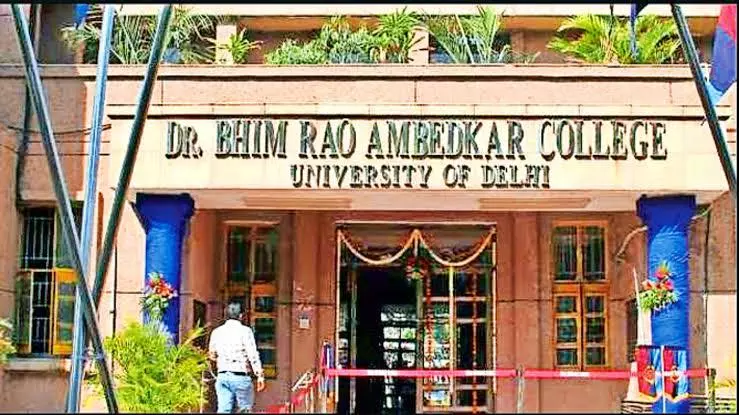
The October 2025 incident in which Deepika Jha, joint secretary of the Delhi University Students’ Union and an ABVP member, slapped Prof. Sujit Kumar during a disciplinary panel meeting at Dr Bhim Rao Ambedkar College, was deeply disturbing. A student leader assaulting a teacher at an official event is an indication of how far violence and political muscle have crept into Indian universities. The video of the incident sparked widespread outrage, with teachers’ bodies across the country condemning the act. The Delhi University Teachers’ Association rightly called it an attack not just on one professor, but on the dignity and safety of the entire teaching community. Following protests and public pressure, Delhi University initiated disciplinary action. A six-member inquiry committee was set up, and Ms Jha was suspended from her DUSU post for two months for “gross indiscipline”. She has been barred from campus during this period and asked to submit a written apology and an undertaking of good conduct. Ms Jha has then apologised publicly, saying she acted impulsively. While the action shows the university has acknowledged the wrongdoing, many teachers feel the punishment is far too mild for a physical assault on a faculty member during an official meeting.
This episode, however, should not be viewed in isolation. Unfortunately, violence against teachers is no longer a rare or shocking occurrence. Across India, educators increasingly face aggression, intimidation and humiliation from students. Surveys suggest that more than 70 per cent of teachers have experienced some form of hostility. In Delhi alone, the police reportedly receive around twenty calls a day related to school or college altercations, many involving threats or violence against teachers. Recent incidents illustrate the enormity of the crisis: in December 2024, a Class 11 student in Uttar Pradesh stabbed his teacher after she confiscated his mobile phone; in April 2025, an engineering student in Visakhapatnam attacked his lecturer with a slipper for a similar reason; and in August 2025, a group of students in Uttarakhand brutally assaulted and humiliated a teacher, leaving him hospitalised. Comparable incidents in West Bengal, Karnataka and other states, often captured on video, suggest a nationwide pattern that cuts across regions and institutions.
These developments reflect a stark social shift. Weak legal protections for teachers, rising emotional volatility among students, socio-economic stress, digital addiction, and post-pandemic anxieties have eroded campus civility. In universities, this is worsened by hyper-politicisation, weak mentorship, and a growing student-teacher disconnect. Spaces once meant for debate and discovery are increasingly becoming arenas of confrontation, where ideology supersedes intellectual engagement.
Today, many educators admit that the real tragedy lies not merely in aggression or politics, but in the changing meaning of education itself. Education was once conceived as a moral and civic enterprise that cultivated empathy, reflection as well as responsible citizenship. Today, it is increasingly treated as a transaction, a pathway to credentials, power or influence. Universities are becoming training grounds for jobs rather than laboratories of thought. Students are encouraged to compete rather than converse, to perform rather than ponder. In other words, this commodification of education, driven by a neo-liberal ethos, has hollowed out its moral core.
Party-affiliated student organisations, whether ABVP, NSUI or others, often work less as forums of democratic participation and more as extensions of larger political machines. Their rhetoric of empowerment frequently slips into factionalism and intimidation. In such an environment, teachers are seen not as mentors but as obstacles, and violence becomes normalised as a form of assertion. The slap that landed on Prof. Sujit Kumar’s face was therefore not just physical. It symbolised the erosion of restraint, reason, and respect within academic life.
The university, at its best, is a place where ideas clash without turning into conflict. When that basic civility breaks down, meaningful learning becomes impossible. The growing hostility on campuses reflects a wider national mood where polarisation replaces dialogue and questioning is seen as defiance. Sadly, in such a climate, the humanities and social sciences are often dismissed as irrelevant, even though society needs their critical and ethical insights more than ever.
So, what is the way forward? Universities must enforce clear and non-negotiable codes of conduct that protect teachers without fear or favour. Disciplinary action must be fair, transparent, and proportionate, not shaped by political affiliations or institutional expediency. Safety mechanisms must ensure that educators can discharge their responsibilities without intimidation or humiliation. Surely institutions alone cannot resolve what is fundamentally a cultural and ethical crisis. Students must also reclaim the seriousness of their role within the academic community. Of course, political awareness is not the enemy of education; it is essential to it.
However, activism divorced from responsibility and non-violence becomes destructive. The purpose of dissent is to challenge injustice and expand freedom, not to silence, threaten, or physically assault those who disagree.
The Delhi University incident should therefore serve as a moment of collective introspection. It forces us to ask what kind of citizens our universities are shaping. Are we nurturing individuals capable of listening, reasoning and caring, or merely producing impatient seekers of jobs, power and privilege? The answers to these questions will shape not only the future of our campuses, but the health of our democracy itself.
If education is to retain its meaning, the trust between students and teachers must be rebuilt through respect, dialogue and the courage to disagree without demeaning one another. Only then can universities recover their true purpose as spaces where ideas flourish, justice is debated and real transformation becomes possible.
The writer is retired professor and former dean of the School of Arts and Humanities at Christ University in Bengaluru
