Jayanta Roy Chowdhury | Turmoil in B’desh: Secular Voices Are Facing Crackdown, Economy Declining

From outside, Dhaka seems calm after months of protests by students demanding the resignation of Mr Yunus’ advisers for inability to improve law and order, by women protesting religious policing of their right to dress freely and by cadres of the opposition Bangladesh Nationalist Party demanding early elections
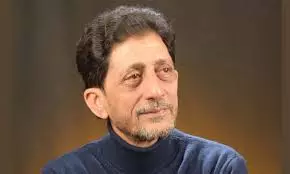
On Friday night, Prof. Abul Barkat, a respected economist and a leading Bangladeshi voice on de-radicalisation and minority rights, was arrested from his home under startling charges, including alleged links to Indian intelligence agencies.
Barkat, who started life as a young freedom fighter in 1971, was advised to leave Bangladesh last year by friends worried at the way the new Dhaka regime was veering towards radical Islam. However, he refused to leave his motherland for the safety of India or the West, where his work has many admirers.
His internment is the latest in a series of midnight arrests of academics, journalists, writers and actors who were the voices of reason and secular thought in an increasingly chaotic and fractured Bangladesh, since August last year when Prime Minister Sheikh Hasina fled to India for safety in the face of frenzied mobs in what some called a “colour revolution”.
The number of such intellectuals, charged with crimes ranging from murder to corruption by the interim government headed by Muhammad Yunus, who came to power with support from Islamic parties, are now in several hundreds.
From outside, Dhaka seems calm after months of protests by students demanding the resignation of Mr Yunus’ advisers for inability to improve law and order, by women protesting religious policing of their right to dress freely and by cadres of the opposition Bangladesh Nationalist Party demanding early elections.
Public discontent was also palpable over reported plans to create an “Arakan Corridor” from Chittagong to Myanmar’s rebel province of Rakhine for supplies from Western nations. Many felt it would draw Bangladesh into a regional conflict where rebels and Myanmar’s military junta are fighting for control of mineral-rich areas in a proxy war between global superpowers.
After a meeting between BNP’s exiled leader Tarique Rahman and Mr Yunus last month in London, where some kind of a political compact appears to have been reached, BNP cadres have gone off the streets while the party’s spokespersons have stopped attacking the Yunus regime.
Other deals seem to have quietened down Bangladesh’s armed forces, which were earlier in a state of near revolt over the appointment of a Bangladeshi-born US citizen as national security adviser over the heads of their three service chiefs and over the proposed Arakan corridor.
However, the still waters of Bangladesh’s current politics in some ways resembles the calm before a tropical cyclone. The streets are still seething with discontent over the capricious nature of the arbitrary rule that Bangladesh has faced over the last one year, marred as it has been by mob violence against secularists, minorities, women and ordinary citizens who have some amount of wealth but without political protection.
Sohel, a trader, was killed last week at Mitford in the heart of Old Dhaka in broad daylight by extortionists owing allegiance to a political party. Elsewhere, bomb blasts were reported in the Bangladesh capital, while at press conference held at the National Press Club of Dhaka on July 10, the Hindu-Buddhist-Christian Unity Council revealed that Bangladesh had seen 258 incidents of recorded violence targeting the minorities in the first half of 2025.
The irony that this trend of arrests and chaotic rule is occurring exactly 54 years after Pakistan’s then military junta headed by Gen. Yahya Khan, and assisted by local Islamists, had similarly “weeded out” those who spoke out for reason, democracy and secular values as also Awami League activists and minorities in erstwhile East Pakistan.
In cantonment after cantonment, before the victorious armies of India and Bangladesh’s Mukti Bahini could march in, intellectuals were rounded up and murdered in cold blood, depriving a new born country of what counts most in developing a nation: human capital.
Since then, Bangladesh has come a long way. From being described infamously as a “basket case” to being hailed as a new “Asian tiger” was a journey which can do any nation proud, much of it through the last 15 years when Sheikh Hasina was in power, when per capita income soared from below $700 to $2,700, according to World Bank data.
However, that story is now faltering. Since 2024, a wave of factory shutdowns has ripped through Bangladesh’s garment sector like a storm – shutting down 113 factories and erasing 96,000 jobs in its wake. Industry watchers cite the example of the once-dominant Beximco Group, now a shadow of its former self after axing 16 units and sending 40,000 workers home by March 2025.
The carnage isn’t confined to sewing machines and cutting tables. The ripple effect is hitting packaging and logistics chains, support industries and the finance sector, which depends on income from loans to the garments industry. Global banks, once bullish on Bangladesh, have now slashed GDP growth forecasts for 2024-25 to a sobering three per cent plus.
Even as unemployment rose, inflation spiralled to double digits. At the same time, outbound migration from Bangladesh, which has been one of the big earners from remittances coming in from abroad, has faced curbs as the US, European and Gulf countries, and Southeast Asia have started restricting visas, partly because too many “guest workers” from that country have landed over the past decades and partly because of the uncovering of a suspected Islamist terror ring among Bangladeshi migrants in Malaysia.
A 35 per cent tariff slapped on Bangladesh by US President Donald Trump on exports to America, if implemented, could mean more economic pain for that country and added angst on the streets against the Muhammad Yunus regime, whose popularity seems to be flailing.
However, whether the streets will eventually burst into violent protests bringing in another regime change, or will be diverted by radicalisation unleashed by myriad Islamist groups, is a million-dollar question which only time can tell.
The writer is a senior journalist
