The Republican defeat in the midterms has brought some of these costs into American politics. The incoming Democratic majorities can scrutinise military assistance and the conduct of the Iran war through hearings and spending debates. Unease about the conflict extends to parts of the Republican Party
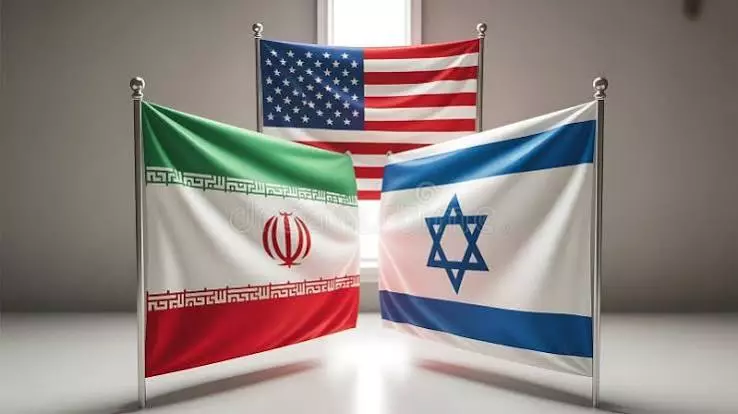
Nearly two decades ago, while at the Royal College of Defence Studies (RCDS) in London, I wrote an essay that asked a basic question. What was the cost to the US, in terms of its international standing, of supporting Israel? That question has acquired new urgency. President Donald Trump said he would hold off on fresh strikes against Iran after appeals from Gulf governments, while maintaining the American naval blockade. If Washington sees an opening for negotiations, will it ask Israel to refrain from military action that could derail them?
My earlier essay examined the influence of organised pro-Israel advocacy in Washington. The relationship also rests on longstanding security cooperation, congressional support and constituencies that extend well beyond any single community. The diplomatic cost arises when other governments believe Washington will defend Israeli decisions regardless of their consequences. That perception makes it harder for American diplomats to secure cooperation from Gulf governments that value their ties with the US and have security interests of their own.
The Republican defeat in the midterms has brought some of these costs into American politics. The incoming Democratic majorities can scrutinise military assistance and the conduct of the Iran war through hearings and spending debates. Unease about the conflict extends to parts of the Republican Party. Mr Trump still directs American foreign policy, and Congress faces limits on what it can compel. A President who chooses to press Israel for restraint may now find more support in Washington for doing so.
Benjamin Netanyahu’s bloc lost its governing majority in the October election, and his political rivals have called for rebuilding bipartisan support in the United States. A hard line on Iran may help Mr Netanyahu rally nationalist voters and potential coalition partners. Any Israeli government also needs to consider how its decisions will be received by American legislators whose influence on aid and oversight will outlast the current administration. A close relationship with one President offers less protection when his room for manoeuvre narrows.
France’s recognition of Palestine in September 2025 illustrates how a partner can exercise independent judgment. Paris continued to support security guarantees for Israel and worked with Saudi Arabia on a framework that included them. It judged that recognising Palestine could help preserve the prospect of a political settlement. Washington faces a different question over Iran. It too can decide what course best serves its own interests while maintaining its commitment to Israel’s security.
The immediate pressure on Washington has come from the Gulf. Mr Trump cited appeals from Qatar, Saudi Arabia and other governments when he announced the pause. Their ports, energy exports and shipping routes remain exposed. Attacks on vessels continued even as traffic through the Strait of Hormuz picked up. A pause in major strikes gives diplomacy time. Renewed fighting could prompt investors to defer commitments and shipping companies to suspend sailings or raise charges, increasing costs for economies that depend on Gulf trade.
At the World Summit on Counter-Terrorism in Herzliya in 2018, I was told that Iran’s ability to stockpile and use missiles and rockets was, in the assessment I heard, almost unlimited. I had followed Iran’s missile development while serving in the Indian Army, chiefly to estimate the risk of weapons reaching any elements hostile to India. For Israel the threat was immediate. Washington’s private exchanges with Tehran should test whether greater transparency about military activity could help reduce the risk of miscalculation. Iran’s relative strategic confidence comes from that arsenal of which exists little transparency.
If negotiations advance, Washington will have to be specific about what it asks of Israel. It could reaffirm its commitment to Israel’s defence and make clear that it would withhold support for a renewed offensive while talks are making progress. Israel would want to know what American backing it could count on if Iran attacked. Washington would want to know whether Israel would give talks time to produce terms that address its security concerns. Tehran would need to know what concrete steps Washington expects and how progress will be judged.
Each side could read an American request for restraint differently. Iran might conclude it can hold out for better terms. Israel might see it as a warning that American support is becoming less dependable. A request to hold back would carry more weight if Washington remained in active consultation with Israel. Gulf governments seeking a durable settlement would also need to know what commitments each party would be expected to honour and how those commitments would be monitored.
Israel’s policy of nuclear ambiguity gives the question of American backing a longer horizon. Israel does not publicly acknowledge possessing nuclear weapons, while the Stockholm International Peace Research Institute assesses it as nuclear-armed. A prolonged loss of confidence in American backing could lead Israeli leaders to place greater weight on their independent deterrent. The immediate task for Washington and Israel is to agree on how much time to give diplomacy and what any agreement with Tehran would need to address.
If Washington concludes that further military action would do little to address those concerns, some Republicans may join Democrats in reconsidering what diplomacy achieved in 2015. The Joint Comprehensive Plan of Action showed that negotiated limits on Iran’s nuclear programme could be backed by international inspections. That experience could inform a longer-term discussion on a nuclear-weapon-free West Asia, an undertaking that would require the participation of Israel, Iran and other countries in the region. For now, the practical question is what verifiable commitments Tehran would be prepared to make and what it would expect in return.
When I wrote at the RCDS two decades ago, I was concerned with how America’s support for Israel affected its standing abroad. The present test is what that relationship enables Washington to do. If the President believes another offensive would jeopardise a credible agreement with Tehran, he should say so directly to Israel. American influence would be put to good use if Washington could reassure Israel about its security and give negotiations a chance to produce a lasting agreement with Tehran. If anything, a realisation may just be emerging in the Trump Administration that JCPOA wasn’t such a bad thing.
Syed Ata Hasnain is the governor of Bihar and a former commander of the Indian Army's Srinagar-based Chinar Corps