Indian Diaspora’s Politics Is A Double-edged Sword
Mr Modi was so enthused by this positive response, conscious of the fact that he had been denied a visa due to complaints about his treatment of religious minorities, that he assumed a strong person-to-person equation with an equally attention-craving politician like Donald Trump would help manage the US-India relationship. Mr Modi underestimated the role of two developments
Whenever a person of Indian origin is in the news anywhere in the world the media in India becomes very excited. Even though the members of the diaspora are people who have made a conscious choice to leave India, give up Indian citizenship and become citizens of other nations, the fact is that many in India do feel a sense of pride in their achievements overseas. Much of the media focus is on the Indian diaspora in English-speaking countries, especially the United States. Little attention is paid to what people of Indian origin have been able to achieve in other distant parts of the world, from Fiji in the Pacific to Suriname on the Atlantic coast of South America.
The one community of overseas Indians that is always in the news is Indian Americans. Two categories of Indian Americans attract most of the media attention — business leaders and politicians. This mirrors the priority of the Indian media even at home with businesspersons and politicians, along with sportspersons, getting most media attention while scientists, educationists and scholars hardly feature.
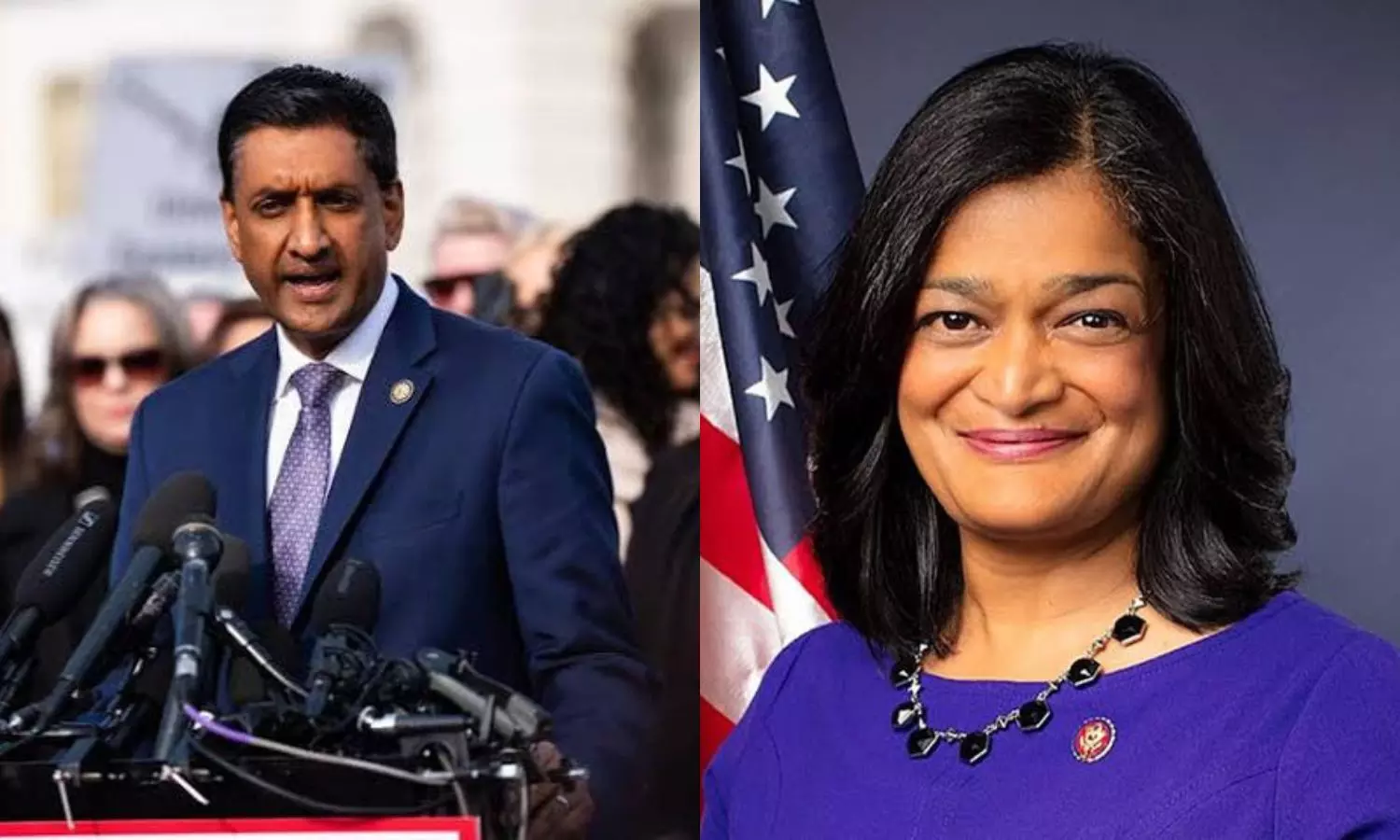
So it is not surprising that there has been much celebratory reporting on the number of Indian Americans who have been elected to various posts in the recently concluded elections in the United States. We know that the mayor-elect of Los Angeles is a Tamil and that the wife of the first Muslim senator in the United States Congress hails from Karnataka. The names of several politicians, some familiar by now, like Ro Khanna and Pramila Jayapal, have also figured in the news. While overseas Indians do constitute a cultural and diplomatic asset for India, it should be remembered that they are a diverse lot and their political activism in their host country can both benefit and hurt Indian interests. Cultivating the diaspora is important. However, the diaspora in itself does not become a diplomatic asset unless it enjoys status and power in the host country. This is where the story becomes complicated.
For many years the average Indian American was a post-graduate, a taxpaying, upper-income individual with children doing well at school and the activities of the family empowering the United States. They were clearly a diplomatic asset. India reaped the diplomatic benefits of this phenomenon during the 1990s and early 2000s when the support for India increased in the US Congress and decreased for Pakistan. Thus, even though the US imposed economic sanctions on India in 1998 following the Shakti nuclear tests, the government of Atal Behari Vajpayee was able to limit the fallout and stabilise the relationship.
Even during the negotiation of the US-India civil nuclear agreement, the government of Prime Minister Manmohan Singh was able to deploy the diplomatic weight of the diaspora to secure wider political support in the US for India’s nuclear status. Prime Minister Narendra Modi inherited this goodwill. He was even able to get President Barack Obama to accept an invitation to be chief guest at the Republic Day parade in January 2015.
Mr Modi was so enthused by this positive response, conscious of the fact that he had been denied a visa due to complaints about his treatment of religious minorities, that he assumed a strong person-to-person equation with an equally attention-craving politician like Donald Trump would help manage the US-India relationship. Mr Modi underestimated the role of two developments.
First, the social composition of the Indian diaspora changed rapidly as more and more of the less qualified H-1B visa types flooded the US. A growing number of Indian immigrants were unable to speak proper English and socially integrate into American neighbourhoods. Second, a growing number of Indian Hindus began to assert their cultural presence, attracting negative local attention in communities around the country.
Most importantly, many Indian Americans in public life disapproved of Mr Modi’s Hindu majoritarianism at home and his close equation with the likes of Benjamin Netanyahu. During the first Modi-Trump era, so to speak, Republicans like Tulsi Gabbard helped raise India’s profile. During the second Modi-Trump era, Tulsi Gabbard was replaced by Zohran Mamdani as the most prominent Indian American political figure. That changed the dynamic.
The conservative Republican, Vivek Ramaswamy, was one face of the Indian American in politics, Mamdani the other face. When US Congresswoman Pramilla Jayapal criticised Mr Modi’s communal politics India chose to snub her. When Mamdani did the same he too was snubbed. Befriending an ideologically compatible politician while snubbing critics is not good diplomacy. The decision of the Modi government to play politics in the US is not in India’s interest.
The Indian government should maintain links with all shades of opinion in the US, as indeed in any other democratic country. How can Indian diplomacy continue to ignore the popularly elected mayors of two major American cities — New York and Los Angeles — at the two ends of the continent? Both have been critics of Indian politics in their own way. Smart diplomacy has to be about winning friends and influencing people, not about playing partisan politics overseas.
There have been worrying reports of the communalisation of Indian diplomacy with a new generation of diplomats being directed to promote Hindutva and Hindu interests worldwide. These reports have not been adequately investigated by the Indian media. Even foreign policy analysts who regularly comment in the media have chosen to ignore such reports. These communal activities of Indian diplomats have raised alarm in many countries that do not wish to see Indian politics infiltrate their country via the diaspora. It is learnt that some countries have made it clear to Indian diplomats that they do not wish to see large gatherings of highly political overseas Indians in their countries addressed by Prime Minister Narendra Modi. The aggressive and loud staging of religious rallies by Hindus and Sikhs in North America, the Ganesh Visarjan in England’s Thames River, the Khalistani rallies in Canada and Britain and other such events have begun to impose a burden on Indian diplomacy.
India’s global profile that the world celebrates is her personality as a rapidly growing, plural and secular democracy. It is this image of India that the Indian American community used to represent. Not of an India of religious majoritarianism, bigotry and political authoritarianism.
Sanjaya Baru is a Distinguished Fellow, United Service Institution of India and Takshashila Institution
