Farrukh Dhondy | The Many Ways of Perceiving the World: What Makes ‘Art’ Great?

A reflection on skill, installations and how our understanding of art evolves.
In the 1970s the revolutionary art critic, artist and writer John Berger wrote a novel called “G”. It was nominated for the Booker Prize and he announced to the press that if he won, he would give half the prize money to the British Black Panther Movement, of which I was a member.
Berger did win, and I was nominated to collect his generous donation. I had read his books and the one that profoundly impressed me was Ways of Seeing, a guide to appreciating painting and even visual advertisements.
Last year would have been Berger’s hundredth birthday (he died in 2017), and several forms of memorial were initiated, including a book of essays to which I was asked to contribute. I did. Apart from recalling the Booker money incident, writing that essay compelled me to think about the ways that I have learned to “see” art.
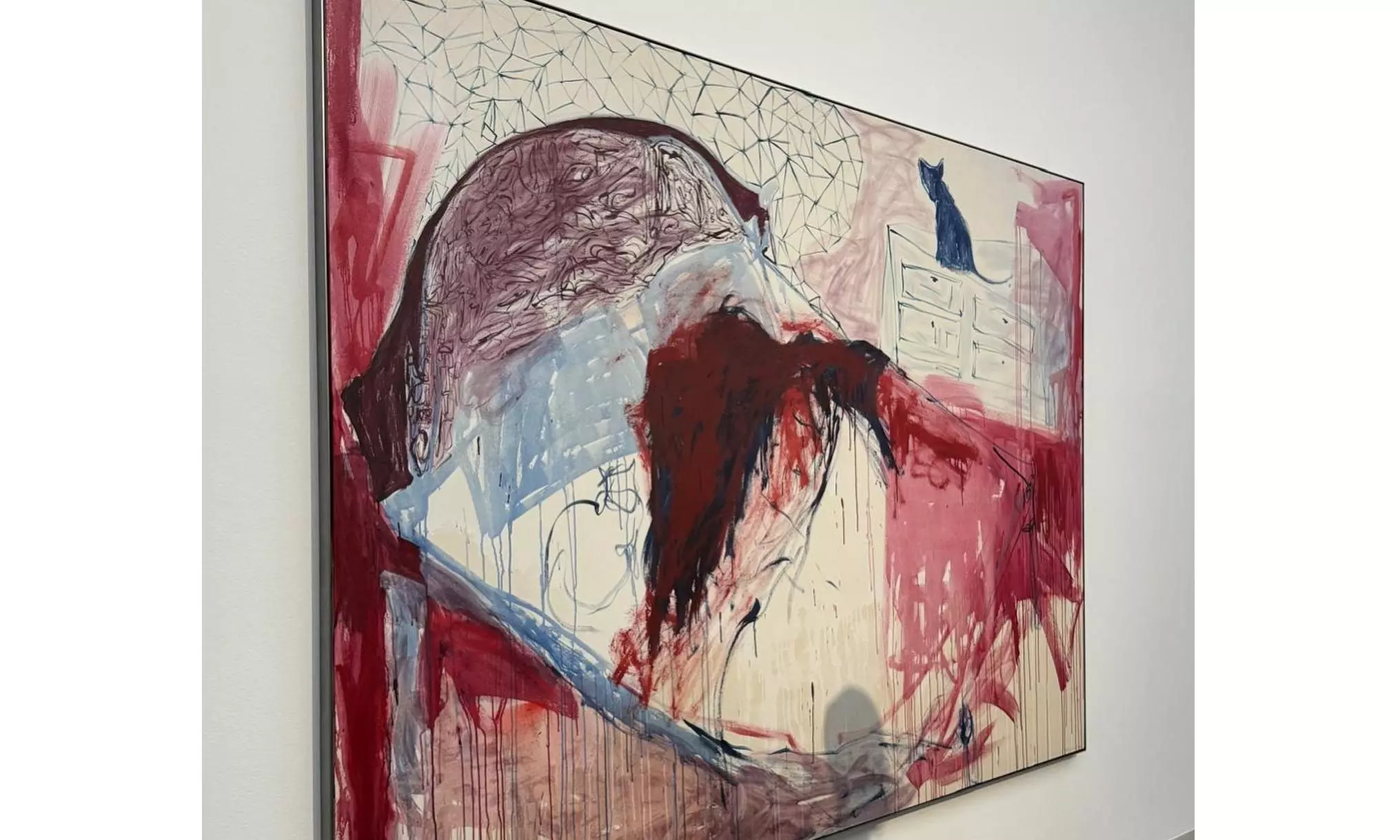
Let me, gentle reader, continue with a confession -- an admission of short-sightedness and perhaps even bigotry. In 1999, Tracey Emin, whom I had fleetingly heard of as a celebrity “artist”, had submitted a dishevelled bed as an “installation” -- a work of contemporary art -- for the Turner Prize. It was shortlisted, didn’t win, but became a notorious piece and object of commentary in the media.
I thought of it as Emin’s prank, an April Fool’s joke played on the art and critical world, or as a straightforward confidence trick by someone who’d acutely assessed the gullibility of the contemporary definers of “art”.
Two of my dear friends categorically disagreed with me. I think they saw the installation as a provocation to thought -- the function of all art?
My simple contention was that art must manifest some, preferably amazing, skill. Our difference of opinion about Tracey’s bed became an occasional subject of light-hearted banter. Then last week the prestigious Tate Gallery announced a major exhibition of Tracey Emin’s work. At the same time, a “biography” of Emin by the eminent art critic and writer Martin Gayford, called My Heart Is This, has been published.
I admit I haven’t made the time or to read it yet, but fully intend to so do. I have read two very moving reviews of the book. It consists, in the main, of Gayford’s interviews with Emin, who details her journey from a “gobby Margate teenager” to a world-renowned artist. She talks of the ups and downs of her life -- “years of break-ups, breakdowns, pregnancies, abortions, celebrity, notoriety….”
And of course she talks of her techniques, her printmaking, painting and rise to fame. The book is full of illustrations and, though I intend to visit the Tate even now, they impelled me to get to a bookshop and buy a copy -- not for myself, but to give to Helen and Cath -- (yes, the friends who disagreed about the bed!) in (partial?) repentance.
Gentle reader, one lives and learns and, I suppose, on occasion even diametrically changes one’s opinions and attitudes. I was not always sceptical about “installations” such as Emin’s dishevelled bed as a narrative of a chaotic or even sordid period of existence. In my short and happy teenage years in India, I had heard of Marcel Duchamp and his adoption of a male piss-pan as his piece of art. When objectors accosted him, saying, “You didn’t even make it”, he replied: “Yes, but I chose it!”
In my days of adolescent conceit, I thought that was an admirable rebuff and, yes, even though I was aware and in awe of classical art, I was partially convinced that those works were photographic and the distorting vision of, say, Picasso, or the dramatic vision of Edvard Munch were real art.
Even at the time, it led to arguments with my father, an Army officer, who fancied himself as an amateur painter, imitating Indian miniatures and mocking the moderns and abstract art as unskilled fraud.
There came a time when my opinion swung back -- even slightly. Yes, classical art depicting religious or royal scenes, landscapes, seascapes, objects were to be marvelled at, not only as exhibitions of extreme skill, but, as John Berger’s book teaches, as ways of perceiving the world and the drama of life and emotion.
My revived scepticism was occasioned by my late friend Vivan Sunderam’s evolution from expert painting to exhibiting an “installation” of metal trunks piled one on top of the other. What was that saying? Travels and traverses?
Something about the mobility of possessions? Journeys? A parable against fly-tipping? A pointer to the fact that leather and plastic have replaced metal as travelling containers? All these things?
Apart from finding these trunks and lifting them up to make a pile, was there any effort or skill involved?
I now have to admit that some installations are dramatic and others I have seen certainly stimulate narratives in the mind. But is that enough?
Have I reached midway?
Does art necessarily entail skill -- shall we think Michelangelo, Rembrandt, Turner, Manet? or provocation to thought -- Duchamp, Emin, anything dragged onto a gallery floor?
Both? Discuss?
