Dilip Cherian | The File Comes Full Circle: Will Central Secretariat Club Manage To Survive?

For decades, the Central Secretariat Club has been woven into the culture of the Central bureaucracy, serving both serving and retired government employees. Many of the officers who spent time there also signed the files that ordered inspections, inquiries and evictions elsewhere
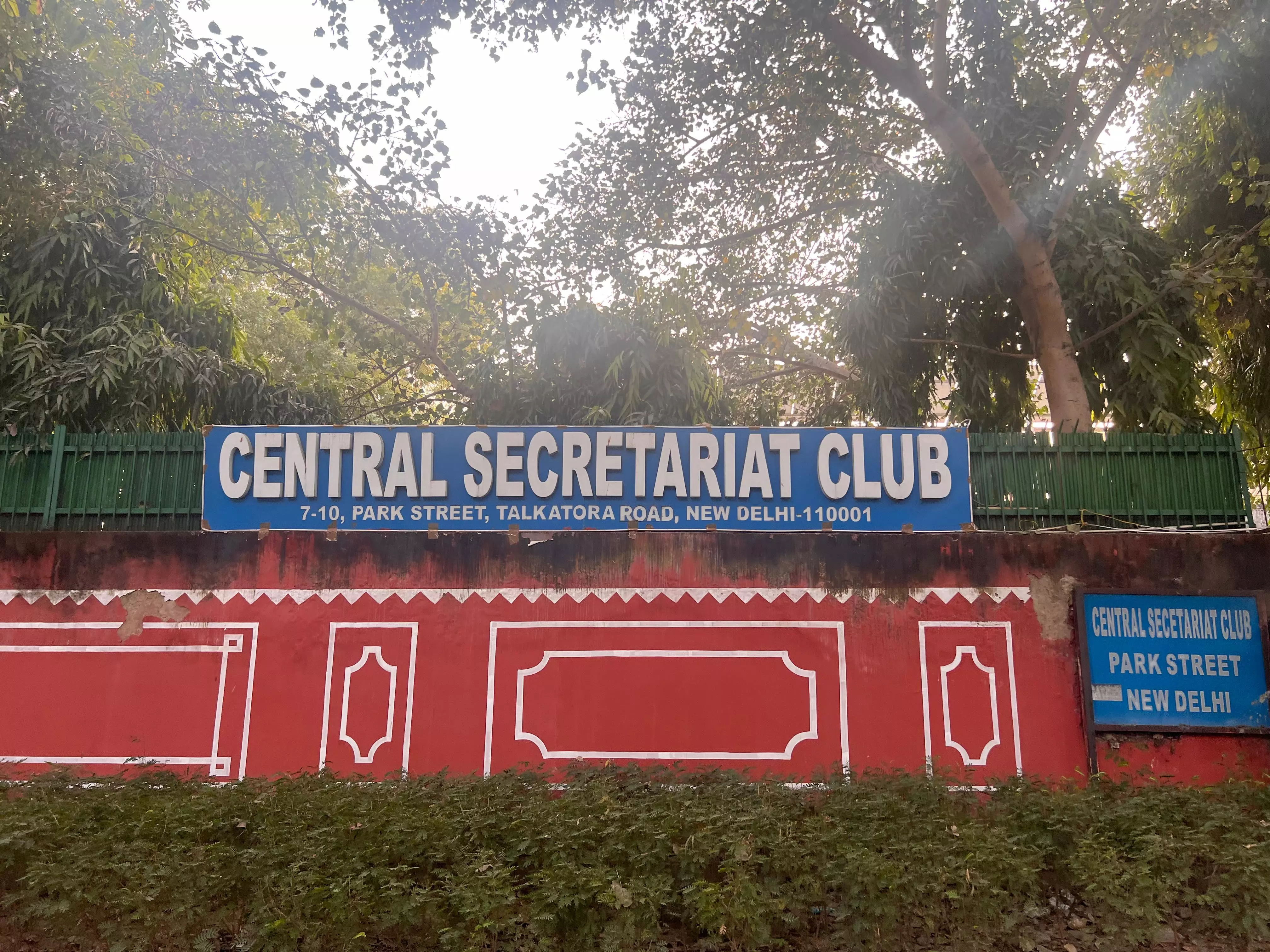
What happens when the fence begins to eat the crop? In Delhi’s babu circles, this question is no longer rhetorical. Disputes over the Gymkhana Club and the Delhi Golf Club were largely about land, privilege and entitlement, but the Central Secretariat Club is different. Here, the government is acting against an institution that has long been part of its administrative ecosystem. That makes this more than just another club dispute.
The department of personnel and training (DoPT) has stood by its decision to withdraw the club’s recognition after a committee, constituted at the direction of the Delhi high court, found the original action to be “fair and justified”. Its findings are troubling: financial irregularities, suppression of information, governance failures, discrimination against lower-level staff, and even allegations of illegal gambling. According to sources, the directorate of estates has already cancelled the land allotment and initiated eviction proceedings.
The club disputes those findings, says it was denied a fair hearing, and is preparing to challenge the decision in court. The legal contest will run its course. Equally important is what this episode reveals about the government’s willingness to scrutinise one of its own.
For decades, the Central Secretariat Club has been woven into the culture of the Central bureaucracy, serving both serving and retired government employees. Many of the officers who spent time there also signed the files that ordered inspections, inquiries and evictions elsewhere. There is a certain irony, and perhaps some measure of poetic justice, in watching the babus discover that the file can also move against itself.
Whether the club survives may ultimately be beside the point. The more consequential question is whether this marks a genuine shift towards holding institutions within the administrative establishment to the same standards expected of everyone else, or whether it will remain an isolated case that proves the rule rather than change it.
The Tukaram Mundhe test
Every few years, India discovers a babu who simply enforces the law. This time, it is Tukaram Mundhe.
Since taking charge of Maharashtra's Food and Drug Administration, Mr Mundhe has unleashed a wave of inspections targeting synthetic milk, adulterated food, illegal gutkha and unhygienic eateries. Well-known establishments have not been spared. The public applause is understandable. The surprise is not.
Food safety laws did not arrive with Mr Mundhe. They already existed. What changed was the willingness to enforce them. When routine regulation starts making headlines, it is usually because routine regulation has been missing.
The reported panic among operators, some of whom allegedly dumped suspected synthetic milk merely on hearing that FDA teams were on the move, is equally revealing. It suggests that the real deterrent was never the law itself, but the prospect of someone actually applying it.
Then there is Mr Mundhe’s career. Twenty-five transfers in 21 years have made him a symbol of an uncomfortable reality: officers who refuse to bend often find themselves moved instead.
That is why celebrating Mr Mundhe alone misses the point. A democracy cannot depend on the periodic arrival of fearless individuals to deliver clean food, honest administration or accountable governance. The real success story will not be that Tukaram Mundhe cleaned up the system. It will be when officers like him stop being exceptional and start becoming unremarkable.
Continuity or complacency?
If anyone thought the Centre had a monopoly on service extensions, Tamil Nadu has provided a timely correction. The state has secured a six-month extension for chief secretary M. Sai Kumar, citing the need for administrative continuity through the northeast monsoon. The Centre agreed.
“Continuity” has become the all-purpose justification for keeping senior babus in office. Cabinet Secretaries, Home Secretaries, intelligence chiefs, regulators and now state chief secretaries — the list keeps growing. Every extension is presented as indispensable. Almost none prompt a harder question: if the system cannot cope with a scheduled retirement, what does that say about succession planning?
Every senior officer has experienced colleagues waiting in the wings. If governments repeatedly conclude that only one person can steer the ship, they are inadvertently admitting that the system they oversee has failed to produce a credible successor.
This is not about M. Sai Kumar. By all accounts, he is an able administrator, and exceptional circumstances may well justify exceptional decisions. But exceptions have a habit of becoming conventions.
A long time ago, extensions were marked as extraordinary situations. Today, they increasingly resemble an administrative reflex. That may buy governments short-term comfort, but it delays renewal, blocks the next generation of leadership and reinforces an unhealthy belief that governance depends less on institutions than on keeping familiar faces in office. Continuity is desirable. Dependence is not.
