Dilip Cherian | Lateral Entry: Reform On Paper, Retreat In Practice

Lateral entry isn’t inherently bad. India’s civil services can benefit from outside expertise — economists, technologists, scientists — especially as policy challenges get more complex. But the mechanics matter
Forget the slogans. The story isn’t about “opening the doors” to experts so much as about how nervous the government got the minute politics sniffed trouble. Over a year after the UPSC published ads for 45 lateral-entry posts at joint secretary, director and deputy secretary levels, and then immediately pulled them amid political backlash over reservations. We’re back in consultation mode. The department of personnel and training (DoPT) says it’s talking to ministries about changes, but concrete policy is still on paper.
If lateral entry were truly the sea change it’s touted to be, the bureaucracy — one of the most ossified institutions in the country — wouldn’t be wading through the same mud again. What’s striking is that about 60 domain specialists were brought in earlier, yet only 38-40 remain. That attrition rate speaks louder than anything else.
Lateral entry isn’t inherently bad. India’s civil services can benefit from outside expertise — economists, technologists, scientists — especially as policy challenges get more complex. But the mechanics matter. Without rigour and transparency, we risk the worst of both worlds: eroding meritocracy while inviting cronyism and political interference.
The reservation backlash wasn’t just political theatre. It exposed an endemic problem — the reform was never fully thought through in the context of India’s legal framework and social justice commitments. Merely resurrecting the idea without addressing eligibility, assessment standards, accountability and tenure security won’t cut it.
Lateral entry shouldn’t be a flavour-of-the-month slogan recycled every election cycle. If it’s going to work, it must be institutionalised with clear rules. Certainly, it’s not something to be tossed aside at the first sign of trouble.
Missile precision, administrative chaos
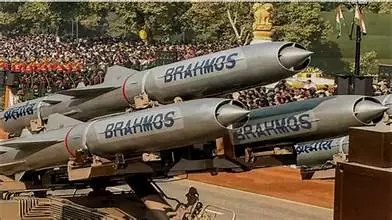
The Central Administrative Tribunal’s move to scrap the appointment of Jaiteerth R. Joshi as director general of BrahMos Aerospace is a telling commentary on how India’s babu machinery continues to fumble even where it can least afford to. When an institution as strategically critical as BrahMos is told to “restart the selection process”, it’s a polite judicial way of saying: your governance standards need adult supervision.
BrahMos isn’t exactly the neighbourhood innovation lab. It’s a flagship Indo-Russian defence collaboration, central to India’s deterrence capability and technological prestige. You’d expect the appointment of its chief to be the gold standard of transparency and institutional rigour. Instead, what emerges is familiar — contested seniority, questionable evaluation and a lack of convincing justification.
The complaint from DRDO’s distinguished scientist S. Nambi Naidu is more than a personal grievance. It underlines our chronic discomfort with meritocracy when it clashes with “other considerations.” If the senior-most, highest-ranked candidate is bypassed, the system must have an unassailable rationale on record. That’s not a courtesy; that’s governance 101.
However, the real concern is that this isn’t an isolated incident. Whether it’s police chiefs, PSU leaders, or regulatory heads, too many critical appointments end up litigated because the government treats due process like an optional accessory. Courts and tribunals shouldn’t have to repeatedly play the role of moral compass for administrative decision-making.
In defence institutions, leadership credibility is not ornamental. If the government wants to claim efficiency and professionalism, it must demonstrate it where it matters most.
Cadre expansion in UP
Uttar Pradesh has just bumped up its IAS sanctioned strength. More posts, more senior positions, more neatly classified reserves. This expansion signals two truths. First, the sheer scale of UP’s governance challenge finally has official acknowledgement. A state this large cannot run on a skeletal level, with constantly firefighting babus. But unless the culture around postings, autonomy, and accountability changes, the government could simply be creating a larger administrative orchestra that will still end up playing to political tunes.
Vacancies were never the only headache in Uttar Pradesh. Chronic transfers, shortened tenures, parallel power structures, and political micromanagement have hollowed out administrative authority at every level. You can appoint more district magistrates, more commissioners, more secretaries, but if their average lifespan in a job is measured in months, not years, how exactly is that strengthening governance?
UP doesn’t just need more officers; it needs a system that trusts them to do their job. Stability of tenure, protection from arbitrary interference, clarity of responsibility, and outcome-based accountability are far more valuable than any cadre expansion notification.
Otherwise, this entire exercise risks becoming classic Indian babu theatre: impressive paperwork, impressive numbers, impressive announcements — and a governance reality that refuses to improve.
