Dilip Cherian | IAS Short of 1,300 Officers, but No One Wants To Fix It

IAS deficit, IIS-MEA tussle and frequent transfers expose systemic gaps
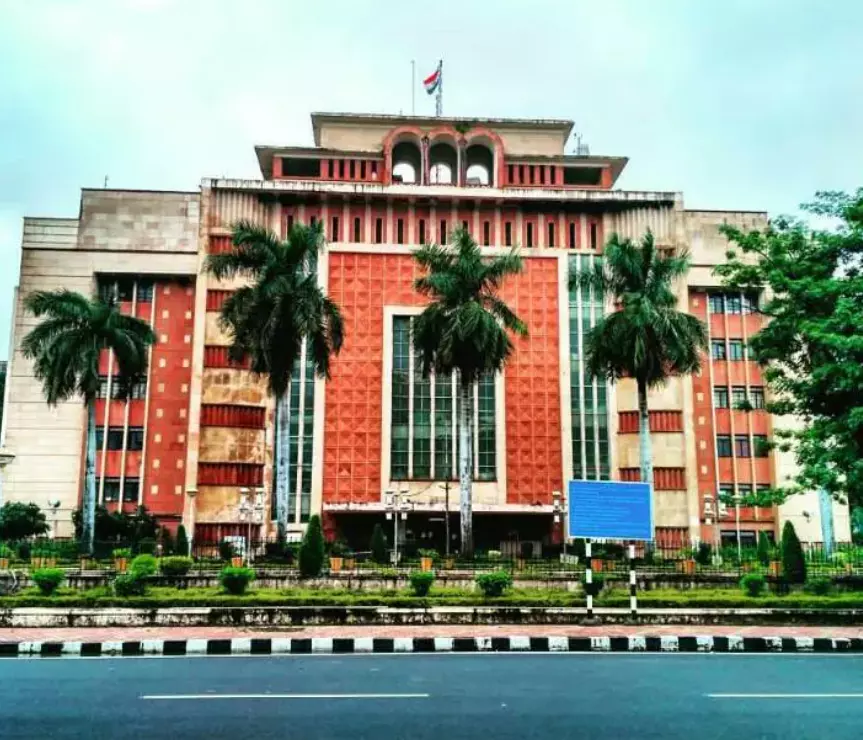
At what point does a staffing shortage become a governance failure? Madhya Pradesh may have already crossed that line. The state is short of over 150 IAS officers against its sanctioned strength. By all appearances, that’s not a marginal gap but a systemic deficit. Strip out deputations and election duties, and the administrative bench looks even thinner. The result is one babu juggling multiple roles, with files piling up and decisions slowing to a crawl.
To be fair, Madhya Pradesh isn’t uniquely mismanaged; it’s just more exposed. Uttar Pradesh, despite a larger absolute shortage, absorbs the shock better because it starts with a deeper pool. MP doesn’t have that luxury. When numbers are tight, every vacancy bites harder.
And yet, the larger story is national. India is short of roughly 1,300 IAS officers. That’s nearly 20 per cent of the sanctioned strength missing in action. For a system that still relies heavily on a generalist administrative elite to deliver everything from welfare schemes to crisis response, this is not a small problem.
What’s worrying is the quiet normalisation of this deficit. The system has adapted, but in the worst possible way, by stretching officers thinner, diluting oversight, and lowering the bar on responsiveness. When a single babu is handling multiple critical functions, accountability inevitably becomes fuzzy, and governance becomes reactive. All the talk about reforms, digitisation, dashboards, and “ease of governance” cannot compensate for a basic lack of human capacity. Right now, India’s administrative machinery isn’t just overworked but underpowered.
Until cadre strength, recruitment and deployment are treated as urgent policy issues rather than routine management, this gap will persist. And states like Madhya Pradesh will continue to function in survival mode.
Who speaks for India abroad?
At its core, the information and broadcasting ministry’s push to station Indian Information Service (IIS) officers in foreign missions isn’t misguided. In fact, it’s overdue. Modern diplomacy isn’t just about closed-door negotiations but also about narratives, perception management, and media engagement. Governments that don’t tell their story globally risk having it told for them.
The original plan to deploy IIS officers across 40 missions ran straight into a brick wall. The Ministry of External Affairs (MEA) pushed back, citing familiar concerns: functional overlap, lack of language expertise, and the small matter of “this is already our job”. The result is a scaled-down proposal: just 10 officers now, positioned as a pilot in key global capitals.
The real issue isn’t the number but the unresolved question of ownership. Who speaks for India abroad? Diplomats trained in statecraft, or communication professionals trained in messaging.
The MEA’s resistance isn’t entirely insecurity. There’s a legitimate concern here. Foreign missions are not PR outposts; they are extensions of sovereign policy. Blurring that line risks confusion, both internally and externally.
At the same time, dismissing IIS officers as redundant misses the point. These are communication specialists, not competitors in diplomacy. If anything, India’s global messaging often suffers precisely because diplomats are expected to double up as media strategists. This leaves us somewhere between a necessary reform and a bureaucratic stalemate.
If the government is serious about shaping India’s global narrative, it needs less turf protection and more clarity on its role. Co-location without coordination will fail. But so will clinging to outdated silos in an age where perception is policy.
Must be something in Haryana’s water
There are transfer records. And then there is Haryana.
Take Pradeep Kasni. The babu saw over 70 transfers in a career spanning three decades. Clearly, that’s not a career path but a cycle of perpetual movement. At one point, he was even sent to a “department” that didn’t exist, without staff, files, or even a salary for months.
Kasni’s case is not an "outlier". Consider the supporting cast. Ashok Khemka, with over 60 transfers. And then there’s Sanjiv Chaturvedi, who also did a stint in Haryana before taking his battles elsewhere, exposing corruption and collecting transfers along the way. At this point, one is tempted to ask — slightly tongue-in-cheek— what exactly is in Haryana’s water?
Because this isn’t just about individual officers being “difficult” or “upright” or “unlucky.” When a pattern repeats this often, across governments and personalities, it stops being anecdotal and starts looking systemic.
Frequent transfers are the oldest tool in the political playbook, subtle enough to avoid headlines, but effective enough to send a message. Stay in line, or pack your bags. The problem is, governance pays the price. Institutional memory evaporates. Continuity disappears. And administration becomes a game of musical chairs.
To be fair, transfers are sometimes necessary. Not every move is punitive. But when the exception becomes the norm, credibility takes a hit. You can’t build long-term policy outcomes on short-term postings.
Kasni’s record is a cautionary tale. A system that treats its officers as disposable eventually finds its governance just as transient. And that raises an uncomfortable possibility: maybe the issue isn’t the officers. Maybe it’s the ecosystem they’re trying to survive in.
