Dilip Cherian | Corruption Not Only Reason Why Projects Stall and Costs Spiral

Asymmetric punishment can make officials stall files, delay projects, and avoid action
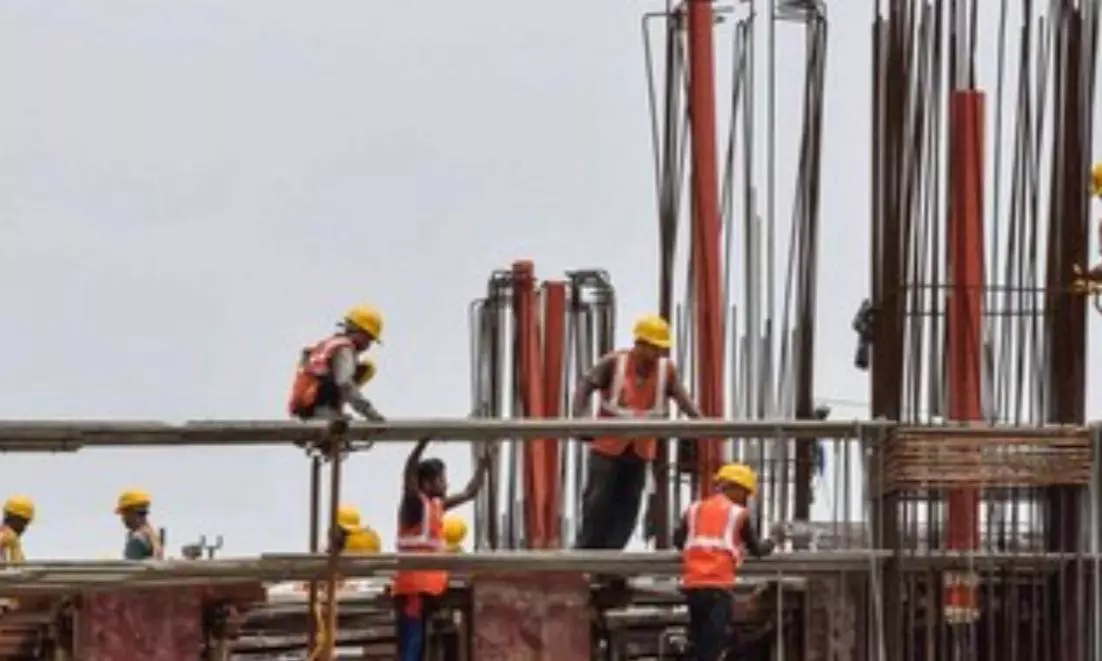
There’s a familiar outrage cycle in India — a project stalls, costs spiral, and we instinctively reach for the “corruption” label. It’s neat, satisfying, and often incomplete. Because sometimes, the system isn’t leaking. It’s freezing.
Take the coal block allocation case. A Delhi court, after years of investigation, acquitted all five accused, babus and others, in one of the oldest coal scam cases. It noted there was “not even an iota of evidence” and that the Central Bureau of Investigation had “miserably failed” to prove wrongdoing. In fact, the court found no proof of conspiracy or personal gain despite a decade of scrutiny and reputational damage.
If you’re a serving officer watching this unfold, what exactly is the takeaway? Not “be honest and decisive”. More like: Even if you’re clean, you may spend the next 10-15 years proving it. That’s not accountability. That’s deterrence.
Which brings us back to an old but uncomfortably relevant idea from In Service of the Republic by Ajay Shah and Vijay Kelkar, published in 2019 — asymmetric punishment.
Simply, the system punishes errors of commission (doing something that later looks questionable) far more than errors of omission (doing nothing at all). Sign a file, and you risk investigations, audits, and headlines. Sit on it, and life goes on quietly, safely, pension intact.
Now connect the dots. A system that can prosecute first and prove later (sometimes never) doesn’t just fail at accountability. It actively discourages decision-making. The rational babu adapts; files slow down, projects stall, costs inflate, and not always because of corruption, but because delay is the safest career strategy available. And when that becomes the norm, paralysis isn’t incompetence. It’s self-preservation.
Which leaves us with an awkward question Mr Kelkar and Mr Shah asked years ago, and we’re still dodging: Have we made honesty too expensive to practise?
UP’s investment pitch hits an awkward pause
All governments love big-ticket announcements. Few enjoy the morning after. The recent clarification by Uttar Pradesh chief minister Yogi Adityanath that a Rs 25,000 crore AI MoU is merely “preliminary” and “not binding” has that unmistakable whiff of a deal announced first and understood later. Which, if we’re being honest, is not the kind of innovation ecosystem Uttar Pradesh should be pioneering.
An MoU of that scale isn’t a casual handshake at a trade fair. It’s a signal to investors, competitors, and markets that the state means business. Walking it back in public, almost casually, doesn’t just dilute the deal; it chips away at credibility. And credibility, unlike MoUs, isn’t something you can sign and unsign at will.
What makes this more puzzling is the tone of the clarification. It sounds less like a calibrated correction and more like someone suddenly discovering the fine print after the press release went out. That’s not reassurance. That’s a red flag waving enthusiastically.
Now, to be fair, governments do sign preliminary agreements all the time. Not every MoU matures into a project. But there’s a way to manage that ambiguity quietly, professionally, without making the state look like it’s hedging its own commitments in real time.
Which brings us to the uncomfortable subtext. Somewhere in the system, someone clearly thought this was a good idea, both the signing and the subsequent clarification. One doesn’t need to name names to see the problem. This is less about one document and more about a style of functioning that mistakes optics for outcomes.
Uttar Pradesh has spent years trying to reposition itself as investment-friendly, predictable, and serious. That effort doesn’t collapse overnight—but it does take hits like this. Because investors don’t just read agreements. They read signals. And right now, the signal feels a bit… improvised.
Hard power is fashionable. Is it also effective?
Delhi’s favourite parlour game is back: guessing the next Ajit Doval (though he’s showing no signs of signing off yet!). And right on cue, the name doing the rounds is Samant Goel, a man who, if the chatter is to be believed, prefers operating in the shadows rather than trending on social media platforms.
The pitch for Mr Goel is straightforward: capability over charisma. Not a soundbite machine, but someone who deals with the mess behind the headlines. His reported bluntness with Jake Sullivan, the outreach across Iran-Russia-Central Asia post-Afghanistan, and the quiet stitching together of intelligence networks is being framed as the kind of hard-edged realism India needs next.
Fair enough. But here’s the question: Will this actually help?
India’s security challenges are no longer just about outmanoeuvring adversaries in the shadows. They’re also about managing optics, alliances, and economic interdependence in full public view. Being “ruthless when required” sounds reassuring until it collides with diplomatic fallout, trade interests, or the occasional ally having a meltdown over methods.
Take the expanding intelligence footprint and alleged deep linkages with countries like Russia and Iran. Smart, perhaps necessary. But also a tightrope walk in a world where alignments shift faster than WhatsApp forwards. Today’s strategic autonomy can quickly become tomorrow’s awkward explanation.
And then there’s the bigger philosophical drift embedded in this conversation: the idea that a “stronger, security-driven state” is the logical path to Viksit Bharat. That’s where the anxiety creeps in. Security efficiency is seductive. But it often comes bundled with a certain impatience for dissent, nuance, and messy democratic processes.
Mr Goel may well be exceptionally good at what he does. The real question is whether India needs a master of covert chess or a player equally skilled at the very public game of balancing power, perception, and principle.
