Dilip Cherian | Can Khattar’s Cost-Cutting Policy Stop Earthquakes?

Quake norms rollback, IAS reinstatements, CM rebuke spark accountability debate
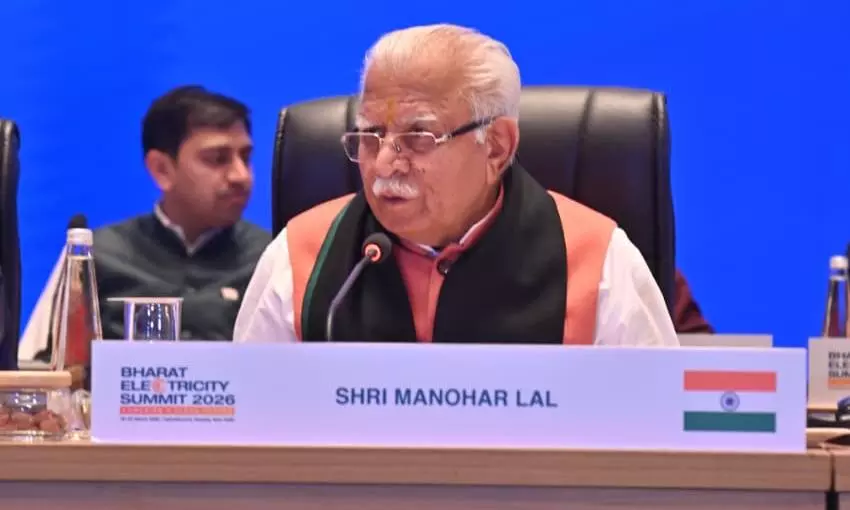
Now and then, public policy produces a decision so baffling that you instinctively read the news twice. The rollback of India’s revised earthquake zoning framework, within just three months, is one such decision. At the centre of this policy tremor is housing and urban affairs minister Manohar Lal Khattar, who seems to have had his way against earthquakes.
For a brief period, India appeared ready to update its approach to preparing for seismic risk. The Bureau of Indian Standards (BIS) had proposed revising the country’s earthquake hazard zoning map and building codes. The idea was to adopt more advanced scientific methods to assess seismic risk and introduce stronger design norms for buildings, especially across the Himalayan belt, where scientists have long warned of major earthquakes. In practical terms, this meant safer buildings — but also costlier ones.
That’s where the ground began to shake in Sarkari circles. Several ministries and infrastructure agencies flagged financial implications. Stricter design standards could push up construction costs, potentially affecting housing projects, infrastructure budgets and urban development plans. The housing ministry, reportedly under Mr Khattar’s direction, led the charge in raising these concerns. The result was swift and decisive. The revised earthquake zoning proposal was withdrawn, and the existing framework continues for now.
Developers, naturally, are relieved. Babus may feel they have avoided an abrupt regulatory disruption. But disaster experts are less amused. Earthquakes, after all, are not known for consulting cost sheets before striking.
Scientists have repeatedly warned about the risk of a major Himalayan earthquake in the future. The revised zoning map was meant to align building standards with this uncomfortable reality. Instead, the policy response has been to press pause.
If the ground shakes tomorrow, will the earthquakes respect the government’s decision to defer stricter building norms? For now, the tectonic plates will continue their slow, patient movement beneath India. And in New Delhi, it appears the earthquakes have been politely asked to wait.
Suspension as a sabbatical? A curious babu trend
Indian babudom has an oddly elastic relationship with accountability. Every few months, a case pops up that makes one wonder whether suspension is truly punishment or merely a temporary pause.
The latest instance is the reinstatement of IAS officer Abhishek Prakash in Uttar Pradesh. The 2006-batch officer, who served as CEO of Invest UP, was suspended last year after allegations that a bribe was sought in connection with a solar project. Now he is back in service after the Allahabad High Court found no prima facie evidence against him in the case involving the alleged middleman. The departmental inquiry, the government says, will continue.
Legally, this is unobjectionable. If a court sees insufficient evidence, reinstatement is the natural administrative outcome. Due process must prevail. But zoom out, and a broader pattern becomes hard to ignore.
Consider the case of Jharkhand cadre IAS officer Pooja Singhal. Arrested by the Enforcement Directorate in a money-laundering probe linked to alleged embezzlement of MGNREGA funds meant for some of India’s poorest households, she spent nearly three years in jail. Yet after she secured bail in late 2024, the Jharkhand government revoked her suspension and reinstated her into service, even as the trial continues.
Again, technically correct. Bail is not a conviction. Yet the optics are difficult to ignore. In both instances, suspension begins to look less like a serious disciplinary measure and more like a time-out, something that lasts until the legal clouds thin.
For the public, that raises uncomfortable questions. When allegations involve bribery or the diversion of welfare funds, should the threshold for returning to office be no higher than securing bail or benefiting from evidentiary gaps?
If reinstatement becomes routine in cases involving serious allegations, that trust begins to corrode quietly, steadily, and in plain sight.
Naidu’s reality check for babus
Andhra Pradesh chief minister N. Chandrababu Naidu recently did something that Indian CMs occasionally do when patience runs thin: He delivered a public dressing-down to his babus. At a meeting with district collectors and senior officials recently, Mr Naidu warned that arrogance, administrative rigidity and poor field engagement would simply not be tolerated. The implied message was to get out of the air-conditioned echo chamber and start listening to people.
Mr Naidu’s frustration is not unusual. Across India, elected governments frequently complain that a section of the government behaves as if it is accountable to procedure rather than to citizens. The chief minister’s complaint about “arrogance” and “rigidity” hints at a deeper institutional tension. Babus are trained to follow rules and maintain continuity. Netas, on the other hand, are judged by how quickly they deliver results. When governance slows down, each side tends to blame the other.
Yet Mr Naidu’s criticism also carries a warning that many civil servants would do well to heed. The Indian administrative system still commands enormous authority, but authority without empathy can quickly begin to look like indifference.
Whether Mr Naidu’s rebuke will actually change behaviour is another question. Bureaucracies, after all, are famously resilient to reform as much as to chaos.
But occasionally, a blunt reminder from the political boss helps clear the fog. And if it nudges officials to step outside their offices and into the real world, the chief minister’s scolding may not be such a bad thing after all.
