Devi Kar | Let’s Be Selective On ‘Facts’ We Ask Kids To Remember, Maybe Memorise

Memorising is not at all a bad thing, if the purpose and application are sensible and meaningful. It is indeed beautiful to hear people recite lines of poetry or excerpts from literary greats
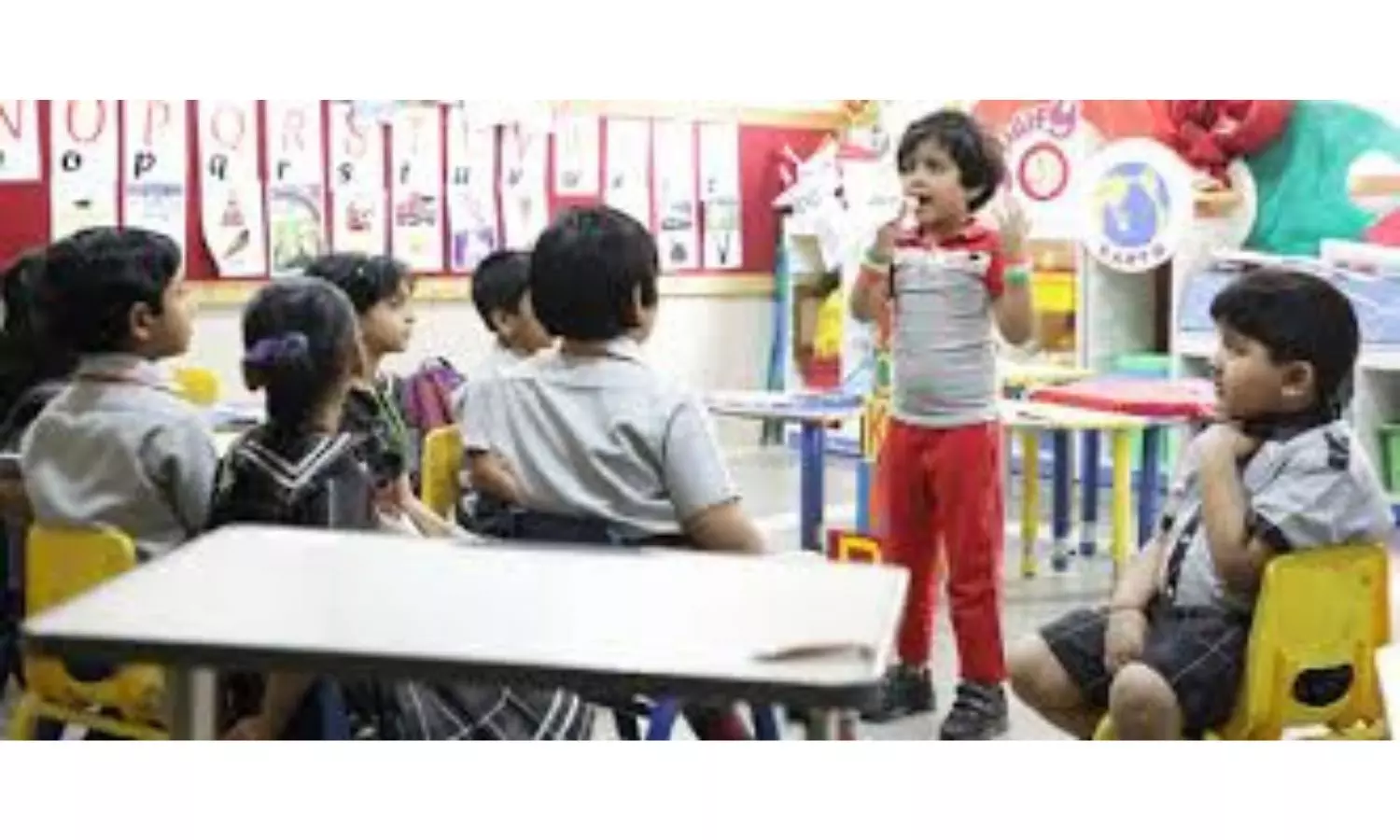
The other day a proud parent sent me a video of her adorable pre-primary daughter, rattling off the names of ministers and political leaders in response to some quiz questions. Without a doubt, this feat would impress many, but educators have begun to think differently about the purpose, process and nature of learning.
Richard Feynman mentioned in one of his books that once when they went bird watching, his father impressed upon him that it was far more important to observe the characteristics and habits of different kinds of birds than to just remember their names. Even today, people marvel at children who recite elocution pieces which in content and meaning, are meant for those who are far beyond their years. A child should not have to memorise anything the meaning of which he/she is unable to grasp. I still remember the time a kindergarten boy brought the house down by reciting one of Swami Vivekananda’s stirring nationalistic speeches, in exact imitation of the Swami. I am sure the little boy didn’t understand a word of what he recited but he was visibly happy and proud of the deafening applause. Nobody thought it was inappropriate. There was universal and undisguised admiration for the little boy’s feat.
It's a fact that there are children with unusual abilities that allow them to memorise or calculate with lightning speed. Being precocious, however, is quite different. It’s when children demonstrate an understanding of the underlying principles of how things work or nature functions at an early age. The former are those whose talents are spectacular and impressive and facilitate certain functions. The second group are those who are the thinkers, future inventors or creators of masterpieces of art or literature.
When we seek to educate our children, we need to be sensitive about the different ways in which they are likely to contribute to society. But in general, we shouldn’t try to artificially expedite their natural rate of maturation.
Sometimes, we give children tasks to perform that are not at all age-appropriate. They may be able to carry out those tasks successfully but without having assimilated their significance in depth. Besides, we must realise children possessing unusual gifts can be proudly exhibited but they are just excelling in showmanship. I suppose such people also have their worth. We had our own Shakuntala Devi, the “human calculator”, of whom we were extremely proud. Unexpectedly, the principal of a reputed school in Singapore remarked: “I don’t think I will send my students to her show… they won’t learn anything from her.” This head teacher felt it would be beneficial if Shakuntala Devi had shared her methods or skills with the young audience, or “it’s just like any magic show”, she said. Other teachers had a different view. They felt the children of their school had been deprived of the uplifting and inspiring experience of watching what a human being was capable of doing.
In this context, it is pertinent to mention the Japanese Suzuki method of teaching music to very small children. This approach is based on the way children learn their mother tongue: by listening and imitating. Since music is taken to be a language, the Suzuki method is used for children from 0-3 years.
Consequently, very young children can render difficult Western classical pieces through these lessons. Critics, however, felt they had no understanding of the pieces they were playing and hence no emotional connect with the music.
Moreover, these young musicians did not know how to read music and without doing so you can hardly be considered a serious musician. This debate is still open.
Memorising is not at all a bad thing, if the purpose and application are sensible and meaningful. It is indeed beautiful to hear people recite lines of poetry or excerpts from literary greats. Formulae need to be remembered as do multiplication tables and historical timelines -- even now. But memorisation has to be done selectively and thoughtfully. We must ask ourselves the questions: “Why should I commit some things to memory and not others?”; “What will I do with the memorised items?” and “How will I use the retained data to advantage?”.
These concerns have become even more crucial today with the advent of artificial intelligence. Apart from ChatGPT, Siri, Alexa, Bixby, Google Assistant and Gemini, there is “children (or) education friendly AI” such as Duolingo Max, Khanmigo and Socratic. The challenge is for children to be able to do things which AI cannot. For instance, AI will always carry out standard calculations, searches and mechanical procedures much quicker than humans, but it won’t be able to demonstrate logical thinking. Teachers and guardians must also work towards strengthening children’s human qualities such as sensitivity, kindness and understanding of moral principles which AI will never be able to possess or offer.
Returning to our initial question, do we continue to encourage our pre-primary children to learn lists of names of the world’s Prime Ministers, Presidents, capital cities and currencies? In response to this question, someone remarked that years ago, her Hindi teacher had made her memorise lists of birds, fruits and vegetables, but to this day she cannot speak Hindi fluently. Today, it would be even more meaningless to make students learn lists of dates and facts or for that matter any content that cannot be applied in life. Both children and adults must learn to use AI as a tool and not a crutch. Memorising, will, however, remain a need in order to prepare the base for further learning, to quicken the process of learning itself and also to keep the mind agile. As has been said by an AI-generated essay: “The best learners of the AI age will know how to combine human judgment with instant information.”
The writer is a veteran school educator based in Kolkata
